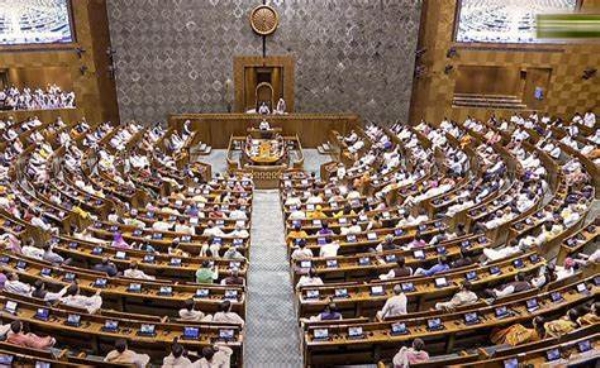
New Delhi, 17 December (H.S.): On Wednesday, the Lok Sabha convened for a pivotal day in the Parliament Winter Session, marked by fervent debates on two transformative bills as proceedings commenced at 11:00 AM IST following the Question Hour.
SHANTI Bill Ignites Nuclear Ambitions
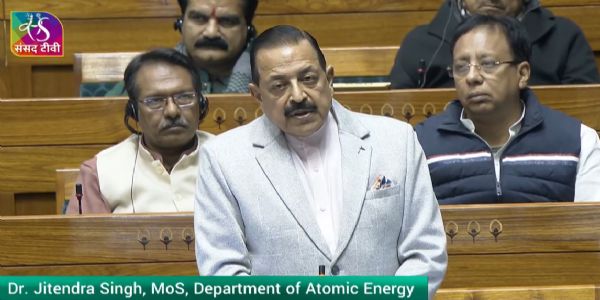
Minister of State for Science and Technology Dr. Jitendra Singh propelled the Sustainable Harnessing and Advancement of Nuclear Energy for Transforming India (SHANTI) Bill, 2025, into the legislative spotlight at 12:29 PM, hailing it as a historic enactment resonant with Dr. Homi Bhabha's vision for peaceful atomic utilization under Prime Minister Narendra Modi's stewardship.
The legislation, tabled to supplant the Atomic Energy Act of 1962 and the Civil Liability for Nuclear Damage Act of 2010, empowers private Indian entities—excluding foreign-controlled firms—to construct, own, and operate reactors under rigorous Atomic Energy Regulatory Board licensing, while introducing penalties up to ₹1 crore via a dedicated redressal council.
Discussions underscored nuclear power's superiority in delivering uninterrupted clean energy over intermittent renewables, targeting a 100 GW capacity surge by 2047 to bolster net-zero aspirations and curtail fossil fuel reliance.
Congress MP Manish Tewari countered sharply decrying the bill's replacement of extant laws, invoking Jawaharlal Nehru's foundational role in India's nuclear odyssey, and recalling opposition resistance to the UPA's Indo-US nuclear pact.
VB-GRAM-G Bill Sparks Opposition Tempest
Union Minister Shivraj Singh Chouhan advanced the Viksit Bharat Guarantee for Rozgar and Ajeevika Mission (Gramin) Bill, 2025—VB-GRAM-G—proffering a statutory pledge of 125 days' unskilled wage employment annually to rural households, ostensibly rationalizing the Mahatma Gandhi National Rural Employment Guarantee Act (MGNREGA).
BJP's Boora Narsaiah Goud defended it as an enhancement with multifaceted benefits, yet opposition fury erupted over renaming, funding shifts from 90:10 to 60:40, and dilution of rights-based tenets.
Congress luminaries, including Priyanka Gandhi Vadra and Hanumantha Rao, lambasted the move as an affront to Gandhi's legacy and rural safeguards, with RJD's Manoj Jha alleging it eviscerates the scheme's essence; protests convulsed Parliament premises,
Broader Session Dynamics
Speaker Om Birla rebuffed adjournment motions enabling papers' tabling by ministers like Arjun Ram Meghwal and Jitin Prasada, alongside committee reports on SC/ST welfare and women's safety.
Railway Minister Ashwini Vaishnaw addressed station redevelopment sans service halts , while Union Minister Jyotiraditya Scindia spotlighted Bharat Telecom's Bihar expansions and 72% telecom export growth.
Concurrently, MP Chandrashekhar Azad protested Delhi's toxic air, and Rajya Sabha advanced under Vice President C.P. Radhakrishnan.
---------------
Hindusthan Samachar / Jun Sarkar
17 Dec 2025