New Delhi, 17 December (H.S.): Prime Minister Narendra Modi’s landmark two-day visit to Ethiopia—the first-ever stand-alone bilateral visit by an Indian Prime Minister—concluded on Wednesday with significant outcomes that have set the stage for a transformative phase in India–Ethiopia relations.
The visit, held on December 16–17, 2025, was marked by the elevation of bilateral ties to a Strategic Partnership, the signing of a series of key agreements, the conferment of Ethiopia’s highest civilian honour, and wide-ranging talks that reinforced the vision of cooperation between two ancient civilizations bound by shared democratic values and solidarity within the Global South.
The visit represented a major diplomatic stride for India in the African continent, reaffirming New Delhi’s commitment to deepen engagement with Africa, particularly at a time when Ethiopia’s role as host of the African Union headquarters gives it a unique standing in continental diplomacy.
A Warm Welcome in Addis Ababa
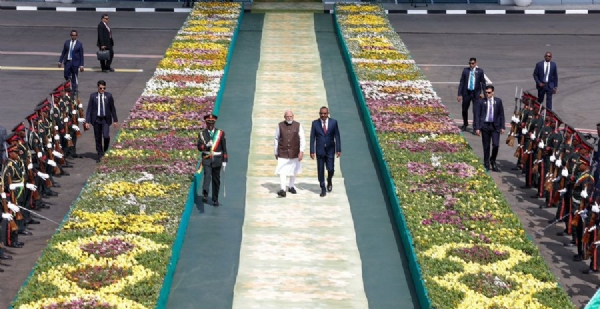
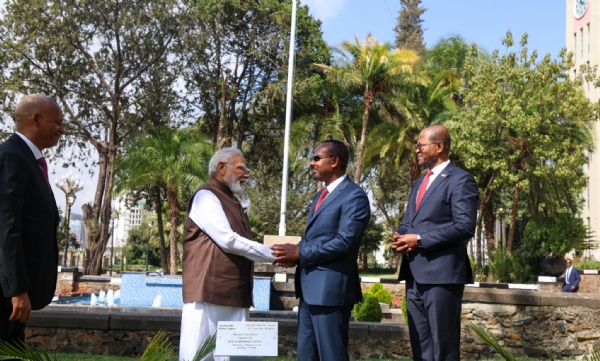
Prime Minister Modi arrived in Addis Ababa on the evening of December 16 to a ceremonial reception at the National Palace. He was warmly received by Prime Minister Dr. Abiy Ahmed Ali, who hosted a series of one-on-one, restricted, and delegation-level meetings.
The two leaders reflected upon the historical ties between India and Ethiopia, with PM Modi describing Ethiopia as “a meeting point for African diplomacy and a cradle of ancient civilization.”
In his opening remarks, Prime Minister Modi noted, “The moment I set foot here, I felt a deep sense of belonging and affinity. India and Ethiopia, both rich in languages and traditions, embody unity in diversity and share a commitment to peace, humanity, and progress.”
Elevation of Relations to a Strategic Partnership
The most significant outcome of the visit was the formal elevation of bilateral ties to a Strategic Partnership, a designation that sets a long-term framework for cooperation across a wide spectrum of sectors. The decision, announced following the delegation-level talks on Tuesday night, will enable both sides to expand their partnership in trade, technology, defense, health, agriculture, innovation, digital connectivity, and global governance.
Both leaders reaffirmed their shared goal of shaping an “inclusive world” and strengthening collective voice from the Global South. They emphasized that this strengthened partnership will serve as an instrument to promote peace, sustainable development, and resilience against global challenges.
Prime Minister Modi expressed gratitude to Ethiopia for its solidarity following the Pahalgam terrorist attack, and reiterated India’s unwavering support for global efforts against terrorism.
Signing of Key Agreements
The two leaders jointly witnessed the exchange of three key Memoranda of Understanding (MoUs) and one implementing arrangement:
Agreement on Cooperation and Mutual Administrative Assistance in Customs Matters, aimed at facilitating trade, curbing illegal trafficking, and modernizing customs procedures.
MoU for Establishing a Data Centre at the Ministry of Foreign Affairs of Ethiopia, to boost Ethiopia’s digital infrastructure and enhance capacity in secure data management.
Implementing Arrangement for Cooperation in United Nations Peacekeeping Operations Training, a reflection of both countries’ commitment to global peace and security.
MoU on Debt Restructuring for Ethiopia under the G20 Common Framework, signifying India’s support for Ethiopia’s economic stability and growth.
Additionally, India announced its decision to double the number of scholarships for Ethiopian students under the Indian Council for Cultural Relations (ICCR) programme. It will also introduce short-term specialized courses in Artificial Intelligence and emerging technologies under the Indian Technical and Economic Cooperation (ITEC) initiative.
In the healthcare sector, India committed to helping augment the capacities of the Mahatma Gandhi Hospital in Addis Ababa, focusing on maternal and neonatal care—a tribute to the shared humanitarian ethos of both nations.
Focus on Economic and Developmental Cooperation
During the talks, Prime Minister Modi reaffirmed India’s readiness to scale up cooperation in priority sectors vital to Ethiopia’s development—such as health security, traditional medicine, food security, sustainable agriculture, natural farming, mining, and clean energy. He underscored the success of Indian enterprises in Ethiopia, noting that Indian companies have invested over 5 billion US dollars, generating more than 75,000 local jobs, particularly in manufacturing and pharmaceuticals.
The two Prime Ministers discussed opportunities to collaborate in Digital Public Infrastructure, critical minerals, and renewable energy, aligning with both countries’ sustainability commitments.
Conferment of Ethiopia’s Highest Civilian Honour
In a special ceremony held at the Addis International Convention Centre on Tuesday evening (December 16), Prime Minister Abiy Ahmed conferred upon Prime Minister Modi Ethiopia’s highest national award—the “Great Honor Nishan of Ethiopia.”
The decoration recognized Modi’s “exceptional contribution toward strengthening India–Ethiopia partnership and his visionary leadership as a global statesman.”
Expressing his deep gratitude, Prime Minister Modi said he accepted the award “with humility and gratitude” on behalf of 1.4 billion Indians. He dedicated it to “all Indians and Ethiopians who have nurtured the bilateral relationship over centuries.” He also commended Dr. Abiy Ahmed for his efforts toward national unity, inclusive development, and environmental sustainability, noting that Indian educators have contributed to Ethiopia’s progress for over a hundred years.
The conferment of the decoration marks a historic milestone, symbolizing Ethiopia’s deep appreciation of India’s enduring friendship and its growing influence in the continent’s development landscape.
Address to the Ethiopian Parliament and Symbolic Tree Plantation
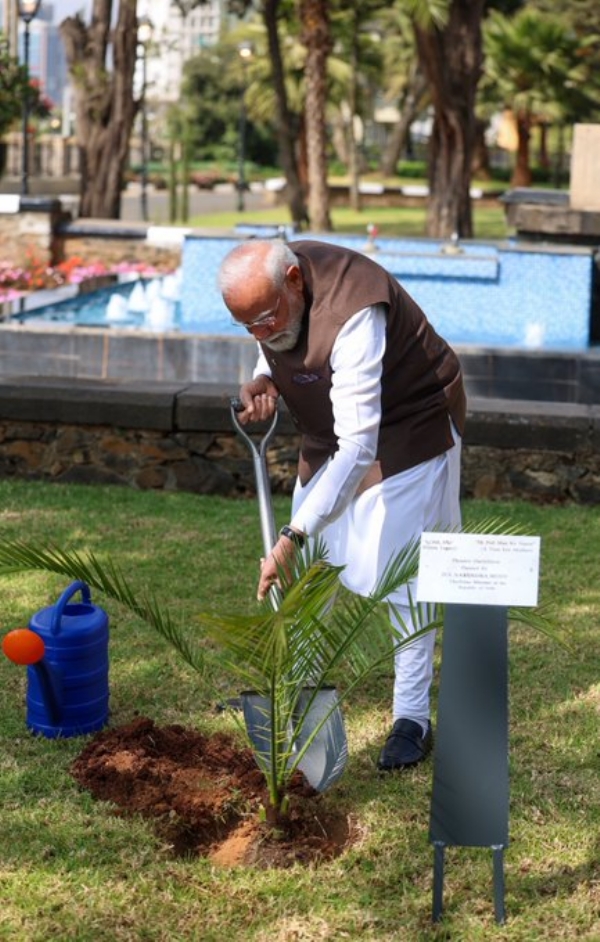
On Wednesday morning (December 17), Prime Minister Modi addressed the Ethiopian Parliament, underlining the common democratic values and shared aspirations for development that unite the two countries. Following his address, he joined Prime Minister Abiy Ahmed and other dignitaries in a tree-planting ceremony as part of Ethiopia’s renowned Green Legacy Initiative.The sapling was planted under India’s domestic campaign ‘Ek Ped Maa Ke Naam’ (A Tree for Mother)—symbolizing the harmony between environmental consciousness and motherly compassion.
The gesture represented India’s solidarity with Ethiopia’s reforestation efforts and the global fight against climate change.
A Relationship Rooted in Shared Vision
As the visit concluded, Prime Minister Modi expressed heartfelt gratitude to the Government and people of Ethiopia for their warmth and hospitality, describing the trip as “truly memorable.” He observed that the visit had “given fresh momentum to India–Ethiopia ties and strengthened a relationship rooted in shared values and a common vision for the future.”
The outcomes of the visit—spanning diplomacy, development cooperation, capacity building, and people-to-people exchanges—signify a new chapter in India’s engagement with Africa. By elevating relations to a Strategic Partnership, both nations have created a durable framework for cooperation that extends beyond commerce into the spheres of culture, security, sustainability, and global governance.
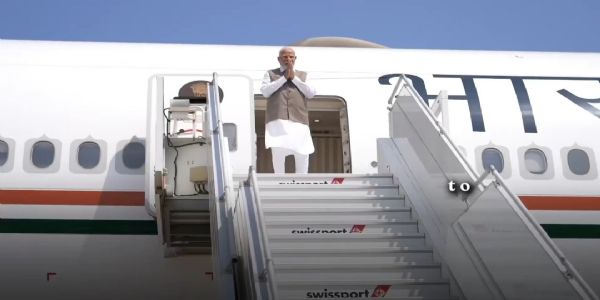
As Prime Minister Modi departed Addis Ababa, accompanied personally by Prime Minister Abiy Ahmed at the airport, the spirit of friendship between India and Ethiopia stood reaffirmed—anchored in history, energized by trust, and directed toward a brighter, more inclusive future.
---------------
Hindusthan Samachar / Jun Sarkar
17 Dec 2025