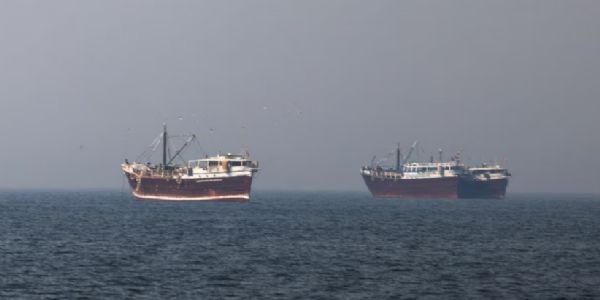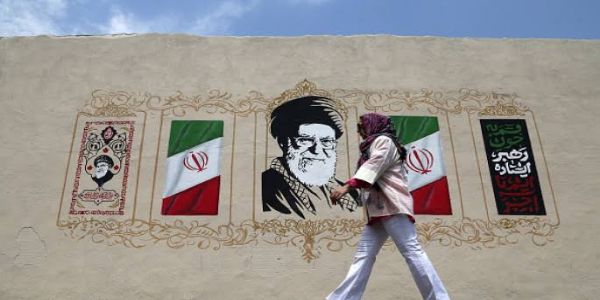
Tehran/Washington, 09 August (H.S.): Iran is seeking a middle ground amid its escalating confrontation with the United States over the Strait of Hormuz, which has been at the centre of the conflict since February. Tehran has expressed hope that ongoing discussions with Oman could help produce a way forward. Meanwhile, the Islamic Revolutionary Guard Corps (IRGC) has reiterated its earlier conditions for reopening the strategic waterway, while Washington has maintained that it will continue to exert pressure on Iran.
According to reports by Al Jazeera, Fox News and CBS News, Iranian President Masoud Pezeshkian expressed hope that talks with Oman would yield results regarding the situation in the Strait of Hormuz. He called for an end to the current state of neither war nor peace through dialogue.
The IRGC, meanwhile, said the waterway could be reopened if the United States ends its naval blockade and provides compensation for the damage caused by the conflict.
US Vice President JD Vance has openly accused Iran of being unwilling to take steps towards improving relations. Washington, he said, would continue to maintain pressure on Tehran.
Iranian Foreign Minister Abbas Araghchi told reporters on Saturday that discussions with Oman had brought the sides close to reaching an understanding on establishing a temporary passage through the Strait of Hormuz. However, he stressed that Iran's conditions must be met before the waterway can be fully reopened. He also reiterated Tehran's demand that the United States compensate Iran for losses resulting from the conflict.
Iran's National Security Council has outlined several conditions for moving forward. These include an end to US threats against Iran, a halt to military action against Iran and its regional allies, the lifting of the US naval blockade, compensation for damage caused by the conflict, and the removal of sanctions along with the restoration of Iran's frozen assets.
Oman, which has been facilitating discussions between the two sides, has condemned the continued attacks on vessels in the Strait of Hormuz but has refrained from assigning blame to any party.
US Vice President Vance, meanwhile, said Washington had destroyed Iran's nuclear programme, significantly weakened its conventional military and substantially reduced its unconventional military capabilities. He added that if Iran still refused to accept an agreement, the decision was ultimately Tehran's.
The US military has said that its blockade in the Strait of Hormuz has forced 53 vessels to alter their routes. US Central Command said that more than 30 vessels carrying humanitarian aid were nevertheless allowed to pass through the waterway safely.
Hindusthan Samachar / Jun Sarkar
09 Aug 2026