New Delhi, 11 August (H.S.): With the onset of the holy month of Shravan, the weather in Delhi-NCR has undergone a noticeable change. Intermittent light to moderate rainfall over the past few days has provided much-needed relief from the humid summer heat, but it has also brought a fresh set of difficulties for residents.
Amid light rain since Tuesday morning, the India Meteorological Department (IMD) has forecast more light to moderate rainfall in the coming days. According to the weather agency, persistent cloud cover and intermittent showers have brought down temperatures in the national capital, making the weather considerably more pleasant.
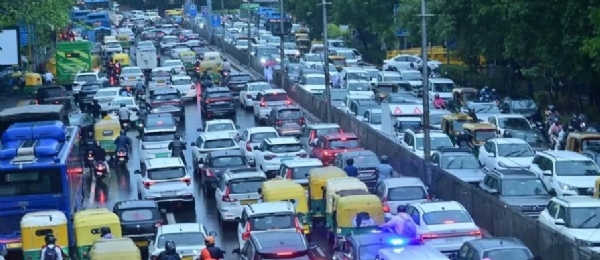
However, the continuous rainfall has resulted in waterlogging across several low-lying areas of Delhi and neighbouring regions. Water accumulated on roads has created significant difficulties for both pedestrians and motorists. The most visible impact of the rain has been on traffic movement across Delhi-NCR, with vehicle speeds dropping sharply on major intersections and busy roads soon after showers begin.
For office-goers returning home, journeys that would normally take one to two hours are now stretching to three or even four hours because of waterlogging and traffic congestion. Long queues of vehicles have become a common sight on major stretches around ITO, Dhaula Kuan, Ashram, the Delhi-Gurugram Expressway and roads connecting the national capital with Ghaziabad.
Commuters are also facing difficulties in accessing public transport and other modes of travel. During periods of rainfall, finding cabs and autorickshaws becomes particularly challenging. At the same time, app-based cab aggregators often impose surge pricing or dynamic fares, in some cases resulting in passengers being charged nearly twice the usual fare.
The increase in travel costs is placing an additional financial burden on ordinary commuters. The combination of prolonged traffic jams, higher fares and unpredictable travel times is also adding to the stress faced by daily passengers.
Waterlogging and traffic congestion during the monsoon and Shravan season are not new problems for Delhi-NCR. Every year, even relatively heavy spells of rain expose weaknesses in the city's drainage infrastructure, leaving several parts of the region vulnerable to water accumulation and prolonged traffic disruptions.
---------------
Hindusthan Samachar / Jun Sarkar
11 Aug 2026
PM Modi to Launch Former President Ram Nath Kovind’s Autobiography at Vigyan Bhavan on Wednesday

11 Aug 2026