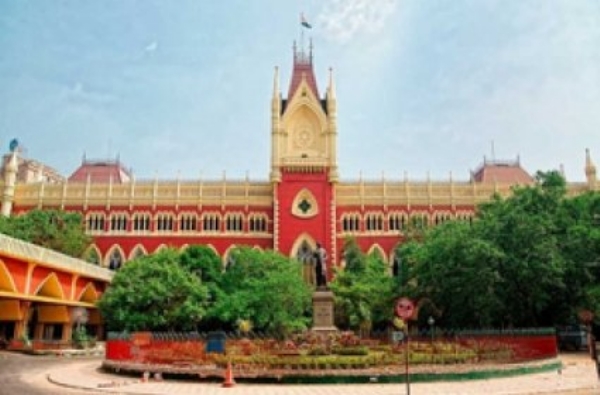
Kolkata, 28 July (H.S.) : The Calcutta High Court has ruled that the burden of proving Indian citizenship rests with the individual whose nationality is under question, observing that neither the State nor the court is responsible for establishing a person's citizenship.
The observation was made by a Division Bench comprising Justice Debangsu Basak and Justice Ajay Kumar Gupta while hearing a habeas corpus petition filed by Suman Molla. The petitioner alleged that his nephew had been illegally detained by police on June 18 on suspicion of being a Bangladeshi national and was subsequently lodged in a detention centre.
To establish his nephew's Indian citizenship, the petitioner produced a voter identity card, Aadhaar card, PAN card, bank passbook, ancestral land records and other family documents before the court. However, the Bench held that none of these documents constituted conclusive proof of Indian citizenship. It further observed that a voter identity card only establishes inclusion in the electoral roll, while Aadhaar and PAN cards are not proof of citizenship.
The West Bengal government informed the court that the detained individual was a Bangladeshi national and had allegedly admitted the same while in police custody. The State also claimed to possess a video recording of the admission. According to the government, the individual had been given 60 days under the law to produce valid proof of Indian citizenship but had failed to submit any acceptable documents so far.
During the hearing, the court also noted several inconsistencies in the petitioner's submissions, including discrepancies in the father's name, the absence of satisfactory answers regarding the death and last rites of the detainee's parents, and the fact that the detained person was reportedly older than the petitioner despite being described as his nephew.
After examining the records and submissions of both sides, the High Court upheld the State's action, reiterating that the responsibility to prove citizenship lies with the person concerned. The court observed that if an individual fails to establish his or her citizenship with legally acceptable evidence, neither the court nor the State can assume that responsibility. The judgment also referred to the provisions of the Immigration and Foreigners Act, 2025.
Hindusthan Samachar / Satya Prakash Singh

29 Jul 2026
Burden of Proving Citizenship Lies with the Individual, Not the State: Calcutta High Court

29 Jul 2026
West Bengal to Reintroduce Eggs in Mid-Day Meals from August 1, Says CM Suvendu Adhikari
29 Jul 2026