Haryana Assembly's Education Committee arrives in Lucknow to
study Uttar Pradesh's education system
Haryana Assembly's Education Committee calls UP's
educational reforms and innovations useful and exemplary
Haryana MLAs praise Operation Kayakalp, Chief Minister Model
Composite Schools, digital education, teacher training, and innovations
Lucknow, 27 July (HS): A high-level committee of the Haryana
Assembly arrived in Lucknow on Monday to study Uttar Pradesh's basic and
secondary education system, educational quality, school infrastructure
facilities, and innovations being made in the education sector. The committee
held a meeting with officials of the education department, including Additional
Chief Secretary, Basic and Secondary Education, Parth Sarathi Sen Sharma, and
Director General School Education, Monika Rani, in the Assembly Hall to gather
information about the extensive reforms and innovations being undertaken in the
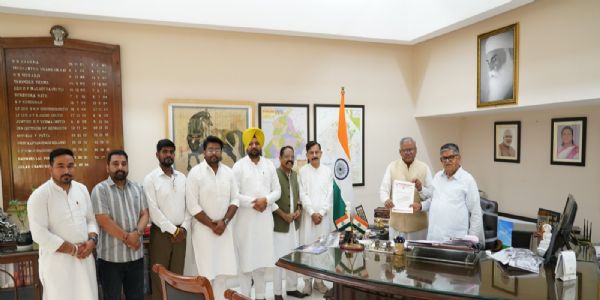
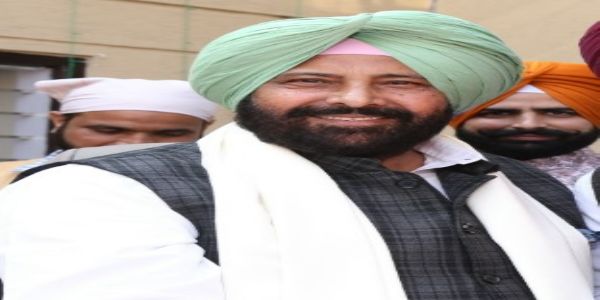
field of education in Uttar Pradesh. The committee included Chairperson of the
Haryana Assembly's Education Committee, Laxman Singh Yadav, and other members.
During the meeting, Additional Chief Secretary, Basic and
Secondary Education, Parth Sarathi Sen Sharma, gave a detailed presentation on
various aspects of Uttar Pradesh's basic and secondary education system,
strengthening of school infrastructure, improvement in educational quality,
teacher training, digital and smart education, implementation of the National
Education Policy-2020, vocational education, digital system of monitoring and
accountability, and various innovative schemes. Members of the Haryana Assembly
committee praised the efforts being made to improve the education system in
Uttar Pradesh and described the state's model as useful and exemplary.
The meeting was informed that under the leadership of Chief
Minister Yogi Adityanath, the state government has focused on providing a
better educational environment in schools as well as developing basic
facilities. Through Operation School Kayakalp, a clean, safe, and
child-friendly environment has been created in schools. After 2017-18, there
has been significant improvement in various standards of infrastructure
facilities in schools. Widespread saturation has been achieved in safe drinking
water, separate toilets for boys and girls, running water, handwashing units,
tiles in classrooms, electrification, ramps and railings, painting of
buildings, kitchens, boundary walls, and other facilities.
The presentation stated that under Operation Kayakalp,
school infrastructure facilities have been strengthened through various sources
such as different departments, Gram Panchayats, urban local bodies, District
Mineral Fund, MNREGA, Development Authority, Corporate Social Responsibility,
and community participation. Significant work has been done in 1.33 lakh
schools in the state to ensure the availability of 19 basic child-friendly
facilities.
The committee was also informed about the Chief Minister
Model Composite School Scheme. The scheme provides for the establishment of two
schools in each district. A total of 150 schools are planned to be developed,
for which an allocation of Rs 4,500 crore has been made. These schools are
developing facilities such as pre-primary to class 12 education, dream labs,
computer and language labs, smart classes, robotics and machine learning,
science-mathematics laboratories, libraries, sports facilities, mini stadiums,
open gyms, solar panels, rainwater harvesting, RO and UV water plants, modern
fire fighting systems, and online CCTV monitoring.
Similarly, under the scheme for upgrading Chief Minister
Abhyudaya Composite Schools, 75 schools are being equipped with modern
facilities. These schools are developing smart classes, modular labs for
science, mathematics, robotics and machine learning, bal vatika (children's
garden), poshan vatika (nutrition garden), Wi-Fi, CCTV monitoring,
child-friendly furniture, and other facilities.
In the field of secondary education, infrastructure
facilities in schools are being extensively expanded through Project Alankar.
Under this scheme, safe drinking water, toilets, laboratories, smart classes,
computer labs, libraries, solar panels, CCTV cameras, Wi-Fi, playgrounds,
multipurpose halls, rainwater harvesting, electricity, and other facilities are
being developed. In government secondary schools, multipurpose halls,
laboratories, additional classrooms, boundary walls, playgrounds, clean
drinking water, and separate toilets have been extensively constructed and
strengthened.
The meeting was informed that there has also been a positive
improvement in various educational indicators of school education. An increase
has been recorded in the retention rate at the secondary level, gross
enrollment ratio, and transition rate at the higher secondary level. The
dropout rate at the primary level has been zero. Schemes such as the
establishment of schools, upgrading of Kasturba Gandhi Balika Vidyalayas, Chief
Minister Model Composite Schools, residential girls' schools in non-educationally
backward blocks, and Project Alankar are being run to increase enrollment and
reduce dropouts.
To improve the quality of education and learning outcomes,
special emphasis is being placed on teacher training, effective teacher cluster
meetings, academic calendars, daily lesson plans, print-rich learning
materials, competency-based assessment, catch-up teaching, active libraries and
reading corners, newspaper reading, and writing proficiency. Students' progress
is being assessed through competency-based evaluation and HPC.
Extensive training systems are being operated at the state,
district, and block levels to enhance the capacity of teachers. More than
16,000 digital learning materials are available on DIKSHA. Teachers are being
trained in modern subjects such as digital literacy, computational thinking,
and artificial intelligence. The capacity of teachers and educational officers
is also being developed in collaboration with prestigious institutions such as
IIIT Lucknow, IIT Kanpur, and IIM Ahmedabad.
In Uttar Pradesh, DIET institutions are being developed as
Centers of Excellence for teacher training and educational capacity building.
In the first phase, Rs 103 crore has been sanctioned for 13 DIET institutions,
while in the second phase, approximately Rs 198 crore has been approved for the
development of 14 DIET institutions.
The meeting also presented Uttar Pradesh's achievements in
the field of digital and smart education. Smart class facilities are available
in 37,266 primary and 3,775 secondary schools in the state. ICT labs have been
established in 33,800 primary and 3,307 secondary schools. Teachers have been
trained for effective use of digital resources in schools, and regular
interaction with students and teachers is being done through smart classes.
Under the implementation of the National Education
Policy-2020, Balvatika is being developed as a strong foundation for
foundational literacy and numeracy. In the state, 71,877 schools have
co-located Anganwadi centers, with approximately 38 lakh children enrolled.
Balvatika is being strengthened through educational materials, assessment
systems, play-based activities, and teacher training. A two-phase school
readiness program is being conducted for smooth transition from Balvatika to
Class 1.
The committee was also informed about the 'Learning by
Doing' pre-skilling program. For students from classes 6 to 8, trades such as
workshop and engineering, energy and environment, agriculture-horticulture and
nursery, and home and health care have been included. Currently, 5,562 upper
primary and composite schools are covered by this program, which is to be
extended to all upper primary and composite schools in a phased manner.
Vocational education is also being promoted at the secondary
level. Under Project Praveen, action is underway to establish 506 labs in the
year 2026-27. Vocational education is being conducted in 1,701 government
secondary schools under Samagra Shiksha, covering approximately 1.35 lakh
students. In addition, 16 trades are being operated.
The Dream Lab scheme was also specially presented at the
meeting. With the cooperation of industry groups, students in secondary schools
are being trained in modern subjects such as design innovation, computer-aided
machining, AR-VR and industrial robotics, artificial intelligence, IIoT,
additive manufacturing, drones, automobiles, and battery EVs. Schools in each
division are being connected through a hub and spoke model.
For transparency, monitoring, and accountability in the
education system, Vidya Samiksha Kendra and various digital applications and
dashboards are being used. Schools are being monitored based on administrative
and academic indicators. Effective monitoring is being done based on data
received from digital sources such as inspection systems, teacher and student
attendance, student learning outcomes, DIKSHA, Manav Sampada, and UDISE.
The meeting also provided information about the creation of
a database of approximately 5.96 lakh teachers and employees through the Manav
Sampada portal, maintenance of service books, online payment of salaries and
other dues, and digitization of various human resource services.
The committee was also informed about efforts such as the
expansion of 'Nipun Bharat Mission', reading culture and newspaper reading
campaign, children's fairs, creative activities, 'Ek Kasturba Ek Khel'
initiative, establishment of residential girls' schools in non-EBB blocks,
research and innovation, and 'Udgam'. To promote research and innovation in the
education sector, teachers and teacher-trainers are being trained, and a
platform is being provided for sharing educational innovations.
The Haryana Assembly's Education Committee praised Uttar
Pradesh's infrastructure development, use of digital technology, teacher
training, skill and vocational education, monitoring system, and educational
innovations in the field of basic and secondary education. Members of the
committee said that the extensive reforms and innovations being made in the
education sector in Uttar Pradesh provide useful experience for other states as
well.
Under the leadership of the Yogi government, the education
system in Uttar Pradesh has not been limited to merely increasing the number of
schools but has been linked to quality education, modern infrastructure,
digital technology, skill development, teacher capacity building, and the
holistic development of students. The state government's goal is that every
student gets the opportunity for quality, equitable, and modern education, and
that Uttar Pradesh becomes a leading state in the country in the field of
knowledge, skills, and innovation.
Hindusthan Samachar / Abhishek Awasthi