Kolkata, 03 June (H.S.) : Senior Congress leader Adhir Ranjan Chowdhury has launched a sharp attack on Trinamool Congress (TMC) supremo Mamata Banerjee amid the growing rebellion within the party, saying that history is repeating itself and that the political game once played by Banerjee is now being played against her.
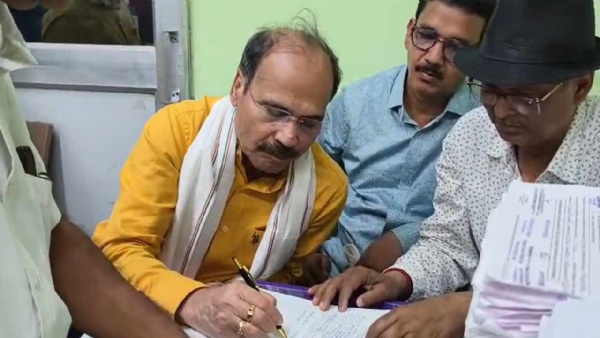
Addressing a press conference in Berhampore on Wednesday, Chowdhury said the ongoing split within the TMC reflected the same politics of defections and realignments that, according to him, had helped shape the party’s rise in the past.
“The same game is being played. The only difference is that the umpire and the referee have changed,” Chowdhury remarked. Referring to Mamata Banerjee, he added, “The game of political defections that you once started, and in which you were the umpire and referee, is continuing today. The players are largely the same, but those controlling the game have changed.”
The Congress leader alleged that Banerjee had earlier sought to prevent the Congress from effectively functioning as the opposition in the West Bengal Assembly and said the current developments were a repetition of past political events.
His comments came on a day of significant political turmoil within the Trinamool Congress. Earlier, expelled TMC MLA Ritabrata Bandyopadhyay was recognised as the Leader of the Opposition in the West Bengal Assembly after securing the support of 58 legislators. Following approval by Assembly Speaker Rathindra Basu, Bandyopadhyay was also handed the office designated for the Leader of the Opposition.
Commenting on the relationship between the rebel TMC legislators and the BJP, Chowdhury suggested that both sides were maintaining a cautious distance from each other. Invoking the popular Covid-era slogan, he said, “Two yards of distance is very important.”
According to Chowdhury, the BJP understands that directly inducting the rebel legislators into the party could prove politically costly, while the dissident MLAs are also aware that an immediate switch could trigger backlash from their voters.
He claimed that several of the rebel legislators had been elected from Muslim-majority constituencies and might face public resentment if they openly joined the BJP. At the same time, he alleged that leaders facing corruption-related allegations could eventually find themselves politically dependent on the ruling party.
Chowdhury further argued that the Trinamool Congress appeared to be rapidly losing cohesion just a month after its defeat in the Assembly elections. He claimed that resignations by party functionaries and elected representatives were increasing across the state and that the party’s influence in several local bodies was weakening.
Recalling the origins of the Trinamool Congress, the Congress leader noted that Mamata Banerjee herself had broken away from the Congress to form a new political party in 1998 following leadership disputes within the state unit of the Congress.
He said that while the TMC had ended the 34-year rule of the Left Front in 2011 and subsequently won three consecutive Assembly elections, its defeat in the 2026 Assembly polls had triggered a serious internal crisis.
According to Chowdhury, the current developments indicate the beginning of a new political phase in West Bengal, with the Trinamool Congress facing one of the most challenging periods in its history.
Hindusthan Samachar / Satya Prakash Singh



03 Jun 2026