TEHRAN/WASHINGTON/BEIRUT, 28 June (H.S.): The United States carried out a second consecutive day of airstrikes against Iran on Saturday, following a drone attack on a commercial vessel near the Strait of Hormuz that Washington blamed on Tehran. The renewed military action has further heightened tensions across the Middle East, with air raid sirens sounding in Bahrain and Kuwait and fears growing over the collapse of fragile regional peace efforts.
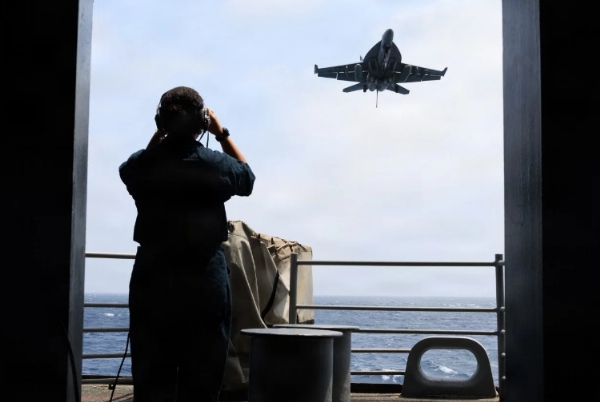
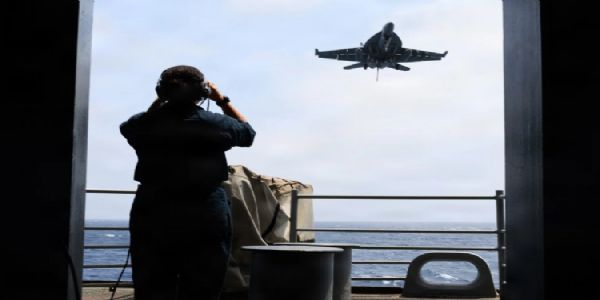
According to reports by CNN, Al Jazeera, ABC News and CBS News, US forces targeted multiple Iranian military sites, including locations in Sirik, Bandar-e Lengeh and Qeshm Island. The US Central Command (CENTCOM) said American fighter aircraft struck around 10 military targets in and around the Strait of Hormuz, including missile and drone storage facilities as well as coastal radar installations. CENTCOM also released blurred footage of the strikes on social media.
Iran's Islamic Revolutionary Guard Corps (IRGC) confirmed that US forces had bombed five coastal locations during the latest wave of attacks. The IRGC warned that any further aggression would be met with a strong response. It also claimed that under the interim understanding reached between Iran and the United States earlier this month, Tehran retains authority over regulating maritime movement through the Strait of Hormuz. According to the IRGC, the latest US operations violated that understanding, adding that vessels breaching the rules would now face stricter enforcement.
US President Donald Trump defended the military action, accusing Iran of violating the ceasefire. He said the strikes were launched in response to Iranian drone attacks on a Panama-flagged oil tanker carrying more than two million barrels of crude oil. According to CENTCOM, the overnight Iranian drone assault prompted the retaliatory strikes on Iranian military infrastructure.
President Trump also warned that the United States could launch a much larger military campaign if Iran continued its actions. He stated that such a scenario could threaten the very existence of the Islamic Republic of Iran.
Meanwhile, Iran responded by launching attacks on US military facilities in Bahrain and Kuwait, according to statements carried by Iran's IRNA and Tasnim news agencies. The IRGC said its naval and aerospace forces fired ballistic missiles and drones at the Ali Al Salem Air Base in Kuwait and the US Navy's Fifth Fleet headquarters at Port Salman in Manama, Bahrain. It described the attacks as retaliation for the US bombing of Iran's coastal regions.
The Kuwaiti military said it was responding to incoming missile and drone threats, while air raid sirens were activated in both Kuwait and Bahrain. Oman also condemned the reported Iranian drone attack targeting Bahrain.
The conflict has also affected Lebanon. Just one day after Lebanon and Israel signed a US-backed framework agreement aimed at easing hostilities, Israeli forces carried out fresh airstrikes in southern Lebanon, reportedly killing at least one person.
Lebanese President Joseph Aoun appealed to President Trump to help stop what he described as Israeli violations of the agreement. At the same time, the Iran-backed Hezbollah movement rejected the security framework, calling it a surrender of sovereignty and declaring it unacceptable.
The current conflict has continued since late February, when President Trump announced a major military campaign against Iran on February 28. Since then, the United States and Israel have carried out extensive strikes on Iranian military, government and strategic infrastructure, significantly escalating instability across the Middle East.
Although diplomatic efforts have continued, including talks between US and Iranian representatives at Switzerland's Bürgenstock Resort over the weekend based on an agreement signed last week, the latest exchange of military strikes has cast serious doubt over prospects for a lasting ceasefire and a negotiated settlement.
---------------
Hindusthan Samachar / Jun Sarkar
28 Jun 2026