Washington, 29 May (H.S.): The United States State Department announced Thursday that it will designate two of Brazil's most violent criminal organizations as foreign terrorist organizations, a move that has sparked diplomatic tension ahead of Brazil's October presidential election.
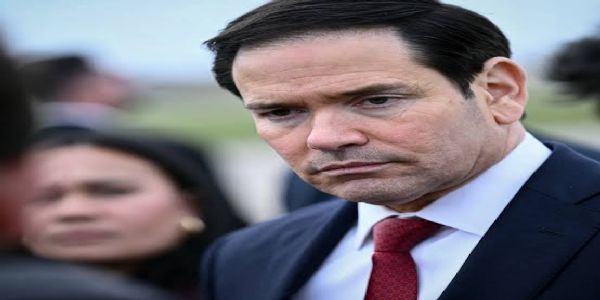
Secretary of State Marco Rubio confirmed that the First Command of the Capital (PCC) and the Red Command (CV) will be officially labeled as foreign terrorist organizations starting June 5. Until then, both groups are being referenced as specially designated global terrorists .
Two Massive Criminal Empires
According to experts, both organizations combined likely have more than 50,000 members. The PCC, based in São Paulo, is Brazil's largest crime syndicate with an extensive international drug trafficking network. The CV, headquartered in Rio de Janeiro, is one of Brazil's oldest and most powerful criminal groups, dominating drug trade in several cities and involving itself in extortion, theft, and arms trafficking.
CV and PCC are two of the most violent criminal organizations in Brazil. Together, they command thousands of members and have orchestrated brutal attacks against Brazilian police officers, public officials, and civilians, Rubio said.
While the gangs' primary connections are in Europe rather than North America, the Trump administration has increasingly turned to aggressive military and legal measures to combat drug trafficking in the Western Hemisphere, including deadly boat strikes against what it calls narcoterrorists in the Caribbean Sea and eastern Pacific Ocean.
Brazilian President Luiz Inácio Lula da Silva has repeatedly stated he will interpret the designation as interference favoring his political rival, Senator Flávio Bolsonaro, in October's presidential elections. The 71-year-old former President Jair Bolsonaro, currently serving a 27-year prison sentence for leading a coup attempt, cannot run, but his son Flávio is his handpicked heir.
Ahead of the election, supporters of Jair Bolsonaro and his presidential hopeful son have aggressively called for the designation, accusing Lula of not fighting these criminal groups effectively.
Public security is a key topic for social economic development. Organized crime is an evil that must be fought, said Celso Amorim, Lula's special adviser for foreign affairs and former foreign minister. International cooperation is welcome, especially in matters of money laundering and arms trade. But pretext for intervention is unacceptable.
Designating criminal cartels in Latin America as foreign terrorist organizations is a key strategy of Trump's administration. The move allows the U.S. government to impose financial sanctions on these groups and their affiliates. The administration has already designated more than a dozen gangs across Latin America as terrorist entities, including prominent Mexican drug cartels.
Political analyst Thomas Traumann says Rubio's move is about the Trump administration trying to meddle in the election after a request by Flávio Bolsonaro during his trip to Washington .
Recent Law Enforcement Wins
Brazilian authorities have scored significant victories against these groups. In August, federal police dismantled part of the PCC's money laundering network through an operation called Hidden Carbon. The operation found companies linked to the PCC laundering at least 6 billion reals ($1.1 billion) in recent years through gas stations, perfume shops, and a financial services company in São Paulo.
Earlier Thursday, Brazilian prosecutors launched a mega-operation targeting fraud, money laundering, and tax evasion in the latest phase of an investigation into criminal gangs like the PCC and CV.
Experts note that neither Jair Bolsonaro nor Lula has been hugely successful in fighting the two criminal groups, although Brazil's federal police and prosecutors have conducted several raids against them in recent years.
The foreign terrorist designation goes into effect on June 5, 2026. This classification enables tighter financial sanctions, travel restrictions, and enhanced law enforcement cooperation against the organizations and anyone supporting them.
Brazil's president did not respond to a request for comment from The Associated Press. Senator Flávio Bolsonaro is yet to comment on the decision .
The designation is expected to become a major wedge issue in Brazil's presidential elections, with public security likely to dominate campaign debates as voters weigh national sovereignty against international cooperation on organized crime .
---------------
Hindusthan Samachar / Jun Sarkar
29 May 2026