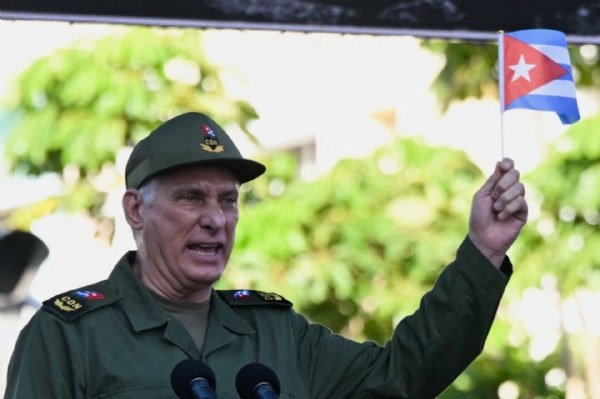
Havana, 19 May (H.S.): Tensions between Cuba and the United States intensified sharply on Monday after Cuban President Miguel Díaz-Canel warned that any potential American military action against the island nation could lead to “incalculable consequences.”
The warning came amid growing geopolitical friction following reports that Cuba had allegedly acquired hundreds of military drones from Russia and Iran, triggering concerns within American intelligence and defence circles. According to media reports citing U.S. intelligence officials, Washington is closely monitoring Havana’s military activities as speculation grows over possible American measures against Cuba’s communist leadership.
In a strongly worded statement shared on social media platform X, President Díaz-Canel asserted that Cuba “poses no threat” to the United States or any other nation. However, he stressed that the Caribbean country possesses the “absolute and legitimate right” to defend itself against any external aggression.
The Cuban leader’s remarks followed reports suggesting that Havana could be evaluating strategic options involving unmanned aerial systems near American military assets, including the U.S. naval base at Guantánamo Bay. While Cuban authorities did not directly confirm the reports regarding drone stockpiling, senior officials maintained that the nation would defend its sovereignty if threatened.
Cuba’s Ambassador to the United Nations, Ernesto Soberón Guzmán, also adopted a defiant tone while speaking to international media in New York. He stated that Cuba would resist any attempted invasion, recalling the failed U.S.-backed Bay of Pigs invasion during the 1960s.
Meanwhile, Washington escalated pressure on Havana by announcing fresh sanctions targeting Cuba’s intelligence agency and several senior government officials. The sanctions reportedly include restrictions on key ministers overseeing communications, energy, and justice, along with multiple senior military figures and Communist Party officials.
The administration of Donald Trump has significantly tightened economic and diplomatic pressure on Cuba in recent months. The United States has also moved to restrict oil supplies reaching the island, particularly by targeting shipments from Venezuela, Cuba’s primary energy supplier.
Analysts believe the tightening sanctions and energy restrictions have worsened Cuba’s ongoing humanitarian and economic crisis. The country has been struggling with severe fuel shortages, recurring nationwide blackouts, inflation, and supply chain disruptions affecting daily life across the island.
Cuban authorities have accused Washington of attempting to destabilise the country economically in order to justify future intervention. Havana maintains that the worsening fuel blockade has severely impacted electricity production, public transportation, and food distribution systems.
The latest developments also come amid reports that American authorities are considering legal action against Raúl Castro, the younger brother of late revolutionary leader Fidel Castro. U.S. media reports indicate that further political and legal pressure on Cuba’s leadership may be under consideration.
Despite the escalating tensions, Cuba continues to receive humanitarian assistance from allied nations. On Monday, the country received another shipment of aid from Mexico, including powdered milk and beans intended for children and elderly citizens affected by the economic crisis.
The shipment reportedly carried approximately 1,700 tonnes of humanitarian supplies and marked the fifth aid consignment sent by Mexico in recent months.
Hindusthan Samachar / Jun Sarkar
19 May 2026