New Delhi, 16 May (H.S.):
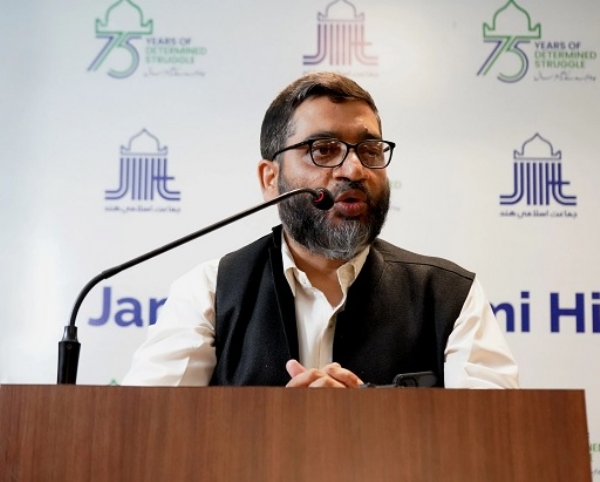
Jamaat-e-Islami Hind president Syed Sadatullah Husaini has expressed deep concern over the recent Madhya Pradesh High Court verdict that described the Kamal Maula Mosque as a temple. He said the ruling would have serious consequences for the credibility of the judicial system, the rights of minorities, religious freedom, communal harmony and the secular fabric of the country.
In a statement, the Jamaat president said the verdict raises important constitutional questions regarding the protection of religious rights under Articles 25 and 26 of the Constitution. For decades, the Bhojshala complex had been managed in a manner that allowed both communities to follow their respective religious practices. Removing the established right of one community to worship and giving priority to another not only disrupts a long-standing arrangement but also risks weakening the principle of equal respect for all religions.
He said such developments must be viewed with extreme caution, keeping in mind the delicate balance required in a pluralistic and diverse society like India. Husaini said the suggestion that the Muslim community should be allotted alternative land in place of its established place of worship is also worrying.
Religious rights cannot be reduced merely to questions of physical space or relocation, because places of worship are deeply connected to historical continuity, identity and collective memory.
He said an approach that appears to displace one community from a historically shared or disputed site gives rise to feelings of alienation and injustice. He also said the Jamaat is deeply concerned about reliance on contested historical and archaeological interpretations in resolving such sensitive matters. Such views must be carefully examined to ensure that they do not unjustifiably favour one set of claims over another.
The Jamaat-e-Islami Hind president said this case should not be seen in isolation, but as part of a broader trend in which disputes related to religious places are being revived. He said the Places of Worship (Special Provisions) Act, 1991 is being ignored, even though its purpose was to preserve the religious character of places of worship as they existed at the time of Independence.
He said the 1991 Act must be followed both in letter and in spirit to prevent the reopening of historical disputes. The far-reaching consequences of weakening this principle could affect communal harmony and social stability. He said the matter should be resolved with constitutional morality, fairness and a commitment to justice for all communities.
---------------
Hindusthan Samachar / Jun Sarkar