Lucknow,
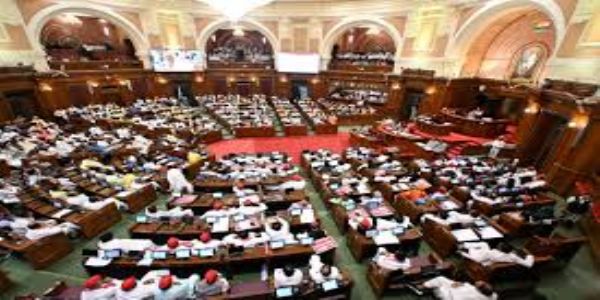
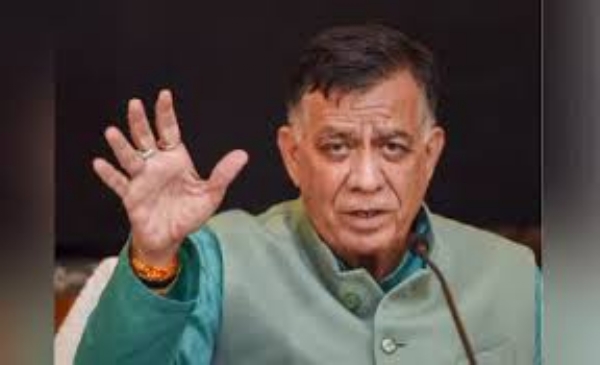
April 30 (HS): Leader of the Opposition in Uttar Pradesh Assembly Mata Prasad
Pandey objected to a motion moved on Thursday during the Assembly's one-day
special session here, claiming that things outside the scope of the state
administration could not be discussed. As soon as House proceedings began,
Parliamentary Affairs Minister Suresh Kumar Khanna informed members of the
Business Advisory Committee's recommendations.
In
response, Pandey, a former speaker of the Assembly, stated that the Rules of
Procedure prohibit debate or vote on any item that does not fall under the
competence of the state government. Implementation of the women's reservation
bill is solely the responsibility of Parliament, not the state government, and
hence should not be debated here.
Pandey
stated that the Samajwadi Party does not oppose women's empowerment or
reservation; rather, it supports them. However, the motion's precise
terminology, which states that 'obstacles' are being created regarding the
'Nari Shakti Vandan Adhiniyam', is offensive, he added, questioning where these
obstacles were being formed and where this specific issue originated. In
response, Parliamentary Affairs Minister Suresh Khanna stated, It is
regrettable that the leader of the opposition, who has previously served as
speaker of this House, is raising concerns about such an important issue.
Our motion focuses on women's empowerment, not their reservation. The central
government has control over reservation issues.
Khanna
noted that they were not arguing the subject of quota, but rather the
empowerment of Uttar Pradesh's women, who make up half of the state's
population. This resolution was introduced fully in conformity with Rule 103 of
the Assembly's Rules of Procedure, he stated. Citing the Rules of Procedure,
Assembly Speaker Satish Mahana issued a judgment confirming that the intended
discussion may go place. He stated that under Rule 103 of the Rules of
Procedure and Conduct of Business of the Uttar Pradesh Legislative Assembly, a
motion may be brought in the House with the speaker's agreement, and a discussion
on such a move is permitted.
The
Speaker finished by stating that there are no restrictions on a conversation
about women's empowerment. It is possible to discuss any issue of public
concern... In a parliamentary democracy, the authors of the Constitution did
not provide any precise procedures for discussing specific topics. Various
societal or public topics may be discussed with the permission of the House and
the speaker's assent. Mahana stated that the Legislative Assembly is competent
and sovereign in defining its own processes. Under Rule 103, the speaker's
judgment on the admissibility of a motion and its subject matter is final.
Hindusthan Samachar / Abhishek Awasthi