Washington, 22 April (H.S.):
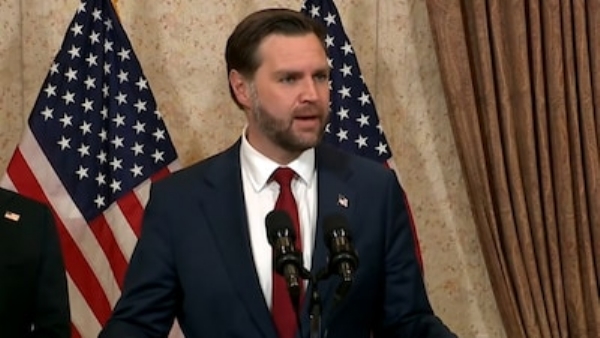
US Vice President JD Vance's anticipated journey to Islamabad for pivotal peace negotiations with Iran has been abruptly deferred, injecting fresh uncertainty into an already fragile truce set to expire imminently. The postponement stems from Tehran's reluctance to confirm participation, compounded by accusations of US unacceptable actions linked to the ongoing blockade of the Strait of Hormuz.
White House officials confirmed Vance remained in Washington on Tuesday, to engage in urgent policy consultations rather than boarding his scheduled flight to Pakistan's capital. A terse statement noted, Additional policy meetings are taking place at the White House in which the vice president will participate, underscoring the fluid dynamics as the ceasefire deadline loomed at midnight GMT.
Meanwhile, Iran's Foreign Ministry spokesman Esmail Baghaei articulated Tehran's position on state television, declaring no final decision on attendance due to contradictory messages, inconsistent behaviour, and unacceptable actions from the American side. He specifically decried the Hormuz blockade as maritime piracy and state terrorism, particularly citing two detained Iranian vessels, signaling deep-seated grievances impeding progress.
US special envoy Steve Witkoff and Jared Kushner, President Donald Trump's son-in-law, rerouted from Miami to Washington, their Islamabad-bound flight diverted per tracking data, to bolster high-level deliberations. President Trump, in a Truth Social post, affirmed the ceasefire's indefinite extension at Pakistan's behest attributed to leaders like Shehbaz Sharif and Asim Munir while vowing to sustain the naval blockade and military readiness until Iran proffers a unified proposal. This move buys time but preserves coercive pressure on Tehran's oil export lifeline.
Pakistan's Information Minister Attaullah Tarar publicly noted Iran's lack of formal commitment via X, even as Islamabad ramped up security with thousands of personnel patrolling airport routes. Regional actors, including China as Iran's key trading partner, loom large, with Foreign Minister Ishaq Dar convening separately with US and Chinese counterparts.
UN Secretary-General António Guterres hailed the extension as an important step toward de-escalation, fostering space for confidence between adversaries, though skepticism persists given Trump's prior bellicosity—he had warned of imminent strikes absent a deal. Iran's internal leadership fractures, as Trump described, further complicate unified responses, while heightened Islamabad security reflects fears of sabotage amid the high-stakes diplomacy.
As consultations intensify ahead of Wednesday's original deadline, the Vance-led talks—envisioned with Iranian Parliament Speaker Mohammad Bagher Ghalibaf—hang in precarious balance, with the Hormuz stranglehold emblematic of unresolved flashpoints.
---------------
Hindusthan Samachar / Jun Sarkar

18 Aug 2026