Hyderabad, April 2 (H.S.): The Department of Heritage, Government of Telangana, has identified prehistoric human burial sites in Motlagudem village of Damaravai mandal in Mulugu district following information received from local residents.
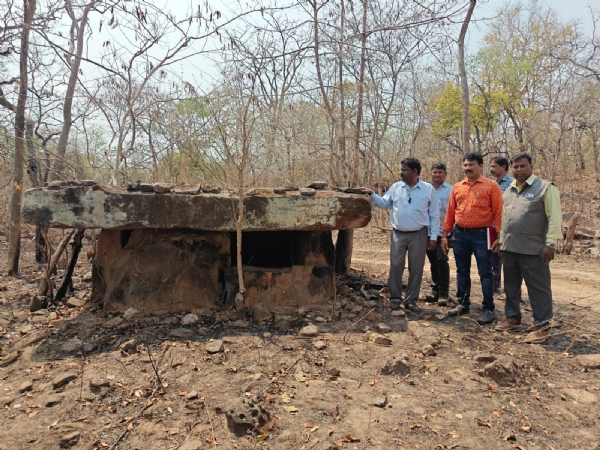
Acting on the directions of Special Chief Secretary Jayesh Ranjan, a technical team comprising Director Acharya Arjun Rao, Deputy Director Dr. P. Nagaraju and OSD A. Raju visited the village and examined the sites.
Officials said the discovery of Stone Age burial remains is significant as it confirms the presence of early human settlements in the Godavari river basin and provides historical evidence about their lifestyle, customs, occupations and social organisation.
The burial structures, located about 120 kilometres from Warangal, are locally known as “Rakasi Bandalu” (giant stones) and “Rakasi Guhalu” (giant caves). Some of the structures have been damaged over time, while others have been disturbed due to the use of stone slabs by locals for construction purposes. Stone troughs found inside some burial sites were also reportedly removed for use as water containers for livestock.
Such burial sites have been identified across several locations in the Eturnagaram agency area including Damaravai, Jaggaram, Gangaram, Rangapuram and Kamaram, as well as in parts of Mangapet mandal such as Mallur Gutta, Motlagudem, Komuraram, Chettupalli, Kanchanpalli, Galaba, Dongathogu and Gundala.
According to the technical team, the burial structures found at Kappalayi Gutta reflect the architectural skills of ancient communities. These dolmen-type burials were constructed using large sandstone slabs spread across areas ranging from about 4 to 25 metres. Each structure consists of four vertical stone slabs topped by a large capstone, with a stone trough-like structure placed inside.
The structures are arranged with distances ranging from about 5 to 100 feet between them, indicating a planned layout resembling an ancient settlement. The capstones are estimated to weigh between 10 and 20 tonnes. Spread across nearly 100 acres, the site is believed to be among the largest clusters of dolmen burial structures in the country.
Officials said such structures are believed to reflect early human beliefs related to life after death. Similar burial traditions have been found in several South Indian states including Telangana, Andhra Pradesh, Karnataka, Tamil Nadu and Kerala.
The Heritage Department said the presence of such significant archaeological remains in Telangana highlights the state’s rich historical legacy.
---------------
Hindusthan Samachar / Indrani Sarkar
18 Aug 2026