New Delhi, 16 April (H.S.):
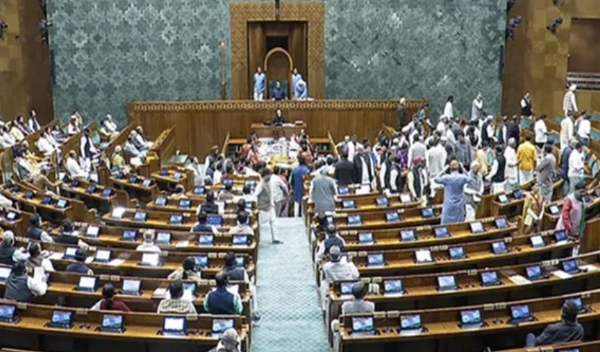
The Indian government will table three pivotal bills in a special parliamentary session today, paving the way for transformative electoral reforms. These measures aim to activate women's reservation ahead of the 2029 Lok Sabha elections and redraw constituency boundaries after decades of stasis, signaling a bold step toward gender parity and equitable representation.
The trio of legislation includes the Constitution (131st Amendment) Bill, 2026; the Delimitation Bill, 2026; and the Union Territories Laws (Amendment) Bill, 2026. At their core lies the Constitution (131st Amendment) Bill, a cornerstone proposal designed to enforce 33% reservation for women in the Lok Sabha and state legislative assemblies by kickstarting the delimitation process.
Convened specifically for April 16, 17, and 18, this extraordinary session seeks to amend and operationalize the Nari Shakti Vandan Adhiniyam (2023), which mandates one-third seats for women in national and state legislatures. Officials express confidence that opposition parties will rally behind women's reservation, minimizing resistance on this front.
Tensions, however, loom over the delimitation proposals, which propose expanding seats in the Lok Sabha and state assemblies. Southern states, wary of losing parliamentary clout due to their superior population control, fear a northward shift in seats post-redistricting. The government has firmly dispelled these concerns, assuring a uniform 50% increase in seats for every state.
The Lok Sabha's cap is set at 850 seats, with no reductions envisioned for any region.
Since 1976, Lok Sabha seats have remained frozen – a new delimitation is not just overdue, but imperative, government spokespersons emphasized.
The exercise will hinge on the last published census (2011), with state-specific delimitation commissions engaging all political stakeholders before finalizing allocations. While the Lok Sabha's expansion is capped, state assembly increases remain flexible.
Debate on the bills kicks off today in the Lok Sabha with a 18-hour window, culminating in voting on April 17. Passage there will propel them to the Rajya Sabha on April 18 for 10 hours of discussion followed by a vote.
The current Lok Sabha comprises 543 seats, underscoring the scale of proposed growth.
---------------
Hindusthan Samachar / Jun Sarkar
15 Apr 2026