New Delhi, 01 April (H.S.):
India has launched the first phase of Census 2027, kick‑starting what is being billed as the world’s largest and India’s first fully digital census exercise. The House Listing and Housing Census (HLO) operation formally began on 1 April 2026, running until 30 September 2026 across all states and Union Territories, with the government also introducing a country‑wide self‑enumeration option that allows citizens to digitally record their household details for the first time.
For this census, the government has replaced the traditional paper‑based system with a digital‑first model: field staff use smartphones and dedicated mobile applications to capture and upload data, while citizens can self‑enumerate online via a secure portal available in 16 Indian languages, including Hindi and English. The portal lets households log in using their mobile number and basic identification details, fill in the census schedule at their convenience, and generate a unique Self‑Enumeration ID (SE ID) that can later be verified by enumerators during house‑to‑house visits.
Officials say the self‑enumeration facility has been rolled out initially in eight states and Union Territories—Andaman and Nicobar Islands, Goa, Karnataka, Lakshadweep, Mizoram, Odisha, Sikkim, and the New Delhi Municipal Council and Delhi Cantonment Board areas—with about 55,000 families submitting data on the first day alone, reflecting early interest in the digital mode.
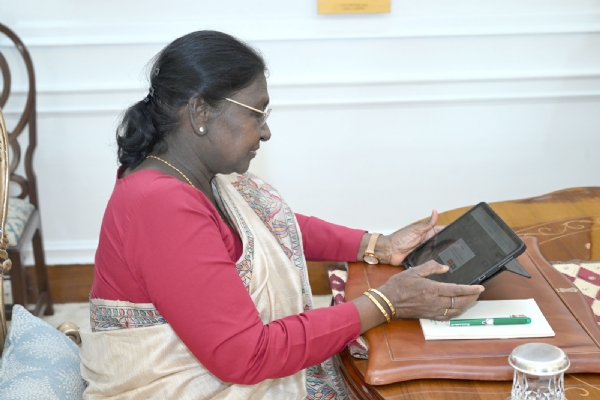
To symbolically mark the launch, President Droupadi Murmu became the first individual to complete self‑enumeration, setting an example of active citizen participation. She was followed by Vice‑President C. P. Radhakrishnan, Prime Minister Narendra Modi and Union Home and Cooperation Minister Amit Shah, who also filed their own household details online.
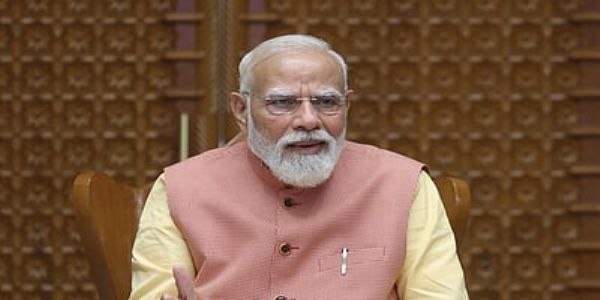
Addressing the nation, the Prime Minister urged people to proactively enrol their families and engage in the census process, calling it the foundation for future development plans and welfare schemes. “Census is not just a statistical exercise—it is a pillar of evidence‑based governance,” he said, emphasising the importance of public cooperation in making the exercise accurate and inclusive.
Under the first phase, the House Listing and Housing Census, enumerators will visit every habitation between 1 April and 30 September 2026 (within a 30‑day window set by each state/UT) to record details about dwellings, available amenities, assets and infrastructure. The government has notified a 33‑question schedule for this phase, covering aspects such as housing‑condition, ownership, utilities, sanitation and basic facilities, which will help design targeted welfare programmes, urban planning and infrastructure projects.
To maximise digital uptake, the state notification reserves a 15‑day window just before each Enumeration Block’s 30‑day house‑listing period exclusively for self‑enumeration. This gives residents time to file their data online before the enumerator’s visit, reducing doorstep‑time and improving both speed and accuracy. Those who do not opt for self‑enumeration will still be covered through the conventional door‑to‑door enumeration, as in past censuses.
The government has reiterated that all data collected under the Census Act, 1948 will be strictly confidential and used only for statistical and policy‑making purposes. The digital platforms for Census 2027—developed with the help of Centre for Development of Advanced Computing (C‑DAC) and others—employ strong end‑to‑end encryption, multi‑level authentication and robust cyber safeguards to protect personal information and guard against unauthorised access.
Officials note that the shift to digital collection will significantly reduce errors, duplication and delays while enabling near‑real‑time data dashboards for planners and administrators. The move is also expected to cut long‑term processing costs and improve the quality of India’s socio‑economic statistics.
Census data serves as the backbone of governance, informing decisions on development planning, infrastructure, education, health, employment and social‑security schemes for the next decade.
Census 2027 is the 16th national census and the first to be conducted in two digital phases: the ongoing housing and house‑listing phase in 2026, followed by the population enumeration phase in 2027, with the reference date for most of the country fixed at 1 March 2027.
Policy experts say the hybrid model—self‑enumeration plus field enumeration—represents a major leap toward data‑driven governance, giving policymakers a deeper, more granular view of India’s demographic and housing landscape. The government is now pushing an awareness and outreach campaign, urging citizens to complete self‑enumeration or cooperate with enumerators so that the census truly reflects the diversity and dynamism of the world’s most populous democracy.
---------------
Hindusthan Samachar / Jun Sarkar