New Delhi, 01 April (H.S.):
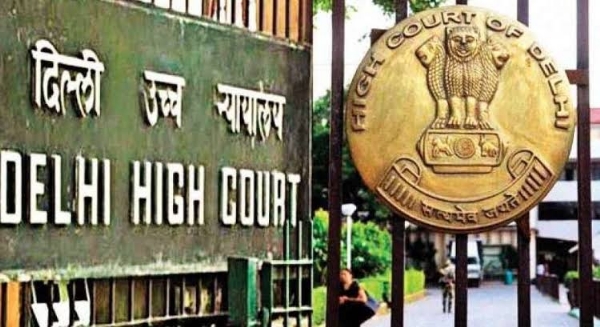
The Delhi High Court has issued notice to former Delhi Chief Minister Arvind Kejriwal in a case where the Enforcement Directorate (ED) has moved to challenge his acquittal by a lower court for allegedly skipping its summons in the Delhi excise‑policy money‑laundering matter.
A bench of Justice Swarana Kanta Sharma ordered that the matter be listed for further hearing on 29 April.
The case stems from the Delhi excise‑policy scam probe, under which the ED had earlier issued multiple summonses to Mr. Kejriwal to appear for questioning. The central agency then filed two criminal complaints at the Rouse Avenue Courts, accusing him of deliberately failing to comply with those notices.
However, on 22 January 2026, the Additional Chief Judicial Magistrate (ACJM) Paras Dalal at Rouse Avenue acquitted Mr. Kejriwal, holding that the ED had not proved beyond reasonable doubt that he had intentionally disobeyed the summonses. The ED has now approached the High Court through an appeal, seeking to set aside that acquittal and renew proceedings against him.
In the present order, the High Court has:
--recorded a notice to Mr. Kejriwal, calling upon him to file his response, and
--directed the trial‑court records to be called up to enable the court to examine the basis of the acquittal order.
Separately, in the broader Delhi excise‑policy case registered by the Central Bureau of Investigation (CBI), the same Rouse Avenue court had discharged Mr. Kejriwal and 22 other accused persons on 27 February 2026, after concluding that the CBI’s case could not withstand judicial scrutiny. The CBI has already moved the Delhi High Court to challenge that discharge order.
The High Court has, in the CBI‑led litigation track, stayed the trial‑court’s adverse remarks about the CBI and its witnesses, while keeping the substantive discharge order under review as part of the pending appeal.
Thus, the Delhi liquor‑policy‑related legal saga now runs on multiple parallel tracks: the ED’s summons‑compliance issue, the CBI‑led discharge appeal, and the main money‑laundering case, with the High Court increasingly positioned as the central forum for resolving key questions around the scope of ED summonses, evidentiary standards and political‑figure immunity.
---------------
Hindusthan Samachar / Jun Sarkar