Dhaka, 01 April (H.S.):
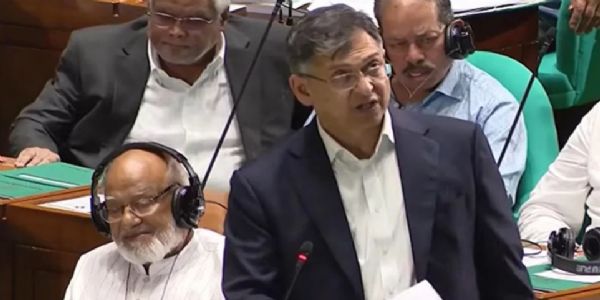
Home Minister Salahuddin Ahmed fiercely criticized the July 2025 National Charter (Constitutional Reform) Implementation Order, 2025 as an endless document of deception and national fraud during late-night parliamentary debate on Tuesday.
Responding to opposition leader's discussion, he asserted the order lacks any legal validity from inception.
Ahmed accused the interim government of excluding political parties' notes of dissent before presenting the document, equating it to national betrayal. He challenged the President's authority post-April 7, 1973, labeling the order void ab initio—neither ordinance nor law.
Critique of Referendum and Interim Role
The minister condemned the referendum ballot forcing yes/no answers to four distinct questions, arguing laws cannot be imposed on public will. He stressed caretaker governments lack jurisdiction over fundamental national issues and criticized the Election Commission for swearing in non-existent Constitutional Reform Council's members, violating constitutional oaths.
Clarifying BNP stance, Ahmed affirmed full commitment to the historically signed July Charter but demanded politically consensual reforms over illegal orders. He claimed public mandate via 51% votes and proposed a special parliamentary committee including all represented parties and independents to draft consensus-based constitutional amendments for parliamentary adoption.
Opposition Backlash
Opposition leader and Bangladesh Jamaat-e-Islami Amir Shafiqur Rahman accused the Law Minister of misrepresenting his statements during reforms debate. In a post-session press briefing, he clarified rejecting proportional committee representation, demanding equal bilateral participation for positive outcomes.
Shafiqur emphasized parliament's formation addressed unfulfilled aspirations from 1952 Language Movement, 1971 Liberation War, 1990 Mass Uprising, and 2004 public revolt. He noted six interim reform commissions and National Consensus Commission finalized July Charter proposals after extensive dialogue, mandating council session within 30 working days—yet unimplemented.
---------------
Hindusthan Samachar / Jun Sarkar