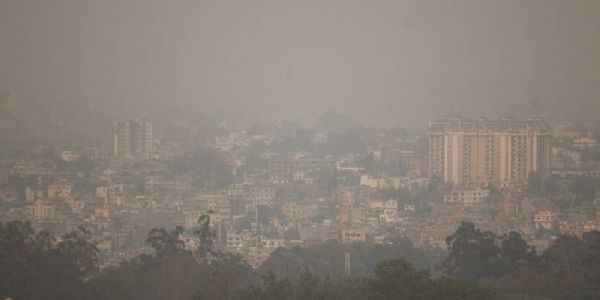
Kathmandu, 09 March (H.S.): Nepal's capital is grappling with severe air pollution, as the city's Air Quality Index (AQI) hovers perilously close to 200—classified as very unhealthy and posing risks to all residents.
Experts pinpoint ultrafine PM2.5 particles as the primary culprit, which are highly harmful and especially dangerous for children, the elderly, and those with pre-existing conditions.
Department of Environment Director General Gyan Raj Suvedi attributes the crisis to urban emissions compounded by adverse weather—stagnant winds and scant rainfall trap smoke, dust, and pollutants within the valley. Diesel vehicles exceeding emission norms, industrial activities, construction dust, biomass burning, and household fuels exacerbate the smog.
Chronic Pollution WoesData reveals Kathmandu's longstanding battle: Late 2025 saw average PM2.5 levels at 45.1 µg/m³ (AQI ~128)—nearly nine times the World Health Organization's annual safe limit of 5 µg/m³. Currently ranking third among the world's most polluted major cities, the valley's air has remained unhealthy for 30 straight days.
Rapid urbanization has spiked energy use, traffic, and industry, elevating PM2.5, carbon monoxide, and nitrogen dioxide levels. Influx from surrounding areas and seasonal forest fires further darken the skies.
Health Alerts Issued
Experts urge minimal outdoor exposure during peak pollution hours, with relief expected only from weather shifts and stricter emission controls.
---------------
Hindusthan Samachar / Jun Sarkar