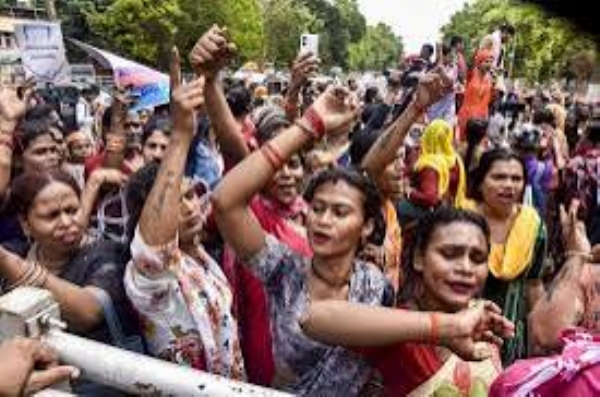
Kolkata, 21 March (H.S.): Members of Kolkata’s queer community and legal experts have raised serious concerns over the proposed Transgender Persons (Protection of Rights) Amendment Bill, 2026, alleging that it could restrict the right to self-identification of transgender persons.
The Bill, recently introduced in Parliament by Union Minister for Social Justice and Empowerment Virendra Kumar, has drawn criticism for proposing a narrower definition of transgender persons and introducing additional procedural requirements for legal recognition.
Social activists and legal experts argue that the proposed changes run contrary to the spirit of the landmark 2014 NALSA vs Union of India judgment, in which the Supreme Court recognised the right of individuals to determine their own gender identity without mandatory medical intervention.
Noted queer author and rights activist Pawan Dhall said the proposed legislation could restrict the definition of transgender persons and may require medical certification for legal recognition. He warned that such provisions could undermine the autonomy of transgender individuals and force them into medical scrutiny. He also demanded that the Bill be referred to a Parliamentary Standing Committee for wider consultation.
Senior advocate of the Calcutta High Court, Kaushik Gupta, also expressed concern, stating that the revised definition could adversely affect members of the trans-men community. He further argued that the proposed screening process for gender recognition could be discriminatory and that nationwide consultations should have been conducted before introducing such provisions.
Queer rights activist and social media influencer Devika Barua questioned why members of the transgender community should be required to prove their identity when no such requirements exist for those identifying as male or female. She described the issue as one involving fundamental human rights and the right to privacy.
Transgender rights activist Dr Ranjita Sinha warned that the proposed amendments could weaken constitutional values and potentially exclude many gender-diverse individuals from legal recognition and protection.
She emphasised that gender identity cannot be confined to medical diagnoses or administrative certification, describing it instead as a matter of dignity, personal autonomy and constitutional rights. She added that the transgender community has historically faced discrimination and social stigma, and any legislation should aim to strengthen their rights rather than restrict them.
Hindusthan Samachar / Satya Prakash Singh
21 Mar 2026