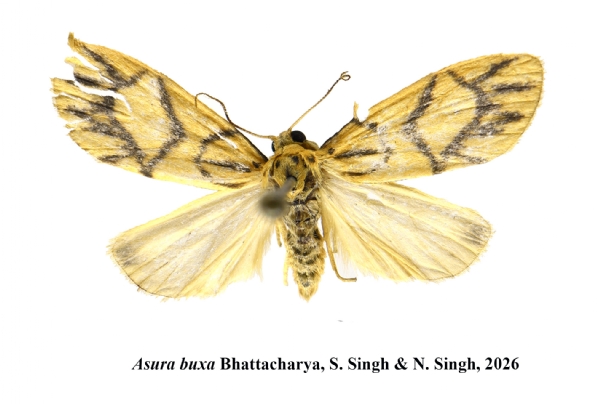
Kolkata, 12 March (H.S.): Scientists of the Zoological Survey of India (ZSI) have discovered two new species of lichen moths belonging to the order Lepidoptera, marking a significant achievement in the field of Indian entomology. In addition, seven other species have been recorded for the first time from the Indian Himalayan region.
According to an official statement issued by the institution on Thursday morning, the findings were published on March 2, 2026, in an international taxonomic research journal. The study presents the scientific description of the newly identified species by a team of Indian researchers.
ZSI Director Dr. Dhriti Banerjee described the discovery as an important contribution to the documentation of India’s moth biodiversity. She noted that research on lesser-studied but evolutionarily significant groups such as Lepidoptera is essential for understanding ecosystem functioning and identifying bio-indicators of air pollution in the Himalayan region. She also emphasized that the discovery highlights the need for sustained taxonomic research in biodiversity-rich regions.
The research team included Dr. Navneet Singh of ZSI Kolkata, Dr. Santosh Singh of the Central Zonal Regional Centre in Jabalpur, and research scholar Srishti Bhattacharya from ZSI Kolkata. The species were identified from specimens collected from Golitar in Sikkim and Panijhora in West Bengal.
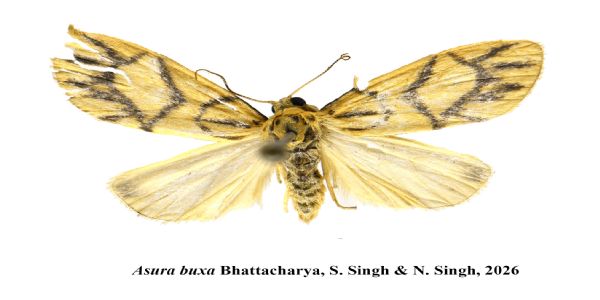
According to the scientists, the species were distinguished based on their morphological characteristics, including body structure, wing coloration and patterns, micro-structural features, and distinct reproductive anatomy.
Researchers also highlighted the ecological importance of lichen moths. Their caterpillars depend on lichens, which are highly sensitive to air pollution. As a result, these moths are considered important natural indicators of environmental health and air quality.
Hindusthan Samachar / Satya Prakash Singh
12 Mar 2026