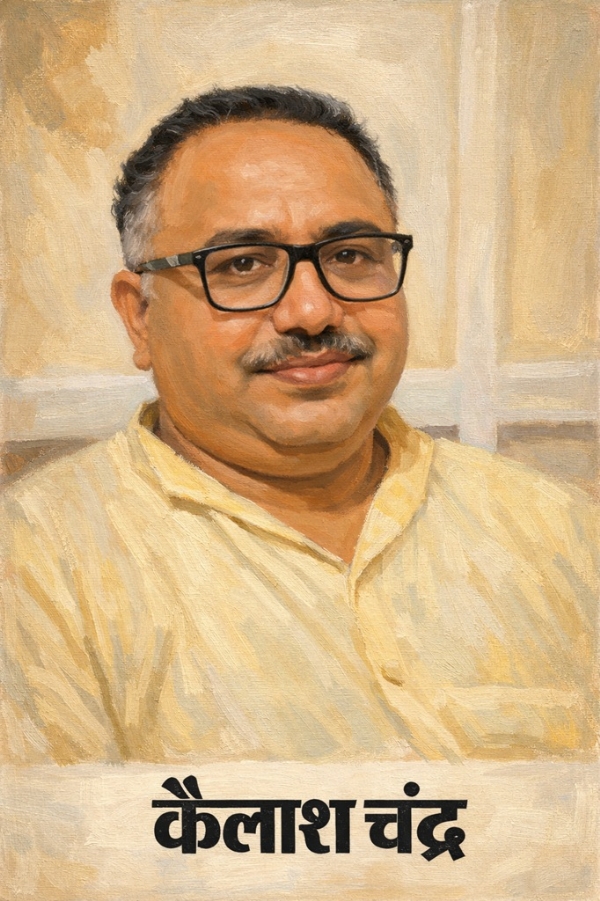
- Kailash Chandra
In the modern age, humanity is advancing at an extraordinary pace. Scientific innovation, economic expansion, and political influence have reached heights never witnessed before in human history. Nations are stronger, technology is smarter, and individuals are more connected than ever. Yet, alongside this rise in power and capability, there is a disturbing decline in character, morality, and human sensitivity. The world today stands at a paradoxical moment: while material progress continues to accelerate, the moral and ethical foundations of society appear to be weakening.
Power, by itself, is neither good nor evil. Its value depends entirely on the character of the person who holds it. When power is guided by wisdom, integrity, and compassion, it creates progress, stability, and harmony. But when it is controlled by selfishness, greed, and arrogance, it becomes destructive. Authority without virtue does not build a society; it tears it apart from within. This is the silent crisis of our time.
No matter how influential, wealthy, educated, or admired a person becomes, if their moral and social character is corrupt, they pose a grave danger to society. History has repeatedly shown that the misuse of authority and wealth erodes the foundations of nations. When individuals in positions of influence prioritize personal gain over collective welfare, corruption spreads like a disease. Institutions weaken, trust disappears, and people begin to lose faith in justice and fairness.
This crisis is not limited to any one country. In today’s globalized world, moral decline is visible across continents. The relentless pursuit of wealth, fame, and control has created a culture where success is often measured by material achievement rather than ethical conduct. Hedonism and consumerism dominate lifestyles. Digital addiction has replaced meaningful human connections. Artificial popularity has taken the place of genuine respect. The race for resources has become intense and often ruthless.
Powerful nations, massive corporate empires, and influential global institutions claim to protect human values and promote development. They speak the language of welfare, human rights, and progress. Yet, behind this carefully crafted image lies a troubling reality. The abundance of wealth and resources has, in many cases, made these systems indifferent to human suffering. Greed drives decisions. Environmental destruction continues in the name of growth. Technological progress sometimes leads to psychological and social enslavement. Cultural traditions are slowly eroded in the rush toward modernization.
The entertainment industry glorifies exaggerated heroes who save the world on screen, while real world actions often contribute to division, conflict, and exploitation. Nations that proudly recite the values of democracy and equality sometimes participate in wars, resource exploitation, and economic domination. The gap between words and actions has become too wide to ignore. The grand performance of caring for humanity can no longer hide the hypocrisy that lies beneath it.
The speed at which the world is moving toward value less living is alarming. Ethics are increasingly treated as optional, and success is often detached from responsibility. This moral crisis has now taken the shape of a global epidemic. In such a time, the role of India becomes deeply significant.
India is not just a geographical entity; it is a civilization that has, for thousands of years, emphasized balance, compassion, truth, and collective well being. Its cultural ethos is rooted in the principles of self restraint, duty, and harmony. The idea that the world is one family, the emphasis on righteous conduct, and the focus on inner character have always been at the heart of Indian thought. In an age where moral confusion is spreading rapidly, these timeless values can serve as a guiding light.
India’s responsibility today is not limited to protecting its own society. It also carries the potential to guide the world toward moral balance and human sensitivity. But this responsibility begins at home. The people of India must first protect themselves from the same forces that are weakening societies across the globe, unchecked ambition, blind materialism, and the erosion of character.
This is a time for deep introspection. Each individual must ask difficult but necessary questions. Is our power governed by our character? Does our education make us wise and responsible, or merely skilled and ambitious? Do we connect our personal success with integrity and social contribution? Do we place national and societal interest above personal benefit?
These questions define the true spirit of patriotism. Loving one’s nation is not limited to words, celebrations, or slogans. The real defense of a country does not take place only at its borders. It happens every day in the choices people make. It is reflected when a person chooses honesty over corruption, responsibility over convenience, and truth over deception.
When an individual protects their character, they protect their nation. Every act of integrity strengthens society. Every act of kindness builds unity. Every decision guided by conscience strengthens the moral backbone of the country. And when an entire society chooses to safeguard its ethical foundation, it becomes a lighthouse for a world struggling in darkness.
The dharma of this age, our highest duty, is to uphold morality, truth, and righteous conduct. In a time dominated by information, the true essence of education must not be forgotten. Education is not merely about gathering knowledge or acquiring degrees. Its real purpose is to transform knowledge into wisdom and wisdom into moral action. Only then can education become a source of light for society.
The future of humanity depends not only on technological progress but also on moral awakening. If power continues to grow without character, the consequences will be severe. But if strength is guided by integrity, compassion, and responsibility, it can lead the world toward a more balanced and humane future.
India has the potential to keep alive the flame of values and humaneness. Its spiritual traditions, its emphasis on ethical living, and its belief in collective welfare can offer hope to a world that is increasingly losing its direction. But this hope will remain alive only if individuals take responsibility for their actions and their character.
When, with this awareness, we say, “Bharat Mata ki Jai,” the words should not be reduced to a slogan. They should become a solemn vow, a promise to protect character, to protect truth, and to protect the moral dignity of the nation. It is a commitment to ensure that progress is guided by conscience and that success is measured not only by wealth but by the good we bring to society.
Such a vow carries a deeper meaning. It is a pledge to create a future where humanity moves beyond greed and division. A future where development does not destroy nature. A future where power serves people rather than controlling them. A future where the timeless ideal of “Sarve Bhavantu Sukhinah” may all be happy is not merely recited but lived in spirit and action.
This is the moment to choose the path of character over convenience, values over vanity, and responsibility over selfish ambition. If India remains strong in its moral resolve, it can help restore balance not only within its own society but also across the world. In doing so, it will remind humanity that true strength lies not in domination, but in compassion; not in wealth, but in wisdom; and not in power, but in righteousness.
(The author is a social activist and columnist.)
---------------
Hindusthan Samachar / Mayank Chaturvedi