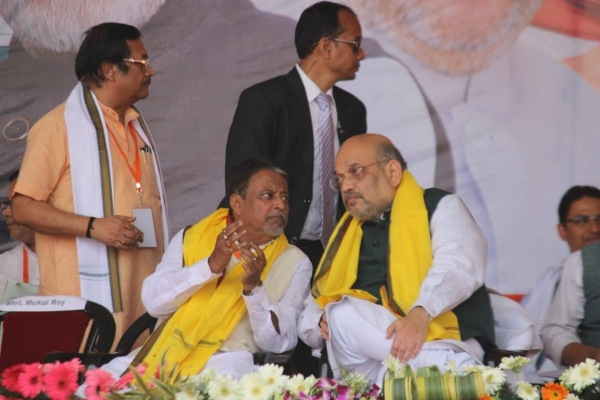
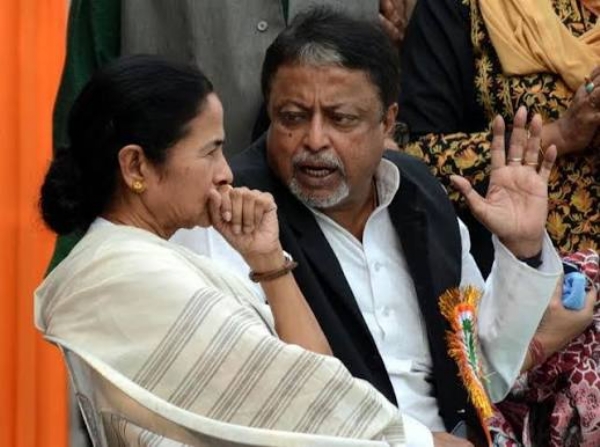
Kolkata, 24 February (H.S.) : Mukul Roy, often described as the “Chanakya” of West Bengal politics for his astute organisational skills and backroom strategy, passed away on Sunday night at the age of 71. His death marks the end of a significant chapter in the state’s political history.
Over a career spanning nearly four decades, Roy played a pivotal role in shaping West Bengal’s political landscape. He was instrumental in the rise of Mamata Banerjee to power in 2011, which ended 34 years of Left Front rule. Years later, he also became a key strategist for the opposition, contributing to efforts aimed at challenging her dominance.
Roy’s political journey traversed the Congress, the Trinamool Congress, and later the Bharatiya Janata Party, reflecting both his strategic adaptability and the shifting political currents of the state.
From Congress Roots to Trinamool Architect
Roy began his political career with the Youth Congress, gradually establishing himself as a capable organiser. In 1998, when Mamata Banerjee broke away from the Congress to form the Trinamool Congress, Roy stood firmly by her side.
As a founding member of the Trinamool Congress, he emerged as one of its principal organisational pillars. Appointed general secretary, Roy was widely regarded as the party’s chief strategist, credited with building its grassroots network during its formative years.
Rise to National Prominence
In 2006, Roy was elected to the Rajya Sabha for the first time, and in 2009 he became the Trinamool Congress leader in the Upper House. During the United Progressive Alliance government at the Centre, in which the Trinamool was a constituent, Roy first served as Minister of State for Shipping and later took charge as Railway Minister in 2012.
Though his tenure in the Railways was relatively brief, he was seen as one of the key national faces of the Trinamool Congress and an effective negotiator in Delhi’s political corridors.
Consolidating Power After 2011
Following the Trinamool Congress’s landmark victory in 2011, Roy played a significant role in consolidating the party’s hold across districts. He oversaw defections from rival parties and helped expand the party’s organisational footprint, earning a reputation as a master strategist capable of engineering complex political realignments.
His behind-the-scenes influence during this period led many in political circles to dub him the “Chanakya” of Bengal politics.
Rift with Leadership and Shift to BJP
Roy’s career, however, was not without controversy. His name surfaced in the Saradha chit fund case and the Narada sting operation, developments that affected his political standing. Over time, his relationship with the Trinamool leadership deteriorated. Political observers noted that the growing prominence of Abhishek Banerjee within the party coincided with Roy’s diminishing influence.
By 2017, the rift had become evident. In November that year, Roy left the Trinamool Congress and joined the Bharatiya Janata Party, a move that significantly altered the political equations in West Bengal.
Key Role in BJP’s Expansion
Within the BJP, Roy was entrusted with strengthening the party’s organisational structure in the state. He was credited with facilitating defections from the Trinamool and helping expand the BJP’s base ahead of the 2019 Lok Sabha elections, in which the party won 18 of West Bengal’s 42 seats — a dramatic improvement from its earlier performance.
In the 2021 West Bengal Assembly elections, Roy was elected as an MLA from the Krishnanagar Uttar constituency on a BJP ticket. However, within months, he returned to the Trinamool Congress, triggering legal and political controversy. He was subsequently disqualified as an MLA under the anti-defection law.
Final Years and Legacy
Despite rejoining the Trinamool, Roy never regained the central political stature he once commanded. As his health declined, he gradually withdrew from active politics. He had been battling multiple ailments for some time and had reportedly slipped into a coma in recent days.
Leader of the Opposition in the West Bengal Assembly, Suvendu Adhikari, expressed condolences, describing Roy as a senior and experienced political figure.
Mukul Roy’s career was defined by strategic acumen, political adaptability and an ability to operate effectively behind the scenes. Whether as an architect of the Trinamool’s rise or as a strategist in the BJP’s expansion, he remained a pivotal figure in Bengal’s turbulent political landscape. His passing leaves behind a legacy intertwined with some of the most transformative moments in the state’s recent history.
Hindusthan Samachar / Satya Prakash Singh