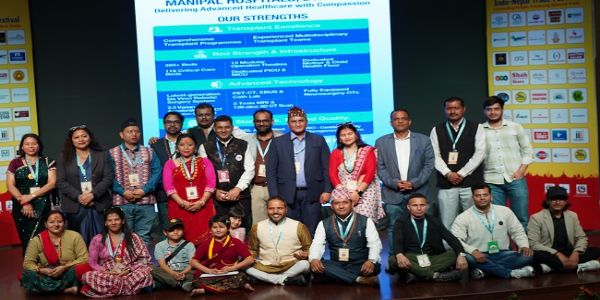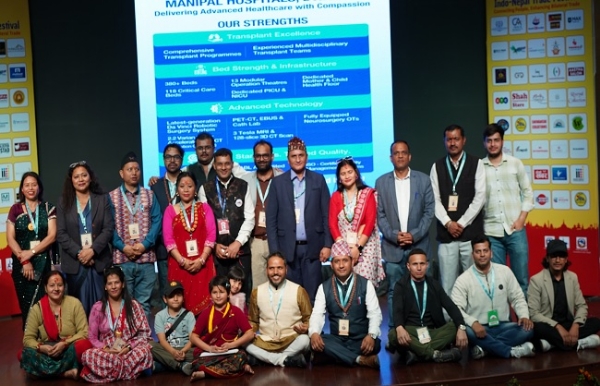
New Delhi, 23 February (HS): The three-day India–Nepal Trade Festival concluded in New Delhi with a focus on strengthening multidimensional economic, technical and cultural cooperation between the two countries.
Organised by the Everest Chamber of Commerce (ECCI) from February 20 to 22, the festival was supported by the Nepal Tourism Board and the Trade and Export Promotion Centre. More than 50 stalls were set up at the event held at PHD House in Hauz Khas, drawing participation from over 20,000 visitors.
The festival was inaugurated by Nepal’s Ambassador to India, Dr Shankar Prasad Sharma, who emphasised the need to further enhance tourism promotion. Additional Secretary to the Government of India, Munu Mahawar, said that under the India–Nepal Startup Partnership, 40 Nepali entrepreneurs had received training at the Indian Institute of Technology Madras, with some selected for incubation and investment support.
During the session on “Harnessing Himalayan Hydropower,” speakers highlighted the need to prioritise energy production, trade liberalisation, strengthening transmission lines and ensuring a stable policy environment. The concept of a “Himalayan Compute Corridor” was discussed, citing Nepal’s clean hydropower resources and favourable climate for data centres. Participants underlined the importance of strengthening domestic energy infrastructure and expanding transmission capacity before scaling up exports.
In the session on banking and fintech cooperation, discussions centred on digital payments, cross-border remittances, monetary coordination and cyber security. Speakers stressed the need for interoperability of QR-based payment systems and closer regulatory coordination to enhance financial inclusion, particularly in rural areas.
The tourism session focused on promoting the Ramayana Circuit, Buddha Circuit, adventure tourism, wellness tourism and destination weddings through an integrated strategy. Participants called for improved border management, clearer branding and policy consistency to maximise tourism potential.
Sessions on media and misinformation highlighted the importance of responsible communication in the digital age to safeguard bilateral trust. Discussions on youth engagement, health and education stressed collaboration in research, scholarships and traditional knowledge systems.
The “Vision 2030” session on innovation and artificial intelligence emphasised cooperation over competition, noting that Nepal’s green energy and young workforce present opportunities for collaboration in data centres and AI ecosystems. Speakers underlined the importance of policy clarity and technological safeguards in fostering long-term partnerships.
Over 10 high-level sessions and policy dialogues during the festival underscored that India–Nepal ties are expanding beyond traditional trade frameworks to include energy, digital economy, innovation, tourism, education and cultural cooperation.
---------------
Hindusthan Samachar / Jun Sarkar