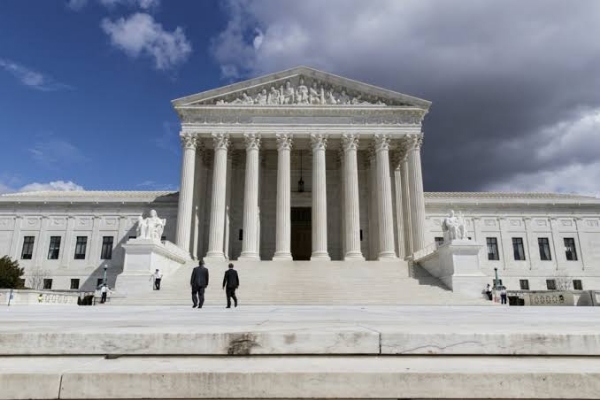
Washington, DC, 21 February (H.S.): The United States Supreme Court issued a landmark 6-3 ruling on Friday, striking down President Donald Trump's sweeping global tariffs as an unconstitutional overreach of executive authority, fundamentally challenging a cornerstone of his economic agenda.
Chief Justice John Roberts authored the majority opinion, asserting that the International Emergency Economic Powers Act (IEEPA) of 1977 does not empower the president to impose broad tariffs without explicit congressional approval, emphasizing the Constitution's clear assignment of taxation powers—including tariffs—to Congress.
In a decision that underscores the separation of powers, the Court invalidated tariffs enacted since April 5, 2025, on nearly all U.S. trading partners, which Trump justified as a response to persistent trade deficits framed as an economic emergency.
Justices Clarence Thomas, Samuel Alito, and Brett Kavanaugh dissented, with Kavanaugh arguing that the measures, while controversial, remained lawful under textual and precedential standards.
Notably, Trump appointees Amy Coney Barrett and Neil Gorsuch joined Roberts and the three liberal justices in the majority, highlighting a rare fracture among conservative jurists.
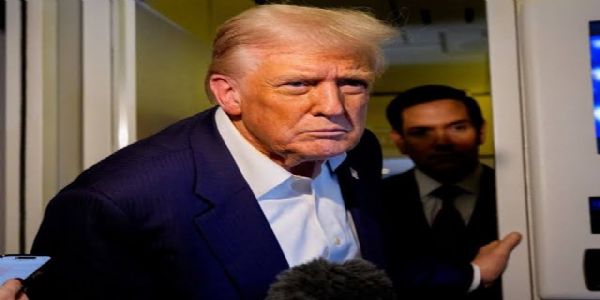
President Trump reacted with unbridled outrage during a White House breakfast meeting with governors and a subsequent press briefing, labeling the ruling deeply disappointing, ridiculous, and a product of fools and lapdogs beholden to RINOs and the radical left Democrats.
He expressed absolute shame toward the six justices for lacking courage to prioritize national interests, vowing to explore very powerful alternatives under existing laws without congressional input and announcing plans for a new 10% global tariff via executive order later that day.
Trump learned of the decision mid-meeting via a note, abruptly ending discussions and declaring intentions to do something about these courts.
The verdict exacerbates political divisions within the Republican Party, where free trade has historically reigned supreme; Senate Minority Leader Mitch McConnell hailed it as a vindication of Congress's Article I role, while former Vice President Mike Pence celebrated it as a win for families burdened by what he termed American-paid tariffs.
Democrats, including Rep. Suzan DelBene, seized the moment to decry Trump's king-like overreach, noting polls where 60% of Americans viewed the tariffs as excessive and 76% anticipated higher consumer prices.
Economically, the ruling leaves over $130 billion in collected duties in limbo, with no guidance on refunds, potentially sparking protracted litigation in trade courts.
While steel, aluminum, auto parts, and select tariffs persist under separate authorities, the decision disrupts ongoing diplomatic negotiations and could benefit nations like India amid stalled U.S. trade talks. New research from major banks indicates midsize U.S. firms—employing 48 million—faced tripled tariff costs last year, often passed to consumers via elevated prices or reduced hiring.
As midterm elections loom, Trump's tariff fixation, invoked 28 times in a recent Georgia speech, risks prolonging chaos in global markets, with strategists anticipating his pivot to backup mechanisms despite widespread voter unease.
---------------
Hindusthan Samachar / Jun Sarkar

21 Feb 2026
Trump Defies Judicial Hammer: Inks 10% Global Tariff Blitz Hours After Supreme Court Smackdown
21 Feb 2026