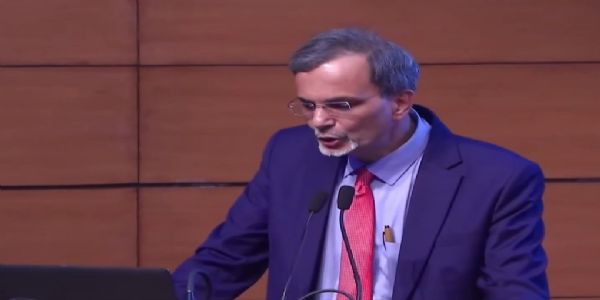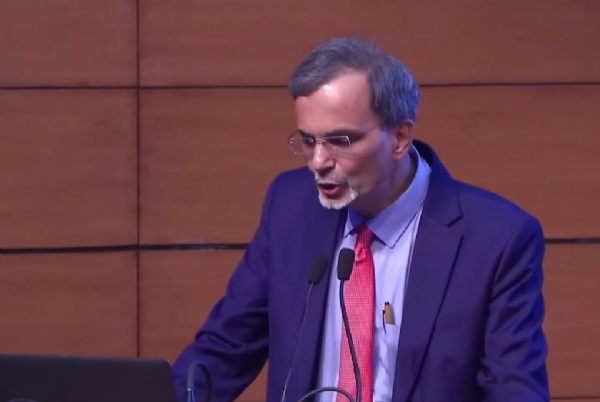
New Delhi, 29 January (H.S.): Chief Economic Adviser (CEA) Dr. V. Anantha Nageswaran asserted on Thursday, that India's economic growth has gained further momentum and robustness in recent years.
According to Economic Survey data, real GDP growth, which averaged 6.4 percent in the pre-COVID period, reached 6.5 percent in fiscal year 2025 and is projected to climb to 7.4 percent in fiscal year 2026. He attributed this expansion to robust domestic demand, accelerating investments, and a conducive economic environment.
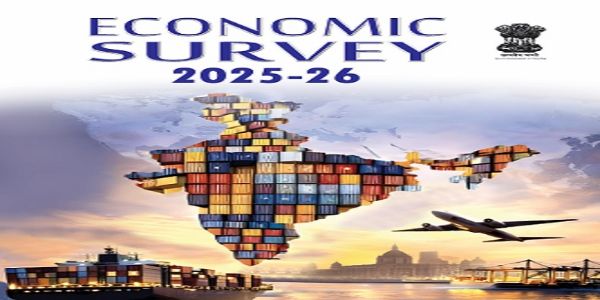
Following the presentation of the Economic Survey 2025-26 in Parliament, Dr. Nageswaran emphasized during a press conference at the National Media Centre that agriculture, manufacturing, and services must operate as synchronized economic engines for India amid shifting global dynamics. He identified manufacturing and exports as pivotal drivers of future growth, bolstering India's competitive edge in a fragmented and tense global milieu.
Amid global uncertainties and economic volatility, India stands as an oasis of macroeconomic stability, Nageswaran declared. He noted that when global trade ceases to be reciprocal and markets lose neutrality, 'Atmanirbhar' (self-reliance) emerges as a legitimate policy tool, adoptable in the national interest.The CEA forecasted GDP growth for fiscal year 2026-27 between 6.8 and 7.2 percent, marginally slower than the current year's estimated 7.4 percent yet balanced and sustainable given the global outlook.
Domestic factors are fortifying economic expansion, he said. Private final consumption expenditure grew 7.2 percent in FY25 and is expected to hold around 7 percent in FY26, while gross fixed capital formation has shown marked improvement, signaling sustained investment continuity and rising investor confidence.India's economy is achieving high growth alongside remarkably balanced inflation, the CEA stated.
Consumer Price Index-based inflation declined from 6.7 percent in FY23 to 4.7 percent in FY25 and further to about 1.7 percent in FY26 (up to December), with softening food prices and controlled core inflation at 2.9 percent ensuring price stability—favorable for monetary policy.
Dr. Nageswaran stressed fiscal discipline for both states and the Centre, essential for keeping sovereign borrowing costs affordable. The fiscal deficit peaked at 9.2 percent in FY21, moderated to 5.5 percent in FY24, and targets 4.4 percent in FY26, accompanied by consistent primary deficit reductions.Direct tax base expansion has strengthened government revenues, with taxpayers rising from 6.9 crore in FY22 to 9.2 crore in FY25.
Capital expenditure has been prioritized, with effective capex surging from 2.7 percent to 3.9 percent of GDP—a positive long-term growth indicator.Digital infrastructure has expanded rapidly, with broadband subscribers growing from 6 crore in 2014 to 100 crore in 2025.
Direct foreign investment has risen steadily, reflecting growing global investor trust in India.Operational high-speed highway corridor length has increased from 550 km to 5,360 km. Railway network commissioning has doubled from 1,500 km to over 3,100 km, while port infrastructure has seen substantial cargo handling and capacity expansions.
Unemployment has fallen from 6 percent to 3.2 percent in 2023-24, with female labor force participation rising nearly 18 percentage points. In the first nine months, unemployment eased from 5.4 percent to 4.9 percent. PLFS surveys are shifting from July-June to calendar-year basis, with 2025 data due in March.
Hindusthan Samachar / Jun Sarkar