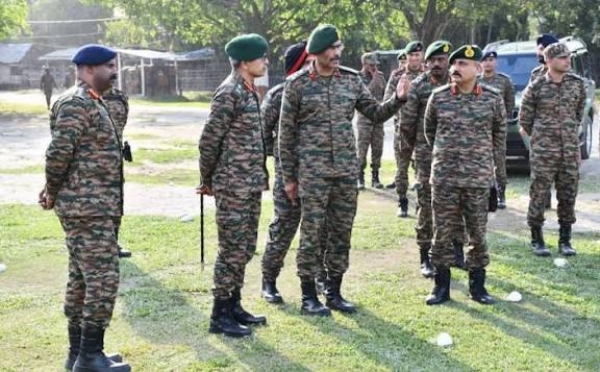
India’s Siliguri Corridor widely known as the “Chicken Neck”, is among the country’s most sensitive and strategically vital regions. Barely about 22 kilometres wide at its narrowest point, this slender stretch of land connects mainland India with the seven northeastern states and nearly 45 million citizens. In the context of evolving regional challenges, China’s assertive posture along the Line of Actual Control, political uncertainty in Bangladesh, and persistent concerns over illegal cross-border movement, the strengthening of this corridor is no longer optional. It has become a national security imperative. Against this backdrop, the proposed forward army cantonment in Bihar’s Kishanganj district represents a decisive and timely step.
Siliguri Corridor: The Nation’s Strategic Lifeline
The Siliguri Corridor is critical not only for military logistics but also for trade, connectivity, disaster response, and the overall strategic unity of the country. Bordered by Nepal to the west, Bhutan to the north, and Bangladesh to the east and south, the corridor’s geography makes it exceptionally vulnerable. Any disruption, whether due to natural calamities such as recurring floods in the Teesta river basin or hostile actions, could potentially sever the Northeast from the rest of India, with grave implications for national defence and internal stability.
Kishanganj: A Natural Strategic Shield
The Indian Army’s proposal to acquire around 250 acres of land in the Bahadurganj–Kochadhaman blocks of Kishanganj to establish a forward military base is part of a broader strategic plan that also includes new installations in Bamuni (Assam) and Chopra (West Bengal). The objective is to enhance rapid deployment and preparedness against multi-dimensional threats.
Located near the India–Bangladesh–Nepal tri-junction, Kishanganj is uniquely positioned to function as a natural defensive buffer for the Siliguri Corridor. A permanent military presence here would strengthen surveillance of cross-border activities, curb smuggling and infiltration, and enable swift humanitarian assistance during emergencies. The Indian Army’s proven effectiveness—from the Doklam standoff in 2017 to large-scale flood relief operations in Bihar and West Bengal—underscores the value of such forward deployments.
Political Objections Versus National Interest
It is deeply concerning that a project of such strategic importance has been drawn into local political contestation. Objections raised by certain political representatives in Bihar and West Bengal, particularly in light of past scepticism over nationally significant military actions such as the 2016 surgical strikes and the 2019 Balakot airstrikes, suggest that narrow political considerations are being placed above national priorities.
This opposition has emerged despite the fact that local farmers had earlier consented to land acquisition, completed formal transfer procedures, and received compensation. The subsequent agitation, allegedly fuelled by political provocation, raises serious concerns. In a sensitive border district like Kishanganj, such resistance risks echoing destabilising protest strategies seen in other conflict-prone regions, creating an alarming precedent.
Demography, Illegal Infiltration, and Security Concerns
Kishanganj has long been sensitive due to demographic changes and allegations of illegal migration from Bangladesh. The district’s challenging terrain and administrative vulnerabilities have compounded these issues, posing risks not only to the state but to national security as a whole—especially given its proximity to the Siliguri Corridor.
A strengthened military presence would act as a force multiplier, reinforcing border vigilance, supporting civil administration, and enhancing overall law-and-order capabilities. While states like Assam have taken firm measures against illegal infiltration, questions remain about inconsistent enforcement elsewhere, further underlining the need for robust institutional safeguards.
Beyond Security: Development and Disaster Management
A military cantonment is not merely a symbol of armed strength. It often becomes a catalyst for local development—creating employment, improving roads and communications, and upgrading civic infrastructure. In disaster-prone regions like Kishanganj, which frequently face floods, a permanent army presence can prove lifesaving. The Indian Army’s critical role during crises such as the 2023 Sikkim floods demonstrates how invaluable rapid, localised military response can be. Disaster management experts and local civil society groups alike recognise that such an installation would significantly enhance resilience and emergency preparedness.
A Strategic Imperative, Not a Choice
At a time when India is advancing cooperative measures with Bangladesh, including extradition agreements and joint border patrols, the construction of an army cantonment in Kishanganj should proceed without obstruction. Allowing unfounded or politically motivated opposition to derail the project risks emboldening forces hostile to India’s interests.
What is required now is transparent dialogue, inclusive development, and unwavering commitment to national security. There can be no compromise on the protection of the Siliguri Corridor. The proposed Kishanganj cantonment is not merely a military installation, it is a cornerstone of India’s unity, sovereignty, and long-term security.
Hindusthan Samachar / Satya Prakash Singh