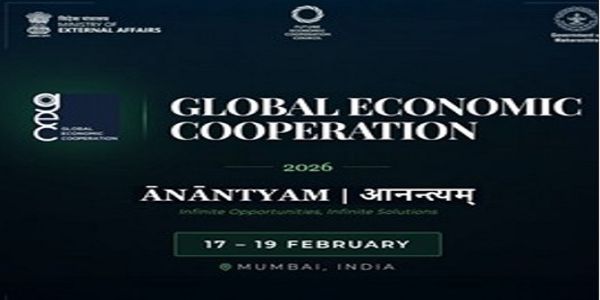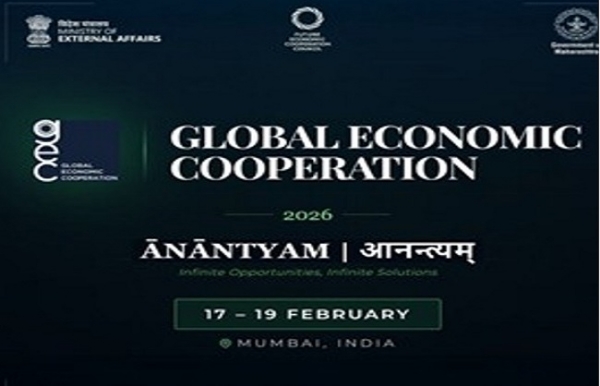
New Delhi, 17 January (H.S.): Senior policymakers, global CEOs, investors, and leaders from multilateral institutions in India and abroad will convene in Mumbai for the inaugural Global Economic Cooperation 2026 (GEC) from February 17 to 19. This high-level, invitation-only forum will deliberate on how economic diplomacy, collaboration, and capital coordination must evolve amid a rapidly multipolar world.In a statement issued on Saturday, Bharatiya Janata Party (BJP) in-charge for foreign affairs Vijay Chauthaiwale announced that the conference is organized by the Future Economic Cooperation Council (FECC), a non-profit platform.
It is being hosted with the support of India's Ministry of External Affairs and the Maharashtra government. A governing body will oversee the council, with Maharashtra Chief Minister Devendra Fadnavis as its patron-in-chief.
Vijay Chauthaiwale serves as director, while Priyam Gandhi-Modi, founder of Vishwamitra Research Foundation, is director and curator.Designed to address profound structural changes reshaping global trade, investment, and economic governance, GEC 2026 responds to the current era of global economic transformation.
Through structured engagements on infrastructure financing, advanced manufacturing, technology systems, energy transition, and resilient supply chains, the event will emphasize cooperation beyond mere commerce. High-level plenaries and closed-door dialogues will focus on economic corridors, investment partnerships, digital connectivity, ESG frameworks, and governance of emerging technologies—topics central to economic sovereignty and global stability today.
On the council's objectives for GEC 2026, director Priyam Gandhi-Modi stated, “The global economy is entering a decisive phase, where economies must shield themselves from threats of fragmentation, protectionism, and uncertainty.
Through Global Economic Cooperation 2026, India is stepping forward to unite governments, investors, and industry leaders, forging practical pathways for collaboration in capital, infrastructure, technology, and energy. These efforts reflect the realities of a multipolar world and our shared responsibility for global prosperity.”
Vijay Chauthaiwale remarked, Under Prime Minister Narendra Modi's adept guidance, India has forged robust partnerships with global leaders that have stood the test of a swiftly changing world. Today, economic engagement is inseparable from geopolitics. Hosting GEC 2026 at this juncture reinforces India's commitment to shaping a cooperative, rules-based economic framework, advancing national interests while bolstering global stability.
He added that on the third day of the conference, GEC 2026 will launch the Emerging Leaders Circle—a dedicated platform connecting young business minds and future leaders with curated panels and discussions on global economic change and innovation.
This initiative, co-hosted with premier institutions like the Indian Institute of Management (IIM) and Columbia University, underscores the forum's dedication to nurturing the next generation of global economic leadership.
The Global Economic Cooperation platform envisions a world where economic corridors pave pathways for collaboration, promoting peace, prosperity, and shared progress through equitable access to trade, connectivity, and inclusion.
This annual forum will bring together minister-level leaders, sovereign and institutional investors, and CEOs from critical sectors including infrastructure, logistics, ports, clean energy, AI, fintech, and advanced manufacturing. The debut edition aims to lay the foundation for innovative approaches to global economic cooperation.
---------------
Hindusthan Samachar / Jun Sarkar