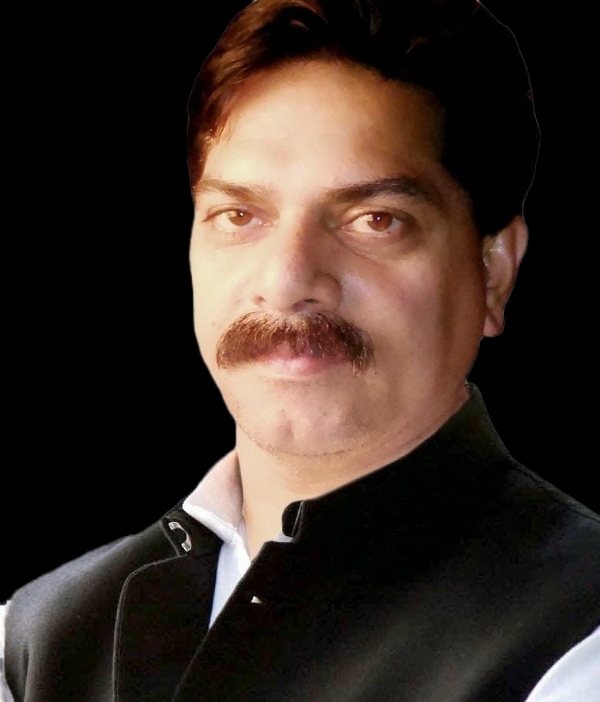
Jammu, 15 January (H.S.): Senior leader and former councillor Ashwani Khajuria on Thursday termed the closure of Mata Vaishno Devi Medical College as “unfortunate, unfair and politically motivated”, alleging that the decision taken by the National Medical Commission (NMC) was against the interests of educated youth and the general public of Jammu and Kashmir, particularly the Jammu region.
Addressing a press conference, Khajuria said medical colleges, nursing colleges and allied institutions play a crucial role in addressing the shortage of doctors and healthcare professionals at the local level. Citing national and global studies, he said strengthening medical education was essential to improve healthcare delivery, especially in rural and semi-urban areas.
Referring to data from the Medical Council of India and the 2011 Census, Khajuria said that out of 640 districts in India with a population of around 1,210 million, nearly 480 are rural districts. However, only 132 of these rural districts have medical colleges, accounting for just 27.5 percent. He said this clearly indicates a severe shortage of medical colleges in rural India.
Khajuria further said that surveys show nearly 74 percent of doctors work in urban areas. He added that rural areas have only 0.2 hospital beds per 1,000 population, compared to 1.1 beds per 1,000 population in urban areas. The density of physicians, he said, stands at just 3 per 10,000 people in rural India, as against 13 per 10,000 in urban areas.
He criticised the NMC’s decision to withdraw the Letter of Permission of Mata Vaishno Devi Medical College in January 2026, allegedly due to non-compliance with minimum standards related to faculty strength, infrastructure, laboratories, library and ward facilities. Khajuria claimed these allegations were baseless and factually incorrect.
According to him, the controversy began after the admission of 50 Muslim students in the first batch, following which debates erupted around institutional functioning, merit and religion. He alleged that certain groups, including the Vaishno Devi Sangharsh Samiti and several pro-RSS and pro-BJP organisations, launched protests opposing the admission of these students.
Khajuria claimed that insiders and faculty members of the college stated that the NMC inspection team informed the institution just 15 minutes before their arrival, calling it an untimely inspection conducted during winter vacations when many faculty members were on leave. He said several faculty members and students had asserted that the college had better infrastructure, including operation theatres, laboratories and library facilities, compared to many other medical colleges in Jammu and Kashmir.
He alleged that the decision to shut down the college was driven by political pressure rather than academic or infrastructural shortcomings.
Khajuria also referred to statements by former and present political leaders, including former chief ministers Farooq Abdullah, Omar Abdullah and Mehbooba Mufti, who have criticised the decision. He said the move had been described as pre-planned and dangerous for communal harmony, while the celebrations over the closure were termed as an expression of religious bigotry.
Appealing to elected representatives, Khajuria urged them to stop celebrating the cancellation of the medical college’s permission and instead work towards restoring the institution. He said people across Jammu and Kashmir were watching these developments closely and questioned the rationale behind celebrating a decision that deprived the region of a vital medical institution.
---------------
Hindusthan Samachar / Krishan Kumar