
For millions worldwide, chronic kidney disease (CKD) remains a silent threat that often leads to end-stage renal disease (ESRD), requiring lifelong dialysis or transplantation. As of 2025, approximately 850 million people globally live with CKD, with around 4 million needing kidney replacement therapy. This figure has risen steadily due to aging populations, diabetes, and hypertension. Yet access to treatment is unequal—two-thirds of those in need lack it, particularly in low-resource regions.
No More Traditional Hemodialysis
Traditional hemodialysis ties patients to clinics for hours multiple times weekly, restricting mobility and quality of life. Peritoneal dialysis offers more flexibility but still demands daily manual exchanges. For decades, scientists have dreamed of a wearable artificial kidney—a compact, portable device that provides continuous filtration, mimicking natural kidneys and freeing patients from machines. Recent advancements as of December 23, 2025, show this dream becoming reality. Wearable and portable kidneys are progressing through trials and innovations, promising greater autonomy, better health outcomes, and reduced costs.
The Growing Burden of Kidney Disease
CKD affects about 10% of the global adult population, making it a leading cause of death. The Global Burden of Disease Study 2023 reports rising prevalence, driven by diabetes (primary cause in 40-60% of cases) and hypertension. In high-income countries like the United States, over 37 million adults have CKD, with annual dialysis costs exceeding $57,000 per patient. In developing regions, outcomes are worse due to limited access. Wearable devices could bridge this gap by enabling home or on-the-go treatment, reducing healthcare burdens and improving survival rates through continuous toxin removal—potentially lowering mortality by up to 40% compared to intermittent dialysis.
How Wearable Kidneys Work
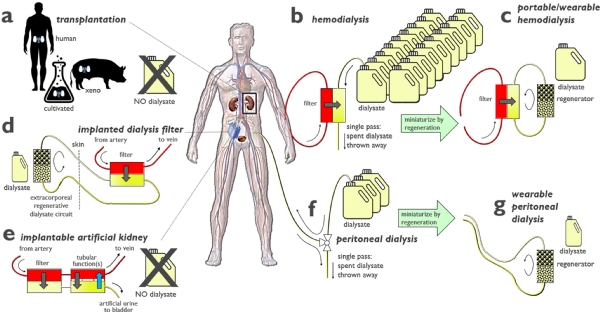
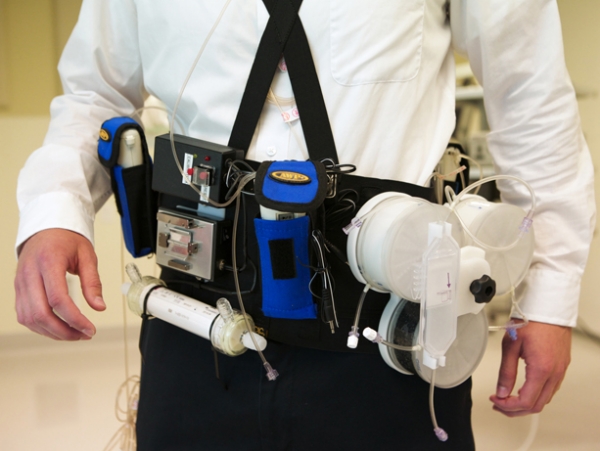
Wearable artificial kidneys fall into two main categories: hemodialysis-based and peritoneal dialysis-based. Hemodialysis versions use miniaturized pumps, filters, and sorbent cartridges to regenerate small volumes of dialysate (typically 4-6 liters instead of hundreds). Patients wear them like a belt or backpack, weighing 5-10 kg. Peritoneal models automate fluid exchanges in the abdomen, regenerating dialysate for continuous use.
Encouraging Results-Better Performance
These devices provide steady filtration, better controlling blood pressure, fluids, and electrolytes—functions traditional dialysis cannot match. ajkd.org -The Future of Technology-Based Kidney Replacement Therapies: An ...Pioneering Developments in 2025 Progress has accelerated, with several projects nearing human application. The NeoKidney from NextKidney BV (Netherlands/Singapore) is a portable home hemodialysis device weighing under 10 kg. It uses advanced sorbent regeneration and fits in a carry-on suitcase.
Clinical Trials are Underway
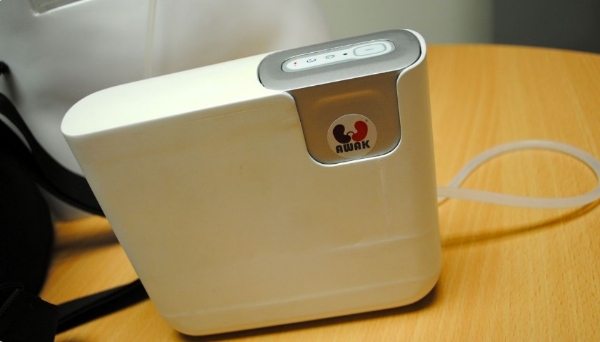
Clinical trials are advancing in Europe, with multicenter studies in France and the Netherlands in 2025. CE mark approval is targeted soon, followed by U.S. FDA submission. It promises 43% annual cost savings per patient. AWAK Technologies' Automated Wearable Artificial Kidney (peritoneal dialysis-based) has completed multiple human trials with no serious adverse events. Weighing under 2 kg, it regenerates dialysate for tidal peritoneal dialysis. The company raised significant funding in 2025 for pivotal U.S. trials. In South Korea, Seoul National University researchers developed a compact peritoneal device using ion concentration polarization technology. Rat model tests in 2025 showed effective waste removal, paving the way for human trials.
Bridging to the Future
Wearables represent a stepping stone to fully implantable bioartificial kidneys. The Kidney Project, led by Shuvo Roy (UCSF) and William Fissell (Vanderbilt), combines silicon nanopore filters with living renal cells in a bioreactor. Preclinical animal tests continue successfully in 2025, with human trials estimated 4-5 years away. This coffee-cup-sized device would implant surgically, operating without external power or immunosuppression.
Challenges and the Road Ahead
Despite promise, hurdles remain: ensuring long-term biocompatibility, preventing clotting, managing infections, and securing funding. Regulatory approvals demand rigorous safety data. A 2025 review in the American Journal of Kidney Diseases notes slower-than-expected innovation but highlights sorbents and nanoporous filters as breakthroughs.
A Transformative Horizon
Wearable kidneys are no longer distant dreams. By late 2025, devices like NeoKidney and AWAK are in advanced trials, offering patients freedom to travel, work, and live fully. Continuous therapy could reduce complications, extend life expectancy, and cut costs dramatically.
The Conclusion
For the estimated 4 million on dialysis worldwide, these innovations bring hope: a future where kidney failure no longer means being tethered to a machine. As research accelerates, the dream of truly wearable—and eventually implantable—kidneys is materializing, promising to redefine treatment for one of humanity's most pressing health challenges. (# Author is associated with Hindusthan Samachar)
Sources/Further Reading
- GBD 2023 Chronic Kidney Disease Collaborators. Global, regional, and national burden of chronic kidney disease in adults, 1990–2023, and its attributable risk factors: a systematic analysis for the Global Burden of Disease Study 2023. Lancet. 2025;406(10518):2461-2482. doi:10.1016/S0140-6736(25)01853-7
- Grand View Research. Wearable artificial kidney market size, share & trends analysis report. San Francisco: Grand View Research; 2025. Available from: https://www.grandviewresearch.com/industry-analysis/wearable-artificial-kidney-market
- NextKidney BV. NextKidney secures €2.5M EICA award to drive transformative innovation in home hemodialysis [press release]. Lausanne: NextKidney BV; February 17, 2025. Available from: https://nextkidney.com/nextkidney-secures-e2-5m-eica-award-to-drive-transformative-innovation-in-home-hemodialysis/
- Vivance (formerly AWAK Technologies). Company updates and clinical trial progress. Singapore: Vivance; 2025. Available from: https://vivance.com/
- Roy S. What’s next for the implantable artificial kidney and beyond. UCSF School of Pharmacy News. November 3, 2025. Available from: https://pharmacy.ucsf.edu/news/2025/11/whats-next-for-the-implantable-artificial-kidney-and-beyond
- Wieringa FP, Suran S, Søndergaard H, Ash SR, Cummins C, Chaudhury AR, et al. The future of technology-based kidney replacement therapies: An update on portable, wearable, and implantable artificial kidneys. Am J Kidney Dis. 2025. doi:10.1053/j.ajkd.2024.10.015 (Advance online publication)
- U.S. Department of Health and Human Services, American Society of Nephrology. KidneyX: Artificial kidney prize and sustainability prize updates. Washington, DC: KidneyX; 2025. Available from: https://www.kidneyx.org/
---------------
Hindusthan Samachar / Dr. R. B. Chaudhary