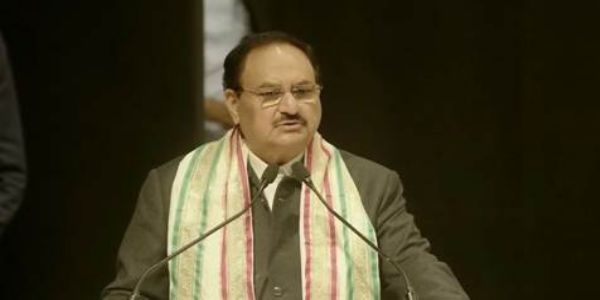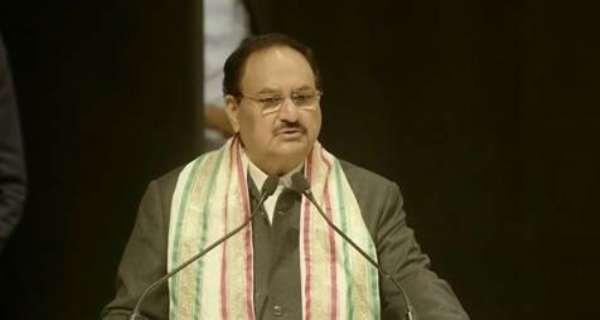
New Delhi/Lucknow, 20 December (H.S.): Expanding Horizons in Healthcare Education: Union Health Minister J. P. Nadda Highlights India’s Medical Transformation at KGMU’s 21st ConvocationUnion Minister for Health and Family Welfare, Jagat Prakash Nadda, today addressed the 21st convocation of King George’s Medical University (KGMU) in Lucknow, underscoring India’s transformative decade in healthcare and medical education.
The ceremony, held under the banner of Azadi Ka Amrit Mahotsav, celebrated the achievements of KGMU’s graduating scholars while reflecting on the nation’s progress in building robust healthcare infrastructure.The event was graced by Anandiben Patel, Governor of Uttar Pradesh; Brajesh Pathak, Deputy Chief Minister and Minister for Medical Education, Medical, Health and Family Welfare; Pankaj Kumar, Minister of State for Finance; Mayankeshwar Sharan Singh, Minister of State for Health and Family Welfare, Government of Uttar Pradesh; and Prof. Ajay Kumar Sood, Principal Scientific Adviser to the Government of India.
Commending KGMU for its longstanding contribution to medical science and public health, Nadda congratulated the graduates for upholding the university’s legacy of excellence. “KGMU stands among the nation’s leading institutions, ranked eighth in the 2025 NIRF rankings, with twelve of its faculty members listed in Stanford University’s top two percent of global scientists,” he remarked.
Highlighting India’s extraordinary growth in medical infrastructure, the Minister said, “While the country had only one AIIMS at the end of the previous century, today there are 23 AIIMS institutions across India—symbolizing our government’s commitment to making world-class healthcare and medical training accessible in every region.”
Nadda revealed that medical colleges have increased from 387 to 819 in the past 11 years, with undergraduate seats rising from 51,000 to 1,19,000 and postgraduate seats from 31,000 to 80,000. He added that, under the leadership of Prime Minister Shri Narendra Modi, an additional 75,000 seats will be created by 2029, with 23,000 already added within a year.
Emphasizing the expansion of healthcare services at the grassroots level, Nadda informed that more than 1.82 lakh Ayushman Arogya Mandirs are now operational nationwide, offering comprehensive primary healthcare. Over 62 crore citizens—representing more than 40% of India’s population—receive coverage of up to ₹5 lakh under the Ayushman Bharat–Pradhan Mantri Jan Arogya Yojana (PM-JAY), making it the world’s largest health protection scheme.
Cautioning that professional education comes with social responsibility, Shri Nadda said, “Basic education is every citizen’s birthright, but professional education is a privilege bestowed upon a few by society. The government invests nearly ₹30–35 lakh per MBBS student, and it is now the moral duty of our young doctors to serve with dedication and compassion.”
Concluding his address, he urged graduates to excel in research and ethical medical practice while carrying forward KGMU’s distinguished legacy. “Remain lifelong learners, innovators, and torchbearers of humanity through science,” he encouraged.
Deputy Chief Minister Brajesh Pathak, in his congratulatory remarks, described KGMU as “a beacon of medical education, research, and public service for over 120 years.” He also detailed Uttar Pradesh’s progress in the healthcare sector, noting that the state’s number of medical colleges had grown from 40 (17 government and 23 private) in 2017 to 81 fully functional institutions today.
He added that each of the state’s 75 districts is now equipped with dialysis units and CT scan facilities, while Ayushman Arogya Mandirs serve every population cluster of over 5,000 citizens.A total of 81 students and one faculty member were honoured for their exceptional academic, clinical, and research achievements across MBBS, BDS, MD/MS, DM/M.Ch., MDS, and M.Sc. Nursing programs.
Awards included gold and silver medals, certificates of merit, cash prizes, and honors for the best theses and residencies. A senior faculty member received a special commendation for outstanding contributions to medical and allied sciences.
Prof. Sonia Nityanand (Padma Shri awardee), Vice-Chancellor of KGMU; Prof. Apjeet Kaur, Dean and Member of the University Assembly and Executive Council; and senior officials from both the Union and State governments also attended the convocation.
---------------
Hindusthan Samachar / Jun Sarkar
20 Dec 2025