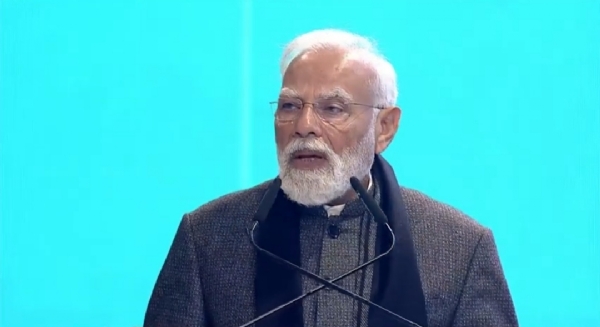
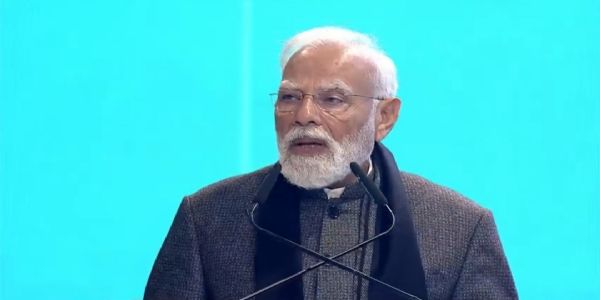
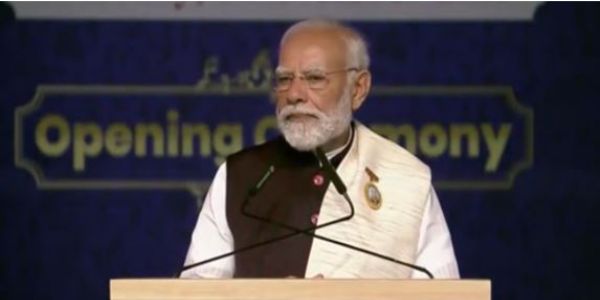
NewDelhi, 19 December (H.S.): Prime Minister Narendra Modi on Friday addressed the closing ceremony of the Second WHO Global Summit on Traditional Medicine at Bharat Mandapam in New Delhi, declaring that traditional medicine now stands at a “decisive turning point” in global health and calling for accelerated, evidence-based integration of these systems into mainstream healthcare worldwide.
He hailed the three-day summit as a powerful convergence of traditional knowledge and modern science, and as a testament to India’s rising leadership in shaping a science-based, people-centred traditional medicine agenda.
India’s leadership and global platforms
The Prime Minister said it is India’s “privilege and a matter of pride” that the WHO Global Centre for Traditional Medicine has been established in Jamnagar, describing its growing global reputation as a key outcome of the international community’s trust in India since the first Traditional Medicine Summit in 2022.
He underlined that the summit had opened new avenues for joint research, simplified regulation and advanced training, and that such cooperation will be crucial in making traditional medicine safer, more reliable and widely accepted across the world.
PM Modi announced that the inauguration of the new WHO South-East Asia Regional Office complex in Delhi, which will also house the WHO India Country Office, marks another important milestone and is being offered as a “humble gift from India” to the global health community.
He noted that this office is envisioned as a global hub to drive research, strengthen regulation and foster capacity building, further deepening India’s strategic partnership with the World Health Organization.
Yoga, balance and holistic health
Calling yoga an integral pillar of traditional medicine, the Prime Minister said that yoga has guided humanity towards a life of health, balance and harmony, and has now reached “every corner of the world.”
He recalled that through India’s initiative and the cooperation of more than 175 countries, the United Nations proclaimed 21 June as International Yoga Day, and he lauded the global community of yoga practitioners and promoters for this transformation.
During the ceremony, PM Modi felicitated the recipients of the Prime Minister’s Awards for Outstanding Contribution to the Promotion and Development of Yoga for the years 2021–2025, describing them as symbols of dedication, discipline and lifelong commitment.
He said the awards reaffirm yoga as a timeless practice for balance, well-being and harmony, contributing to a healthier and stronger New India as well as to global wellness.
New initiatives: Digital Ayush, quality marks and global library
The Prime Minister welcomed the launch of the Traditional Medicine Global Library, describing it as a global platform that will collate scientific data and policy documents on traditional medicine in one place, thereby ensuring equal access to useful information for all countries.
He pointed out that this library had been announced during India’s G20 Presidency at the first WHO Global Summit on Traditional Medicine and noted with satisfaction that the commitment has now been fulfilled.
Underscoring India’s push towards digital and quality-linked reform, PM Modi highlighted the launch of the My Ayush Integrated Services Portal (MAISP), a master digital portal designed to bring together services and stakeholders across the Ayush sector.
He also unveiled the Ayush Mark, envisioned as a global benchmark to assure the quality and authenticity of Ayush products and services, thereby enhancing consumer confidence and supporting international trade in traditional medicine.
Restoring balance in an AI-driven era
Reflecting on the summit’s theme, “Restoring balance: The science and practice of health and well-being,” the Prime Minister said that Ayurveda regards balance as the very essence of health and that only a body which maintains this equilibrium can truly be called healthy.
He warned that many contemporary health challenges—from diabetes, heart disease and depression to cancer—are rooted in lifestyle-related imbalances, including work–life, diet, sleep, gut microbiome, calorie and emotional imbalance, with global data and clinical experience reinforcing these trends.
PM Modi cautioned that in the 21st century, the rise of artificial intelligence, robotics and a lifestyle built on convenience without physical exertion is creating unprecedented stress on human bodies.He argued that restoring balance has therefore moved from being a global cause to a global urgency, and he urged the traditional medicine community to act with greater speed and resolute commitment, looking beyond immediate needs to shoulder collective responsibility for future health challenges.
Evidence, safety and Ashwagandha
Addressing concerns around safety and evidence, the Prime Minister acknowledged that questions naturally arise when traditional medicine is discussed, and he stressed that India is working systematically to answer them through science.
He cited Ashwagandha as a key example, noting that while it has been used in India’s traditional medical systems for centuries and saw a surge in global demand during the COVID-19 pandemic, India is now advancing it through rigorous research and evidence-based validation.
He informed the gathering that a special global deliberation on Ashwagandha had been organised during the summit, where international experts examined its safety, quality and usage parameters in depth.
PM Modi affirmed that India is fully committed to making such time-tested herbs a responsible part of global public health, supported by strong data, robust standards and transparent regulatory frameworks.
Integrative cancer care and clinical research
PM Modi welcomed a new initiative jointly launched by the Ministry of Ayush and the WHO Global Centre for Traditional Medicine to strengthen integrative cancer care in India.Under this effort, traditional medical systems will be combined with modern oncology to improve patient outcomes and to generate evidence-based guidelines that can guide policies and clinical practice.
He added that several leading institutions in India are conducting clinical studies on serious health conditions such as anaemia, arthritis and diabetes using traditional medicine approaches.
The Prime Minister also highlighted the growing participation of Indian start-ups in the traditional medicine ecosystem, describing it as youthful energy joining ancient tradition and helping to propel the sector to “new heights.”
Global partnerships and the Delhi Declaration
The Prime Minister emphasised that health ministers and delegates from multiple countries had demonstrated an exemplary model of global partnership over the three days of the summit.
He said that their intensive discussions on standards, safety and investment had paved the way for the Delhi Declaration, which will act as a shared roadmap for advancing traditional medicine in the coming years.
PM Modi also announced two notable international collaborations: a Centre of Excellence for BIMSTEC countries to serve South and South-East Asia, and a partnership with Japan to integrate modern science with traditional practices for better health outcomes.
He stressed that strengthening research, deploying digital technologies and formulating trusted global regulatory frameworks will collectively empower traditional medicine and enhance its contribution to global health security.
Books, reports, stamp and exhibition
On the occasion, the Prime Minister released the WHO technical report on training in yoga, intended to guide structured, competency-based yoga education and enhance professional standards worldwide. He also unveiled the book “From Roots to Global Reach: 11 Years of Transformation in Ayush,” which chronicles the rapid evolution of India’s Ayush sector into a globally engaged, reform-driven ecosystem.
PM Modi further released a commemorative postal stamp on Ashwagandha, symbolising the global resonance of India’s traditional medicinal heritage and recognising the herb’s emerging international profile.
Earlier in the day, the Prime Minister visited the Traditional Medicine Discovery Space, an exhibition showcasing the diversity, depth and contemporary relevance of traditional medicine knowledge systems from India and around the world.
Shared responsibility for a balanced future
As the summit drew to a close, the Prime Minister said that a large section of the global population has always depended on traditional medicine, yet these systems have historically not received the place they deserve despite their vast potential.
He insisted that the way forward lies in building trust through science and extending the reach of traditional medicine through collaboration, regulation and innovation rather than through rhetoric alone.
PM Modi underlined that the responsibility of advancing traditional medicine with trust, respect and responsibility rests on all nations, not on any single country.
Thanking the WHO, the Ministry of Ayush and all participants, he expressed confidence that the participation, dialogue and commitment witnessed in New Delhi over the last three days show that the world is ready to move forward together to restore balance in health and well-being for present and future generations.
---------------
Hindusthan Samachar / Jun Sarkar
19 Dec 2025
Yoga, Ayurveda and Innovation: PM Modi Charts Global Roadmap at WHO Traditional Medicine Summit
19 Dec 2025