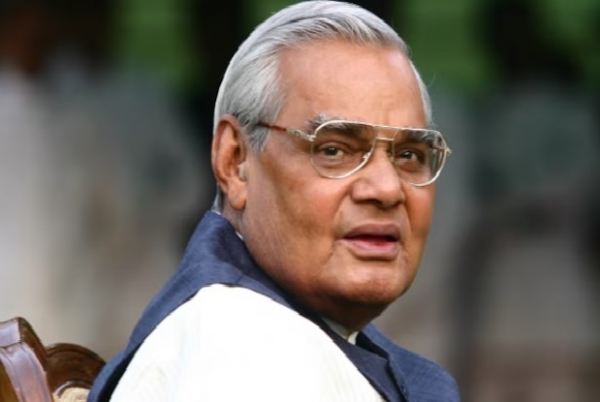
New Delhi, 17 December (H.S.): Former Prime Minister Atal Bihari Vajpayee, regarded as one of the tallest figures in the Bharatiya Janata Party (BJP), believed that it would be unhealthy for India’s parliamentary democracy if a popular Prime Minister were to become President merely by virtue of a majority mandate. He considered such a move a dangerous precedent for India’s democratic traditions.
Vajpayee’s view has resurfaced amid speculation about Prime Minister Narendra Modi possibly being projected as a presidential candidate in 2027. This perspective has been highlighted in a recently released book authored by Ashok Tandon, senior journalist and media advisor to Vajpayee during his tenure as Prime Minister.The book was launched in New Delhi on Wednesday.
According to Tandon, the background dates back to 2002, when the Vajpayee-led National Democratic Alliance (NDA) government was deliberating possible nominees for the President of India. At that time, Tandon worked in the Prime Minister’s Office (PMO).
In the book, he recounts that Dr. P.C. Alexander, then Governor of Maharashtra, had emerged as a potential candidate. An influential associate within the PMO was in contact with Dr. Alexander and, acting informally, gave him the impression that he enjoyed Vajpayee’s personal backing.
The same associate continued to persuade Vajpayee to consider Dr. Alexander, a Christian, as the NDA’s presidential nominee. The argument offered was strategic — that nominating a Christian President would make Congress President Sonia Gandhi uncomfortable and potentially hinder her future prospects of becoming Prime Minister, as the country could not have both a Christian President and a Christian Prime Minister simultaneously.
Meanwhile, then Vice President Krishan Kant was lobbying for support from NDA convener and Andhra Pradesh Chief Minister N. Chandrababu Naidu, among others. Within the BJP, several leaders began voicing the opinion that a senior party leader could be nominated for the position instead. Vajpayee, characteristically patient, heard everyone out but did not openly express his own preference.
At that time, the Opposition Congress Party was reportedly keen on fielding outgoing President K.R. Narayanan as a potential candidate against the NDA nominee. However, Narayanan declined, insisting that he would contest only if he were to be elected unopposed.
Tandon writes that Vajpayee firmly rejected suggestions from within his own party that he should himself move to Rashtrapati Bhavan and hand over the Prime Minister’s position to L.K. Advani, his deputy and number two in the government. Vajpayee, he notes, was deeply opposed to the idea. His reasoning was clear: a popular Prime Minister becoming President through majority power would be unconstitutional in spirit and contrary to the ethos of India’s parliamentary democracy.
Such a move, he felt, could mark the beginning of a very wrong tradition, one that he vowed he would never endorse.Driven by his consensus-oriented political style, Vajpayee reached out to Opposition leaders to ensure broad agreement on the NDA’s choice of candidate. “I remember,” writes Tandon, “that Sonia Gandhi, Pranab Mukherjee, and Dr. Manmohan Singh met Vajpayee to discuss the matter.
For the first time, he officially disclosed that the NDA had decided to nominate Dr. A.P.J. Abdul Kalam as its candidate for President.”
The revelation, he recalls, was met with stunned silence.Breaking the pause, Sonia Gandhi remarked, “Your choice has surprised us. We have no option but to consider supporting him, though we will discuss your proposal before taking a final decision.”History followed: soon after, Samajwadi Party chief Mulayam Singh Yadav announced his support, saying, “Dr. Kalam is my choice too.”
The book also notes that Dr. P.C. Alexander, in his autobiography, later blamed several individuals for thwarting his own prospects of becoming President in 2002.Among those he held responsible were K. Natwar Singh, former Congress minister, and Brajesh Mishra, Vajpayee’s Principal Secretary and National Security Advisor.
Ultimately, Dr. Kalam’s unexpected nomination reshaped the entire race. His name had not featured in earlier discussions, yet his selection found acceptance across party lines and emerged as one of the most consensual and widely respected presidential choices in India’s history.
---------------
Hindusthan Samachar / Jun Sarkar
17 Dec 2025
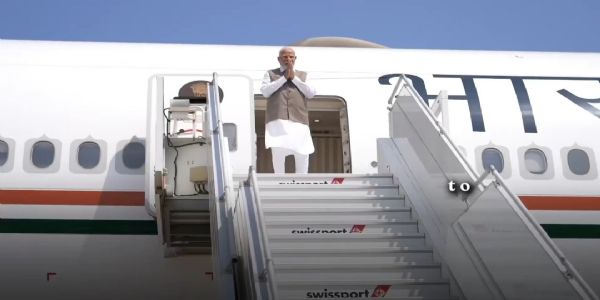
En Route to Muscat: PM Modi’s Oman Visit Set to Deepen Strategic, Energy and Diaspora Ties
17 Dec 2025