Chennai, 17 December (H.S.) : The BJP’s recent “master stroke” in Uttar Pradesh—appointing OBC leader Pankaj Chaudhary to a key party post—comes on the heels of its surprise victory in Tamil Nadu. In Tamil Nadu, the BJP broke its long‑standing marginal status by capitalising on anti‑incumbency and forging alliances with regional players. That win has emboldened the party to replicate a similar “southern‑style” outreach in the Hindi heartland, where caste arithmetic remains decisive.
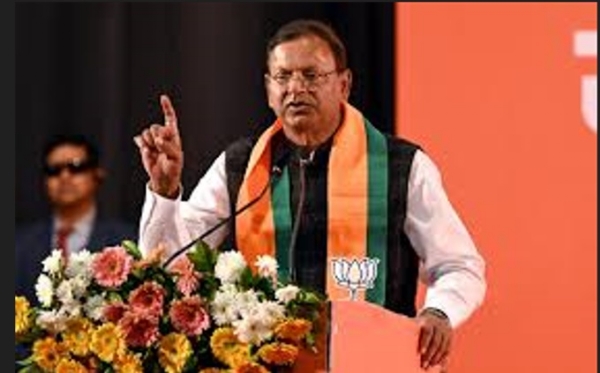
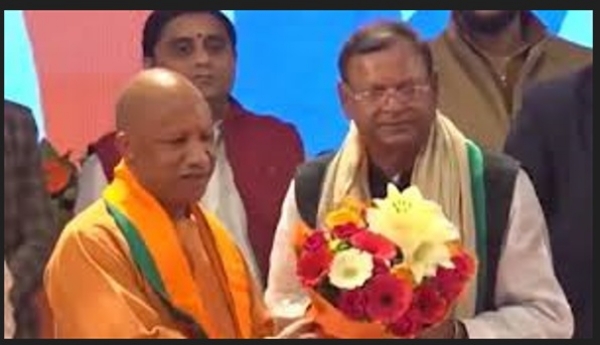
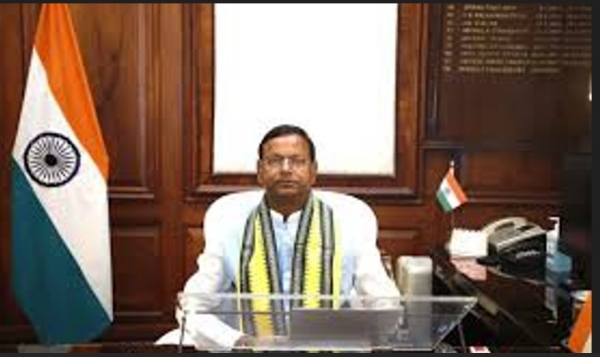
In a significant political development, Union Minister of State for Finance Pankaj Chaudhary was unanimously elected as the President of the Bharatiya Janata Party’s (BJP) Uttar Pradesh unit on December 13, 2025. The announcement was made by Union Minister Piyush Goyal during the party's Sangathan Parv (Organization Festival) in Lucknow, drawing enthusiastic support from Chief Minister Yogi Aditynath, Deputy Chief Ministers Keshav Prasad Maurya and Brajesh Pathak, and thousands of dedicated party workers.
Political analysts view this appointment as a decisive turning point, positioning the BJP to consolidate the state’s most influential voting bloc—the Other Backward Classes (OBC)—ahead of the critical 2027 Assembly elections. By selecting a leader from the Kurmi community, the BJP has signaled its readiness to counter the social justice narrative championed by opposition parties and reclaim its dominance over non-Yadav OBC demographics.
Born on November 20, 1964, into a politically prominent family in Gorakhpur, Pankaj Chaudhary’s journey is rooted in grassroots leadership and consistent electoral success. A graduate of Gorakhpur University, he began his career as a municipal councilor in 1989 and served as the Deputy Mayor of Gorakhpur before formally joining the BJP in 1990.
His electoral track record is nearly unparalleled; he has been elected to the Lok Sabha from Maharajganj seven times between 1991 and 2024. This consistent performance, maintained despite shifting political tides, underscores his deep connection with voters and his prowess as an organizational strategist. His elevation to the Union Ministry in 2021, where he manages vital portfolios in financial services and capital markets, further solidified his reputation as a trusted lieutenant of the party’s central leadership, including Prime Minister Narendra Modi and Home Minister Amit Shah.
The strategic depth of this appointment is best understood through the lens of Uttar Pradesh’s complex demographic landscape, where OBCs constitute over 50 percent of the total population according to the Hukam Singh Committee findings. Within this vast group, the Kurmi-Patel community represents a vital pillar, accounting for approximately 3 to 4 percent of the state’s population but wielding decisive influence across more than ten Lok Sabha constituencies and 36 Assembly seats.
Traditionally, the BJP has sought to mobilize non-Yadav OBC groups—such as Kurmis, Lodhs, Nishads, and Kushwahas—to counter the Yadav-centric base of the Samajwadi Party. By appointing Chaudhary, the BJP aims to neutralize recent opposition gains among Kurmi voters and reinforce a sense of representation and honor within the community’s leadership.
As the state prepares for the 2027 electoral battle, Pankaj Chaudhary is being hailed by party veterans as a master architect of organizational structures. His appointment is expected to bolster internal unity and re-energize the cadre, particularly in Eastern Uttar Pradesh, where his influence is most profound.
The grand celebrations planned by party workers from Lucknow to Maharajganj reflect a renewed sense of purpose within the BJP ranks. By placing a seasoned, cadre-based OBC leader at the helm, the BJP has effectively aligned its leadership with its most significant voter base, presenting a formidable challenge to the opposition’s PDA (Backward, Dalit, Minority) narrative and setting the stage for a high-stakes political showdown.
---------------
Hindusthan Samachar / Dr. R. B. Chaudhary