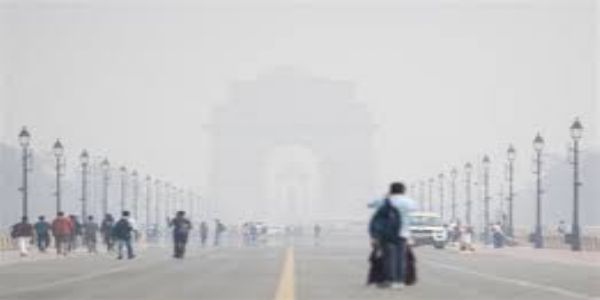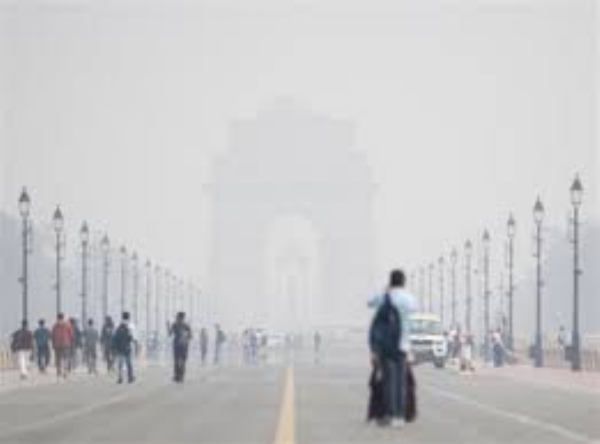
New Delhi, December 14 (H.S.): A thick blanket of smog enveloped the National Capital Region on Saturday, pushing air quality to alarming levels and triggering serious public health concerns. The overall Air Quality Index (AQI) for Delhi stood at 387, firmly in the “very poor” category, indicating significant health risks, especially for children, the elderly and people suffering from respiratory ailments.
The decline in air quality has been gradual over the past week. Delhi recorded an AQI of 282 on Tuesday, categorised as “poor,” followed by 259 on Wednesday. Pollution levels worsened thereafter, rising to 307 on Thursday and jumping to 349 on Friday, before edging closer to the “severe” category on Saturday.
Environmental experts attributed the deteriorating air quality to a combination of stagnant wind conditions, vehicular emissions, industrial activity and seasonal factors, including crop residue burning in neighbouring states.
Large parts of the National Capital Territory are now facing hazardous air conditions. Official data showed that at least 18 localities recorded an AQI above 400, placing them in the “severe” category. Wazirpur was the worst affected with an AQI of 443, followed by Jahangirpuri at 439 and Vivek Vihar at 437. Rohini and Anand Vihar recorded AQI levels of 434 each, while Ashok Vihar stood at 431. Sonia Vihar and Delhi Technological University recorded 427 each, Narela 425, Bawana 424, Nehru Nagar 421, Patparganj 419, ITO 417, Punjabi Bagh 416, Mundka 415, Burari Crossing 413, Chandni Chowk 412 and DU North Campus 401.
Health experts warned that prolonged exposure to such high pollution levels could aggravate asthma, reduce lung function, increase cardiovascular stress and cause irritation of the eyes and throat. Authorities have advised residents to restrict outdoor activities, use protective masks and adhere to advisories issued under the Graded Response Action Plan, which may be tightened further if conditions do not improve.
Meanwhile, Delhi is witnessing cool and cloudy weather, with temperatures hovering around 10 degrees Celsius. The minimum temperature is expected to drop to around 8 degrees Celsius later in the night. Although conditions are relatively milder compared to typical mid-December weather, dense fog during early morning and late evening hours has added to commuter difficulties. Meteorological officials said colder conditions are likely to intensify as the month progresses, which could further affect air quality if wind speeds remain low.
---------------
Hindusthan Samachar / Jun Sarkar