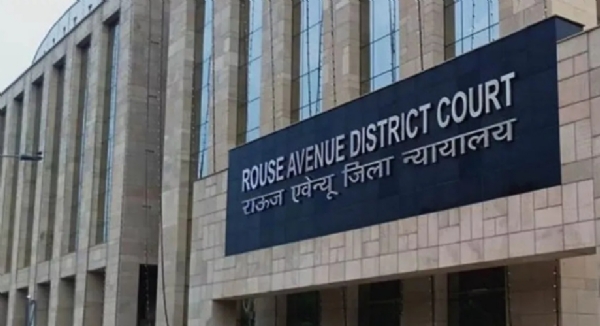
New Delhi, 04 August (H.S.): Fourteen Special Courts have been established at Delhi's Rouse Avenue Court Complex to ensure the speedy trial of cases related to terrorism, narcotics and paper leaks. The newly constituted Fast-Track Court is scheduled to hear paper leak cases for the first time on Tuesday.
On July 24, the Delhi High Court directed the establishment of a Fast-Track Court at the Rouse Avenue Court Complex for the expeditious hearing of the NEET paper leak case.
Judge Anu Grover Baliga was initially appointed to preside over the Fast-Track Court. The court held its first hearing on July 27, but the proceedings had to be adjourned as the Central Bureau of Investigation (CBI) had not appointed a Public Prosecutor.
Subsequently, on August 1, the Delhi High Court ordered the establishment of 14 new Special Courts for the speedy disposal of cases involving terrorism, narcotics and paper leaks. Under the revised order, Judge Ajay Gupta was appointed to hear paper leak cases, replacing Judge Anu Grover Baliga.
According to the High Court's directions, the Rouse Avenue Court Complex will now have six courts to hear cases registered under the National Investigation Agency (NIA) Act and the Unlawful Activities (Prevention) Act (UAPA), three courts for cases under the Maharashtra Control of Organised Crime Act (MCOCA), four courts for narcotics-related cases under the Narcotic Drugs and Psychotropic Substances (NDPS) Act, and one dedicated Fast-Track Court for the expeditious trial of paper leak and similar cases.
The 14 Special Courts were inaugurated on July 3 by Chief Justice of India Surya Kant, Delhi High Court Chief Justice D.K. Upadhyaya, and Justice Jyoti Singh, the portfolio judge overseeing the Rouse Avenue Court Complex in the Delhi High Court.
---------------
Hindusthan Samachar / Jun Sarkar



04 Aug 2026