Ahmedabad, 04 July (H.S.):
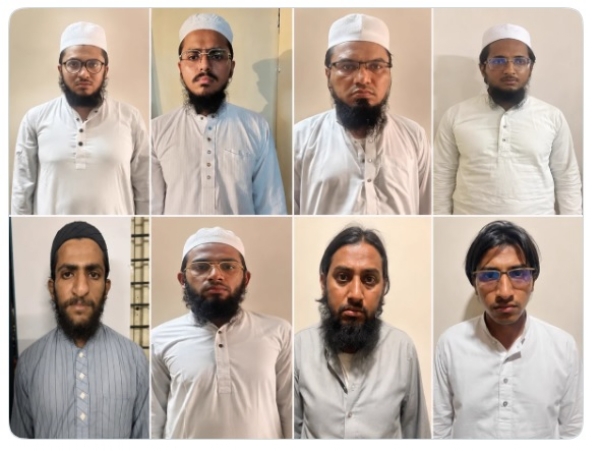
The Gujarat Anti-Terrorism Squad (ATS) has busted a suspected module linked to the banned terrorist organisation Darul Islam Gujarat Jaish-e-Mohammed during a coordinated multi-state operation, arresting eight accused. Investigating agencies claim the module was allegedly in contact with handlers based across the border and was working to establish a network for anti-national activities.
According to the ATS, five specialised teams conducted simultaneous operations in coordination with the police in Gujarat's Banaskantha, Navsari and Patan districts, as well as with the Dewas Police in Madhya Pradesh. The arrested individuals have been brought to the ATS headquarters for interrogation.
Preliminary investigations indicate that the accused were allegedly influenced by the ideology and propaganda material of Jaish-e-Mohammed chief Masood Azhar. The agency alleged that they were attempting to build a local logistical network, spread the organisation's ideology and lay the groundwork for potential future terrorist activities.
Investigators said one of the most significant aspects of the case is the manner in which the module allegedly dispersed its members across different cities while awaiting further instructions for a possible attack. To avoid detection and facilitate movement, the group is alleged to have used unregistered properties as safe houses.
According to investigators, the module allegedly received Rs 3 lakh from its handlers to establish its local infrastructure. The money was reportedly used to purchase a second-hand car, which was deliberately not transferred into the name of any member to conceal their identities from vehicle databases and transport records.
The investigation further revealed that the module extensively used institutional premises as hideouts. Three members — Zakaria Durrani, Mufti Fauzan Ismail Dauwa and Mohammad Amin Shera — were allegedly accommodated at Jamia Abul Hasan Madrasa in Khadiyasana, Patan. Another operative, Mohammad Abdul Rahman Savadi, was allegedly stationed at Jamia Rahmania Madrasa in Navsari. The remaining accused — Ahmed Abdullah Ghazivala, Ibrahim Ghagha, Mudassir Ghazivala and Bilal Durrani Ghagha — allegedly managed different parts of the network from Mehsana, Banaskantha and Dewas.
Officials said the investigation and materials seized during the raids suggest that all the accused were heavily influenced by speeches and literature attributed to Masood Azhar.
Azhar is designated as a terrorist and is accused of masterminding several major terrorist attacks in India, including the 2001 attack on the Indian Parliament, the 2016 Pathankot Air Force Station attack and the 2019 Pulwama suicide bombing.
During the searches, the ATS reportedly recovered books authored by Azhar and printed in Pakistan, along with eight formally typed letters in Urdu that investigators allege were written by the operatives directly to him expressing their intent to join the terrorist organisation.
Deputy Inspector General (DIG) Sunil Joshi said the module had allegedly remained in regular contact with Pakistan-based handlers identified as Abdullah and Mohammad Umar.
A comprehensive case has been registered against all eight accused under Sections 13, 17, 18, 38 and 39 of the Unlawful Activities (Prevention) Act (UAPA), along with Sections 61 and 148 of the Bharatiya Nyaya Sanhita (BNS).
Officials said the investigation is continuing, and further action will be taken based on the interrogation of the accused and the examination of digital evidence recovered during the operation.
---------------
Hindusthan Samachar / Jun Sarkar

04 Jul 2026