Lucknow, 03 July (HS): “The question is all over these days.
It surfaces in television studios, in newspaper columns, in family WhatsApp groups,
usually after the latest disturbing headline. A young man in Pune is allegedly
pushed off a fort by the woman he was weeks from marrying. A bride from Indore
is accused of conspiring in her husband’s murder on their Meghalaya honeymoon.
A graduate in Bhopal dies at her in-laws’ home amid allegations of harassment.
A software engineer in Bengaluru leaves behind a long video about the legal
battle and the emotional strain he could no longer bear. The details differ;
the shock is identical. And the question follows almost on its own: is the
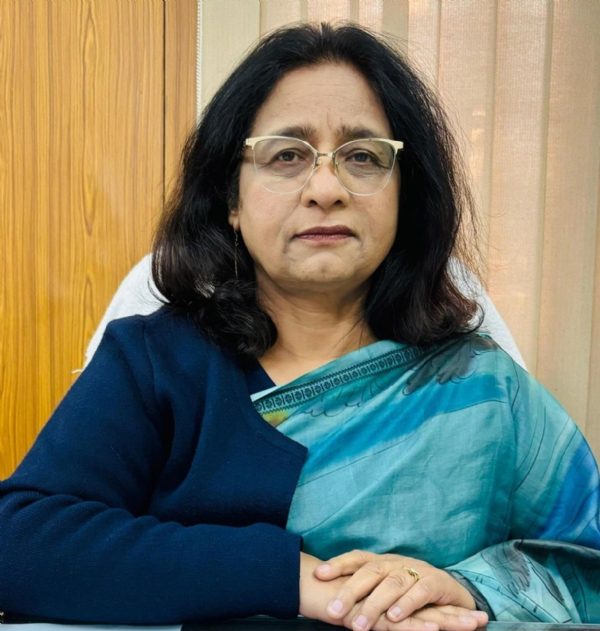
institution of marriage itself coming apart?” quips Prof. Arvinder A Ansari,
Dept of Sociology, Jamia Millia Islamia, Secretary, Indian Sociological Society
(ISS).
“It is an understandable question, and a misleading one.
Spousal homicide remains among the rarest of crimes, and a handful of
sensational cases cannot diagnose the health of an institution. To treat them
that way is to mistake the headline for the history. But the unease they
produce is not foolish. It points, however imperfectly, to something real and
far more common than murder: the growing strain inside intimate relationships,
including among the people we assume are insulated by education, city life and
modern values. The danger is not in announcing that marriage is finished. It is
in refusing to see what is changing inside it. The sacred language of marriage
still survives, in rituals, in family honour, in the expense of weddings and
the moral weight of being married. But that language now sits uneasily beside
what actually happens in many homes: private resentment, coercion, emotional
immaturity, the slow grind of legal conflict, and the difficulty of leaving a
marriage with dignity. The result is not collapse. It is a new fragility,” she
opined.
Andrew Cherlin’s idea of the “deinstitutionalisation” of
marriage helps name that fragility. Modern marriage, he argued, has drifted
away from the fixed social rules that once told husbands and wives how to
behave. It began as an institution organised around duty, property, and family alliances.
Over time, it became a bond built on companionship. More recently, it has
turned inward and individual, expected to deliver personal happiness and
emotional growth. India fits the pattern with a twist. Even as marriage loses
its practical necessity for some, its symbolic value stays extraordinarily
high. The wedding grows grander precisely as the marriage grows less certain.
Émile Durkheim saw the underlying danger a century earlier,
in his idea of anomie: the condition in which social norms weaken, and human
desire loses its regulation. Institutions like marriage, for Durkheim, gave
life structure and held impulse in check. Loosen that structure and people gain
freedom, but they can also be left restless and unanchored. Later thinkers said
much the same in their own vocabularies. Anthony Giddens described the modern
ideal as the “pure relationship,” one that lasts only as long as both partners
feel fulfilled. Zygmunt Bauman called it “liquid love,” a bond entered into
with the quiet awareness that it can just as easily be dissolved.
India is revealing precisely because it sits between these
worlds. Marriage here has seldom been only a union of two people. It has been
an alliance between families, a transaction in honour, lineage and caste. That
is why the self-chosen love marriage has so often been read not as a private
decision but as a threat to a larger order. The old scaffolding of marriage,
the kin networks and religious sanction and economic dependence and the stigma
of separation, held unions together even when the couple inside was miserable,
and sometimes even when one partner was suffering.
That scaffolding is weakening now, though it has not fallen.
The young increasingly speak of compatibility and selfhood; their families
still speak of duty and adjustment. Divorce is legally available and socially
punishing. Love is more visible and not yet fully accepted. Choice has widened,
but the price of choosing wrongly, or of choosing again, stays high. This is
the volatile middle that Indian marriage now occupies: sacred in public,
negotiated in private.
That friction explains why these recent cases have struck
such a nerve. A society that had fully individualised marriage might have shrugged
them off as isolated crimes. A society that had kept marriage wholly
institutional might have found them unthinkable. India is caught in between,
still treating marriage as destiny while quietly handing individuals the power
to choose, to refuse, and to undo. When a bride is accused of killing a groom,
or a young woman dies amid dowry allegations, part of the horror is the horror
of recognition. The bond we were taught to think of as unbreakable turns out,
like any modern relationship, to be breakable.
None of this means marriage in India is dying.
Deinstitutionalisation is not extinction. People still marry, still pour
fortunes into weddings, and still treat marriage as the natural destination of
an adult life. What is changing is where the bond gets its strength. It is
shifting from the outside in: from community pressure to the couple’s own
commitment, from obligation to affection. A structure that once held regardless
of happiness now holds only while both people keep choosing it. That makes
marriage more honest and more equal than it was. It also makes it lighter, more
breakable, and more anxious.
We will keep reaching for sensational explanations, because
a structural one is harder to see than a headline. But the deaths in Pune,
Bhopal, Meghalaya and Bengaluru are not evidence that love has turned lethal or
that marriage has failed. They are evidence that the old scaffolding is coming
down, and that we have not yet built an ethical language to put in its place. That
language cannot be nostalgia for unquestioned duty. Nor can it be a careless
celebration of individual desire. Modern marriage asks for something harder
than either: honest communication, real consent, emotional accountability, and
the recognition that separation, however painful, is not a disgrace. The crisis
is not that Indians have stopped believing in marriage. It is that we still
consecrate it as sacred without preparing anyone for the emotional and ethical
work that intimacy now demands.
Hindusthan Samachar / Abhishek Awasthi