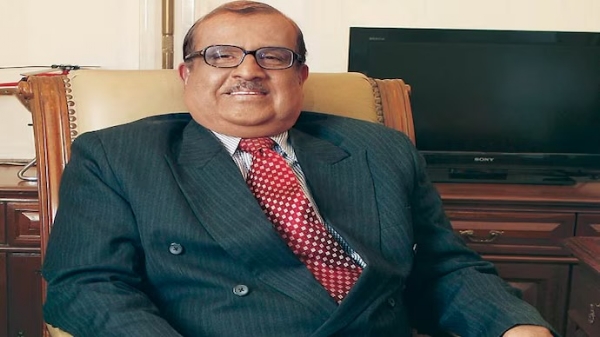
Thiruvananthapuram, 21 July (H.S.):The UDF government has reconstituted the Kerala State Planning Board, appointing former Cabinet Secretary KM Chandrasekhar as its Vice-Chairperson, marking his return to a role he previously held during the 2011-16 UDF government led by former Chief Minister Oommen Chandy.
Chief Minister V D Satheesan will head the Board as its Chairperson. Five Cabinet ministers representing various UDF allies have been included as members. They are Industries and Information Technology Minister P K Kunhalikutty, Power Minister Sunny Joseph, Water Resources Minister Mons Joseph, Forest Minister Shibu Baby John and Transport Minister C P John.
Interestingly, C P John had also served as an expert member of the Planning Board during KM Chandrasekhar's earlier tenure as Vice-Chairperson. The government is expected to announce the names of the non-minister expert members, including part-time members, at a later date. Sources indicated that eminent personalities from the shipping and industrial sectors are likely to be inducted. During the previous UDF government, the Board had included noted technocrat E Sreedharan and industrialist Tarun Das as part-time expert members.
The previous Planning Board, headed by Vice-Chairperson V K Ramachandran, comprised six full-time expert members and three part-time experts.
KM Chandrasekhar, a former Cabinet Secretary to the Government of India under the UPA government headed by Prime Minister Manmohan Singh, was appointed Vice-Chairperson of the Kerala Planning Board immediately after his retirement from the civil service in 2011.
His earlier tenure is remembered for the preparation of the Kerala Perspective Plan 2030, a long-term development blueprint that sought to transform the state's economy and social indicators to levels comparable with Nordic countries such as Sweden, Denmark and Norway over two decades.
Even after completing his term, KM Chandrasekhar continued to advise the Kerala government on policy matters. He played a key role in framing the state's fiscal strategy ahead of the 16th Finance Commission and was among the first to argue that the growing use of cesses and surcharges by the Centre was reducing the states' legitimate share from the divisible pool of central taxes.
---------------
Hindusthan Samachar / Arun Lakshman