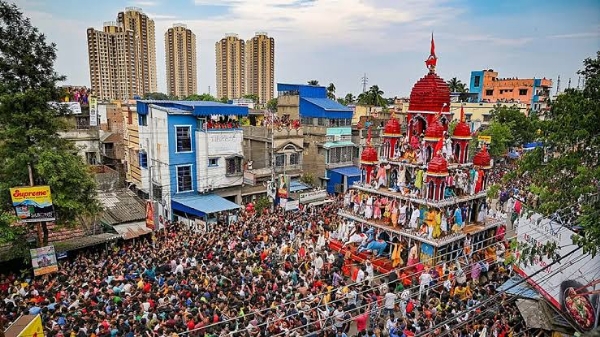
Hooghly, 14 July (H.S.): Long before the famed chariots of Puri began drawing millions of pilgrims into the global spotlight, a quieter but equally enduring tradition had already taken root on the banks of the Hooghly River in eastern India. The Mahesh Rath Yatra, held annually in Serampore of West Bengal's Hooghly district, is regarded as India's oldest Rath Yatra after Puri, with a documented history spanning more than six centuries.
For devotees, historians and cultural scholars alike, Mahesh is far more than a religious fair. It is a living chronicle of Bengal's spiritual heritage, Vaishnavite traditions and community life that has survived political upheavals, colonial rule and rapid urbanisation.
A tradition dating back to the 14th century
According to temple records and local tradition, the Mahesh Jagannath Temple was established around 1396 CE by Dhrubananda Brahmachari, a devotee inspired by Lord Jagannath of Puri. Unable to travel regularly to Odisha, he is believed to have installed the deities of Jagannath, Balabhadra and Subhadra at Mahesh, laying the foundation for what would become one of eastern India's most significant religious festivals.
The annual Rath Yatra gradually evolved into a major pilgrimage, attracting devotees from across Bengal and neighbouring states.
The iconic wooden chariot
At the heart of the festival stands the magnificent wooden chariot, rebuilt in the late 19th century under the patronage of local philanthropists after earlier versions were damaged.
Towering over devotees, the multi-tiered chariot is richly decorated with traditional motifs and intricate craftsmanship. Every year, thousands gather to pull the massive structure through the streets of Mahesh, considering it a sacred privilege believed to bring divine blessings.
The spectacle transforms the historic town into a sea of faith, music, flowers and devotional chants.
Rituals rooted in centuries-old tradition
The celebrations begin well before Rath Yatra.
The Snan Yatra, or ceremonial bathing festival, marks the public bathing of the deities. According to tradition, Lord Jagannath then falls ill after the elaborate ritual and remains away from public view during a fortnight known as Anabasara.
The day before Rath Yatra, the temple celebrates Nabajouban Utsav, symbolising the Lord's recovery and renewed youth. The deities are adorned in elaborate royal attire with silver ornaments and offered the traditional Chhappan Bhog—56 varieties of food.
The following day, Jagannath embarks on the chariot journey to the Gundicha Temple, popularly regarded as the deity's aunt's house, before returning during Ulto Rath (the return chariot festival).
A festival beyond religion
While deeply rooted in Hindu tradition, Mahesh Rath Yatra has long been known for its inclusive character.
Residents from different communities participate in organising the festival, managing crowds, decorating streets and hosting pilgrims. Local artisans, sweet makers, toy sellers and traditional craftsmen depend significantly on the annual fair, which boosts the regional economy.
The festival also showcases Bengal's folk culture through devotional music, kirtan performances and traditional fairs.
Colonial connections
Mahesh's Rath Yatra continued uninterrupted even during the British colonial period. Historical accounts suggest that European visitors stationed in nearby Serampore frequently witnessed the grand procession and documented it in travel writings, making the festival one of the earliest Indian religious events described by foreign observers.
The proximity of Serampore—once a Danish settlement—gave Mahesh unique international visibility during the colonial era.
Growing global attention
Although the Rath Yatra of Puri remains internationally recognised, Mahesh has increasingly attracted researchers, photographers and cultural tourists interested in Bengal's living heritage.
State authorities now strengthen infrastructure, security and transport arrangements every year as hundreds of thousands of devotees visit the temple during the festival.
For local residents, however, Mahesh's greatest strength lies not in numbers but in continuity.
In Mahesh, faith is inherited across generations. Families have been pulling the chariot together for centuries. It is not merely a festival—it is our identity, says a senior temple servitor.
Preserving a living heritage
As India balances rapid modernisation with the preservation of its cultural legacy, Mahesh Rath Yatra stands as a remarkable example of an ancient tradition adapting to contemporary times without losing its spiritual essence.
More than six hundred years after its inception, the rhythmic chants of Jai Jagannath, the towering wooden chariot, and the unwavering devotion of pilgrims continue to define one of Bengal's oldest and most cherished religious celebrations—an enduring symbol of faith, history and cultural continuity.
---------------
Hindusthan Samachar / Priyanka Pandey

15 Jul 2026
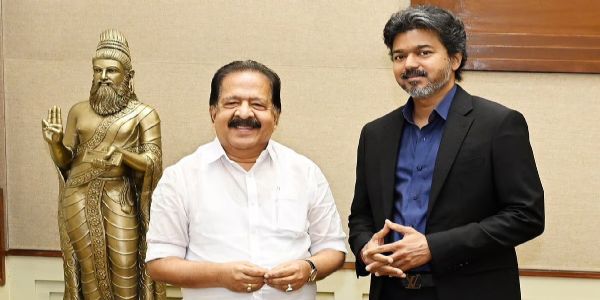
TN to join hands with Kerala in anti drug drive ; CM Vijay to attend awareness event with Mohanlal
TN to join hands with Kerala in anti drug drive ; CM Vijay to attend awareness event with Mohanlal..