Nagpur, 28 May
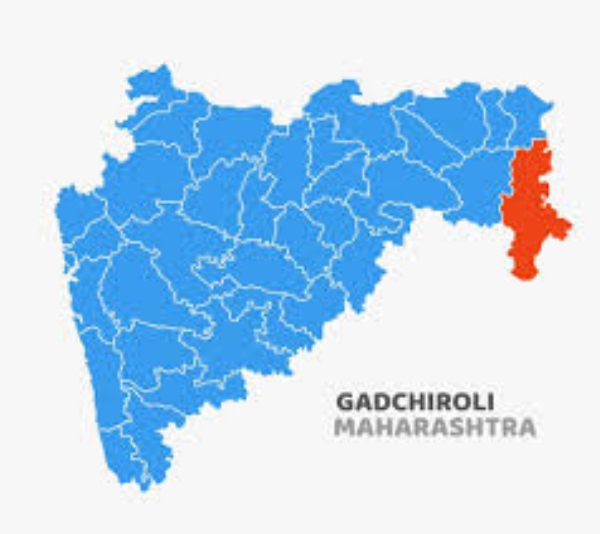
(HS): Once posting at Maharashtra’s Gadchiroli district was a sort of
punishment for any government and private employee. The scenario has changed
and is fast changing with the initiative at the centre and the state. During
the last five years Gadchiroli has changed, away from threats of Maoists and no
facilities into a Steel City of India.
The road network
with the help of the Border Road Organisation improved the connectivity and
also ensured safety of security personnel posted in remote areas in the
district. Systematic plan to end the Naxalite movement has materialised to
ensure safety to Forest Officials and suppliers of raw materials to industries
in adjoining areas. With rich and dense forest cover and abundant minerals
Gadchiroli could have been very important place for industries.
JRD Tata had
planned to start a steel plant in Gadchiroli, which was later shifted to
Tatanagar, for want of transportation facilities in Gadchiroli. With the
development of road network and elimination of Naxalite activities, Lloyd
Minerals started the largest single location iron ore plant in Sujagarh in
Gachiroli, with government’s full support. The project is the largest in India,
and probably in Asia, projected to mine 55 Million Tonnes Per Annum. The
present mining operation is up to 10 Million Tonnes Per Annum, including
hematite and bonded hematite quartzite.
Gadchiroli with
75 per cent of geographical area covered by dense forest, spanning over 1.1
million hectares, is also known for its biodiversity. With this forest cover Gadchiroli
is rightly called the lungs of Maharashtra State. Rich in tribal heritage the
district has Madia and Gond tribes as its natives, and has diverse wildlife.
This is the only
district in Maharashtra which does not have operational direct railway line
running through it. Initially a part of Gond Dynasty of Khandkya Ballarsha, the
district was carved out from Chandrapur District in 1982. A major attraction,
besides dense forest, is beautiful Markanda Dev Temple built and developed from
8th to 13th century and is termed as Khajurao of the
Vidarbha region of Maharashtra.
Entry of Lloyd
Minerals was conditional for not damaging the eco-system. It is set to become
the first certified green mining project using battery-operated heavy
equipment, LNG-powered vehicles and renewable energy to minimise carbon
footprints.
Community Impact
Local tribal
community is being trained through skill development programme, so that
sufficient work force could be hired.
A 30bed hospital
with modern facilities was constructed.
Solar
electricity and road augmentation worked out.
Ecological
restoration by plantation against trees that were removed was announced.
Initial
opposition to the project due to tree-felling, and possible damage to
environment and wildlife has calmed down after the government declaring ten
times plantation against the trees cut for the project.
Transport
The villages
which had not seen state transport bus during the last 65 years of formation of
united Maharashtra State are celebrating connectivity through state-operated
transport network.
Still many
villages are isolated during monsoon. Efforts are going on to connect those
villages through roads and bridges over rivers and rivulets.
A proposal to
develop an airport in Gadchiroli has been mooted to attract investment in the
most backward district of Maharashtra – Gadchiroli.
---------------
Hindusthan Samachar / Ajay Vasant Mardikar
29 May 2026