New Delhi, 07 April (H.S.):
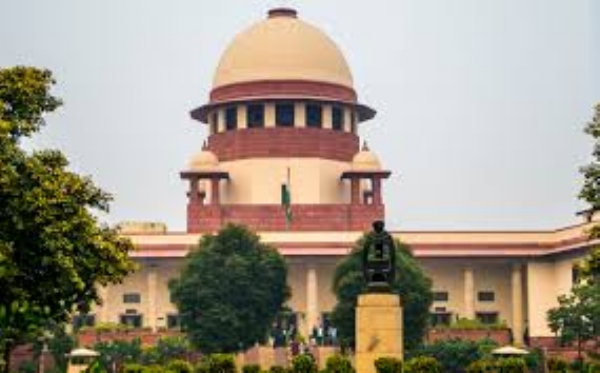
A nine-judge Constitution Bench of the Supreme Court, presided over by Chief Justice Suryakant, commenced hearings on Tuesday on the contentious issue of women's entry into the Sabarimala Temple, pitting religious faith against fundamental rights.
The Centre, in its affidavit, argued that the restriction on women of menstruating age entering the temple pertains to religious belief and autonomy, urging the court to uphold the ban while limiting judicial review in such matters.
Solicitor General Tushar Mehta, representing the Centre, emphasised India's tradition of elevating women to divine status—worshipped as goddesses by the President, Prime Minister, and judges alike—contending that concepts like patriarchy and gender stereotypes are alien to Indian civilisation and incompatible with its cultural heritage.
The Bench comprises Justices BV Nagarathna, MM Sundresh, Ahsanuddin Amanullah, Arvind Kumar, AJ Meshi, PB Varale, R Mahadevan, and Joymalya Bagchi. The court has mandated completion of hearings by April 22, with petitioners arguing April 7-9, respondents April 14-16, rebuttals on April 21, and amicus curiae submissions on April 22.
This follows the Supreme Court's 4:1 verdict on September 28, 2018, which deemed the exclusion of women aged 10-50 unconstitutional, violating equality (Article 14) and religious freedom (Article 25); Justices Dipak Misra, AM Khanwilkar, RF Nariman, and DY Chandrachud ruled against biological discrimination in faith practices.
Justice Indu Malhotra dissented, asserting judicial restraint in religious matters: temples should determine worship customs, not courts, as equality cannot wholly override denominational rights under Article 26, warning of broader implications for other religious sites.
---------------
Hindusthan Samachar / Jun Sarkar
07 Apr 2026