Gorakhpur,
6 April (HS): Chief Minister Yogi Adityanath has stated that coordination
between the different dimensions of journalism—print media, visual media,
digital media, and social media—is essential. If different aspects of the media
present the same fact in different ways and perspectives, it will create
confusion for the public. Such a situation will also impact public trust in the
media. Therefore, it is essential that all media organizations operate in
accordance with common standards, values, and ideals.
CM
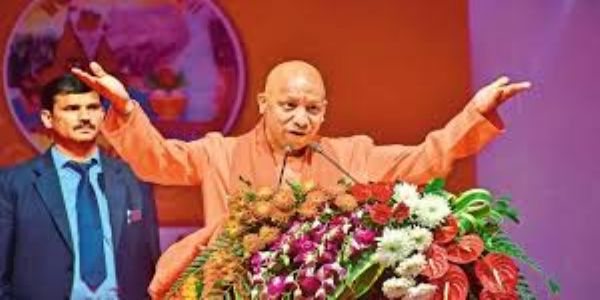
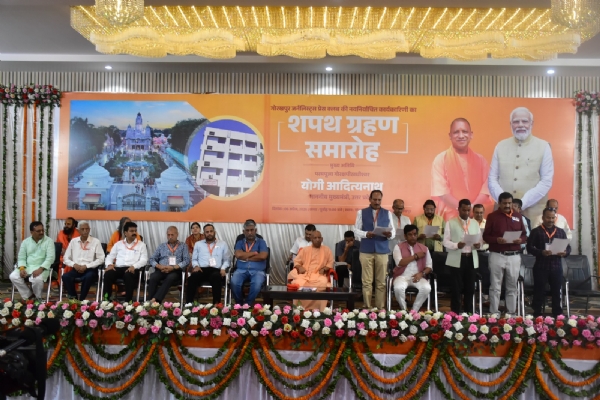
Yogi was addressing the oath-taking ceremony of the new executive of the
Gorakhpur Journalists Press Club on Monday as the chief guest. In the program
organized at the Gorakhpur Club auditorium in Civil Lines, Chief Minister Yogi
Adityanath said that today there are various types of challenges in journalism.
Journalism has the forms of print media, visual media, digital media and social
media. Today, every member of the family is interested in different forms of
media. He said that today there is a need to integrate all forms of journalism
holistically. Print media and visual media have their own standards and their
own code of conduct. But, social media is yet to be integrated with it.
CM
Yogi said that journalism should not allow itself to become unbridled but
should move forward with the values and ideals of journalism. The basic
spirit of journalism in India for 200 years has been national service, social
service and the spirit of Ek Bharat Shreshtha Bharat. We should move forward
with this spirit. He said that today there is a section in the media which
misleads the society and spreads unrest. We need to avoid this form of media.
The Chief Minister said that if there is a difference in the same news on
social media and print media, it disturbs the public. This situation of dilemma
is dangerous. We should strive to prevent such a situation. He said that the
government always stands with journalism based on values and ideals.
Criticism
should not be treated as personal grudge: The Chief Minister said that
democracy runs on dialogue. There can be criticism in dialogue, but this
criticism should not be mistaken for personal grudges. When we work with a
unified mindset, meaningful results always emerge. CM Yogi said that journalism
is a mirror of society. Society understands society's issues from the
perspective from which journalism presents them. To remain a symbol of public
trust, journalism must maintain a unified view of right and wrong. Journalism
should not have two opinions on any issue, because this attitude undermines
public trust.
This
year is very important for Hindi journalism: The Chief Minister said that
journalism has strengthened Indian democracy even in adverse circumstances. The
Chief Minister said that this year is very important for Hindi journalism
because 200 years ago, Hindi journalism started in Kolkata on 30 May 1826. On
30 May 1826, Jugul Kishore Shukla launched the first Hindi newspaper, Udant
Martand. When he started the newspaper, the country was under slavery. He used
journalism as a medium to amplify the voice of the country's independence. For
200 years, the glorious journey of journalism has been moving forward without
stopping, without getting tired, without wavering.
Correct
facts build strong public trust: The Chief Minister said that when journalism
joins the voice of the common man and presents the correct facts to the public,
a strong public trust is built. Journalism that embodies public trust cannot be
shaken by any force in the world. Journalism has always achieved its goals by
treading difficult paths. CM Yogi also mentioned Mahatma Gandhi, Bal Gangadhar
Tilak, Ganesh Shankar Vidyarthi, and Atal Bihari Vajpayee using journalism as a
medium for the freedom movement and service to the nation. He also pointed out
that Bal Gangadhar Tilak, through journalism, instilled the slogan Swaraj
is my birthright in the public consciousness from Lucknow in 1916. In
2017, following the centenary of this slogan, various programs were organized
by the state government.
The
challenge of disruptive forces is always before journalism: The Chief Minister
said that the foundation of Indian journalism has been inspired by our
Upanishads. This inspiration comes from the Upanishads' maxim Satyameva
Jayate. He added that journalism has always faced the challenge of
disruptive forces in society. These forces have been impeding journalistic
freedom. Undeterred by these obstacles, we must continue to advance journalism
because our journalism is based on the values of the Upanishads, which embody
the belief that truth is certain to triumph.
Zero
tolerance policy against crime and corruption continues: The Chief Minister
said that the government has continued its policy of zero tolerance towards
crime and criminals, corruption and corrupt individuals. Every segment of
society is benefiting from public welfare schemes. He added that the government
has also launched various housing schemes for journalists. Accredited
journalists are being provided with cashless medical facilities.
3
crore population depends on Gorakhpur: The Chief Minister said that today, a
population of three crore people depends on the Gorakhpur metropolis for
education, business, and employment. A large population from eastern Uttar
Pradesh, western Bihar, and Nepal also depends on Gorakhpur. He said that the
direction of journalism in Gorakhpur should foster a sense of patriotism among
the people. Journalism should be strongly promoted with the aim of achieving
the goal of a self-reliant India and advancing the concept of a developed
India. If we can achieve this, it will be extremely important. He said that the
Gorakhpur Journalists Press Club was established in 1998. Its members enjoyed
the close association of the then Chief Minister Kalyan Singh. Last year, I
also had the privilege of attending the oath-taking ceremony of the Gorakhpur
Press Club members. SP Tripathi, as President, and Arvind Shukla, as Secretary,
played a key role in the establishment of the Gorakhpur Journalists Press Club.
CM Yogi said that the government has provided a magnificent building to the
Gorakhpur Journalists Press Club, where journalistic work is being carried out
smoothly.
Mayor
Dr. Manglesh Srivastava administered the oath: At the ceremony, Mayor Dr.
Manglesh Shrivastava administered the oath to the new executive officers of the
Gorakhpur Journalists Press Club: President Omkar Dhar Dwivedi, Vice President
Dhanesh Kumar, General Secretary Pankaj Shrivastava, Joint Secretary Mahendra
Gaur, Treasurer Durgesh Yadav, Library Secretary Sanjay Kumar, Executive
Members Manoj Kumar Mishra, Rajneesh Tripathi, and Ajit Singh. Press Club
President Omkar Dhar Dwivedi delivered the welcome address, while Gajendra
Tripathi and Prem Paraya conducted the program.
On
this occasion, MP Ravi Kishan Shukla, Legislative Council member and BJP state
vice president Dr Dharmendra Singh, State Women Commission vice president Charu
Chaudhary, Mahant Ravindra Das of Kalibari, Dainik Jagran local editor Madan
Mohan Singh, Amar Ujala local editor Vineet Saxena, Rashtriya Sahara's Piyush
Banka, Aaj's Akhilesh Chand, Independent Chetna's Anand ji Vaishya and a large
number of journalists participated.
Hindusthan Samachar / Abhishek Awasthi