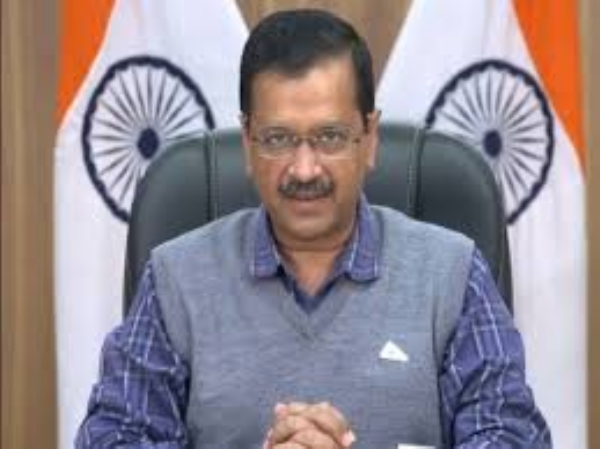
New Delhi, 27 April (H.S.): Aam Aadmi Party (AAP) national convenor Arvind Kejriwal has announced that he will not participate personally, nor through any lawyer on his behalf, in the proceedings of the bench headed by Justice Swarnakanta Sharma at the Delhi High Court in his ongoing case. In a video statement issued on Monday, Kejriwal said he has taken this decision on the grounds of a “conflict of interest”, stressing that his objection is not to any individual judge but to the principles of fairness and perceived impartiality in the administration of justice.
Citing Mahatma Gandhi’s concept of Satyagraha, Kejriwal said that when the conscience senses that wrong or injustice is being done, one must not remain silent but must confront it—although the first step should be dialogue, not defiance. He added that a person must present his case before the alleged wrongdoer with full humility and respect, giving them a fair chance to correct their mistake. If, despite all efforts, justice is not delivered, then one must obey the inner voice and undertake peaceful, respectful resistance, accepting all consequences with courage. In this process, he said, there should be no hatred or anger towards the person accused of doing injustice.
Kejriwal claimed that he approached Justice Swarnakanta Sharma with complete sincerity and humility, requesting her to recuse herself from his case and allow it to be heard by some other judge at the High Court. He said he pleaded that his case be assigned to another judge, but the judge rejected his request and ruled that she would hear the matter herself. “With all humility, I respectfully disagree with her decision,” Kejriwal said, adding that whatever judgment Justice Swarnakanta may ultimately pass, he reserves all his legal rights, including the option to challenge it in the Supreme Court if and when appropriate.
Kejriwal had earlier moved the Delhi High Court, seeking a change of bench in his case related to the Delhi excise‑policy scam, arguing that Justice Swarnakanta had already formed a pre‑conceived view against him and therefore could not give an impartial verdict. On April 20, the Court dismissed that plea, with the judge observing that the objections raised were based on speculation and conjecture, not on concrete evidence, and could not be allowed to interfere with judicial process.
In a separate affidavit, Kejriwal also claimed that the children of Justice Swarnakanta Sharma are part of the panel of lawyers representing the Central government, and that the Solicitor General, Tushar Mehta, assigns work to them. On this basis, Kejriwal alleged a conflict of interest and questioned whether he could reasonably expect impartial justice from her bench. He maintained that he still has the right to approach the Supreme Court against any adverse order passed by her.
Despite his strong criticism of the judge’s stance in this specific matter, Kejriwal reiterated that he holds the judiciary in high regard. He recalled that the Indian judiciary, over the past 75 years, has often protected citizens’ rights in times of crisis, and that it was the same judiciary that acquitted him of false cases and granted him bail in the past. “I bow before the institution of the judiciary,” he said, even as he chose to boycott the proceedings before Justice Swarnakanta Sharma’s bench as a form of protest against what he perceives as a compromised, conflict‑ridden hearing.
---------------
Hindusthan Samachar / Jun Sarkar
27 Apr 2026
Prime Minister Modi to virtually inaugurate Meghalaya’s indoor cricket academy on April 28

27 Apr 2026