Lucknow,
April 15 (HS): In
India’s democratic journey, there are certain moments that are not merely
announcements of a policy or a bill, but carry the potential to change the
course of history. The ideas expressed by Narendra Modi at the Nari Shakti
Vandan Act Conference held at Vigyan Bhavan were filled with such historic signals.
In the context of the special parliamentary discussions scheduled for April 16,
17, and 18, the vision he presented has the capacity to shape not only India’s
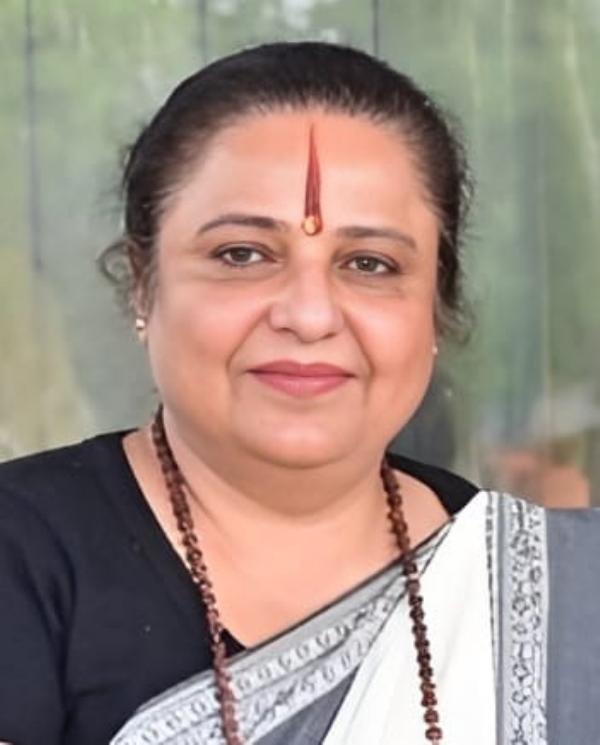
democratic structure but also the political culture of the world, says Prof.
Geeta Singh Director, CPDHE, University of Delhi.
The Nari
Shakti Vandan Act is not merely a provision to grant women representation in
Parliament and State Assemblies. It is an effort to correct a deep historical
imbalance that, for a long time, deprived national policy-making of the
experiences, sensitivities, and perspectives of half the population. When half
of a society’s strength is not fully included in the decision-making process,
the nation’s progress also remains incomplete. This Act paves the way toward
completing that incompleteness.
In Indian
civilization, women have not been viewed merely in social roles; they have been
regarded as the foundation of creation, strength, and values. The tradition of
“Yatra Naryastu Pujyante, Ramante Tatra Devata” (where women are honored, there
the divine resides) has long existed in our culture. Women have been seen as
Lakshmi (prosperity), Saraswati (knowledge), and Durga (power). However, across
many historical periods, social and political structures failed to fully
translate this ideal into practice, resulting in limited participation of women
in nation-building.
Today, as
India redefines its role on the global stage in the 21st century, it has become
essential that national policies represent the complete consciousness of
society. The Nari Shakti Vandan Act is the result of this broader national
vision. With increased participation of women in Parliament and Assemblies,
policy-making will naturally become more sensitive, balanced, and reflective of
diverse social experiences.
Women
possess the ability to understand the subtle dimensions of life. Their
experiences in areas such as family, society, education, health, environment,
and social justice are broader and more humane. Therefore, when women become
part of the decision-making process, policies evolve from being mere
administrative documents into reflections of real societal needs.
Experiences
from many countries around the world affirm this truth. Where women’s political
participation has increased, significant improvements have been observed in
policies related to education, healthcare, child welfare, and social justice.
In India too, after the introduction of reservations for women in Panchayati
Raj institutions, this transformation has been clearly visible. From village
panchayats to district councils, millions of women have demonstrated remarkable
leadership and administrative capability.
The Nari
Shakti Vandan Act seeks to expand this experience to the national level. It is
not merely a policy to increase representation; it is a step toward making
democracy more inclusive and balanced. In his address, the Prime Minister
emphasized that the Indian woman is not only a force demanding rights but also
a bearer of culture and values. Women have played a crucial role in sustaining
the Indian family system, social harmony, and community life. Therefore, when
women actively participate in national policy-making, the spirit of values,
discipline, and service will also strengthen in politics.
At a time
when many democracies around the world are grappling with political
polarization, aggression, and self-centered politics, India can offer an
example of sensitive, women-centered governance. In Indian culture, power does
not merely mean authority but also creation and balance. The Nari Shakti Vandan
Act is a significant step toward establishing this balanced power.
However,
it is important to understand that this transformation will not come through
legislation alone. A change in social mindset is equally necessary. Along with
political opportunities, women must also receive training, resources, and
social support. Families, society, and political parties must work together to
create an environment where women can confidently assume leadership roles.
For
India’s younger generation, this Act can serve as a source of inspiration. When
young girls see women playing decisive roles in Parliament and Assemblies, they
will develop aspirations to lead and contribute to nation-building. This will
further strengthen the roots of democracy. This Act is not only a need of the
present but also a preparation for the future. In the coming decades, India is
moving toward becoming a major global economic and cultural power. It is
therefore essential that the talents, energy, and vision of women are fully
utilized in the nation’s development journey.
The Nari
Shakti Vandan Act symbolizes the belief that India’s future will be strong only
when its women are equally empowered. This is not merely a question of
political representation but of the reawakening of national consciousness. This
Act will achieve success in accordance with its objectives, and in the coming
years, India’s political character will become more sensitive, inclusive, and
value-driven. It will then be said that Indian democracy has truly recognized
its other half. And perhaps history will remember this moment as the time when
India not only honored women but placed them at the center of nation-building.
Hindusthan Samachar / Abhishek Awasthi
15 Apr 2026