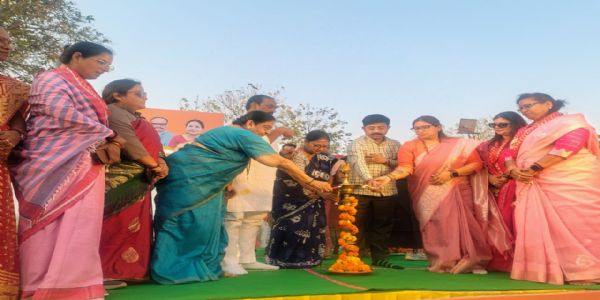
Lucknow,
April 15 (HS): India’s
development story remains incomplete if women are not given their rightful
place. The idea of “From Women’s Empowerment to a New India” is not merely a
slogan but a firm commitment toward building an inclusive, just, and
progressive nation. As India moves toward the vision of a “New India,” the
participation and leadership of women have become increasingly crucial. In this
context, the recently passed Women’s Reservation Bill, known as the Nari Shakti
Vandan Act, has emerged as a historic step.
In ancient
India, women held a respected and dignified position. However, over time, social
evils and inequalities weakened their status. In modern India, continuous
efforts through education, awareness, and government policies have aimed to
empower women. Today, women are excelling in every field—be it science, sports,
politics, administration, or entrepreneurship. This transformation reflects the
rise of “Nari Shakti” (women’s power).
The
Women’s Reservation Bill is a milestone in Indian democracy. It ensures 33%
reservation for women in the Lok Sabha and State Legislative Assemblies. This
step aims to provide women with greater opportunities in politics so they can
actively participate in policymaking and governance. The
benefits of this legislation are significant. First, it will enhance women’s
political participation. Until now, women have been underrepresented in
politics, leading to inadequate attention to key issues such as women’s safety,
health, and education. With increased representation, these concerns are likely
to receive greater focus.
Second, it
promotes social equality. When women become part of the decision-making
process, it strengthens the spirit of gender equality in society. This not only
safeguards women’s rights but also helps in establishing a more balanced and
just social order. Third, the
bill will boost confidence and leadership among women. Women in leadership
roles will inspire others, especially the younger generation, proving that
women can lead in any domain. This will gradually bring a positive shift in
societal mindset.
However,
certain challenges remain in its effective implementation. The reservation will
come into force after the completion of the census and delimitation process,
which may delay its impact. Additionally, it is important to ensure that
elected women representatives exercise independent authority and are not merely
symbolic figures.
Education
and economic independence are equally vital for women’s empowerment. Only when
women are educated and financially self-reliant can they fully exercise their
rights. Government initiatives such as Beti Bachao, Beti Padhao and women
empowerment missions are playing an important role by providing opportunities
in education, health, and employment. In the
digital age, new opportunities have opened up for women. Through the internet
and technology, women are gaining education and running online businesses from
home. This digital empowerment is further strengthening women’s role in
building a New India.
A change
in social mindset is also essential. Without equal respect and opportunities
for women, empowerment efforts will remain incomplete. Families, educational
institutions, and media must work together to foster a culture of equality and
respect. Ultimately, the journey from “Nari Shakti to New India” is continuous
and holistic. The Women’s Reservation Bill is a crucial step in empowering
women politically and strengthening their role in national development. When
women participate in decision-making, policies become more inclusive and
effective. Thus, women’s power is not only the foundation of society but also
the driving force behind the creation of a New India. Ensuring education,
safety, and equal opportunities for every woman is essential. Only then can we
build a strong, prosperous, and developed India by 2047.
Hindusthan Samachar / Abhishek Awasthi
15 Apr 2026