Kolkata, 01 April (H.S.): The electoral battle in the Asansol South Assembly constituency in the 2026 West Bengal Assembly elections is expected to be shaped by issues such as the declining coal economy, illegal mining, and identity politics. This urban–industrial seat in Paschim Bardhaman district falls within the Raniganj coal belt, where slowing industrial activity, informal coal networks, and demographic changes are influencing the political discourse.
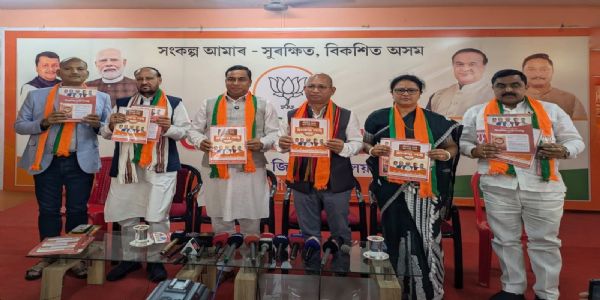
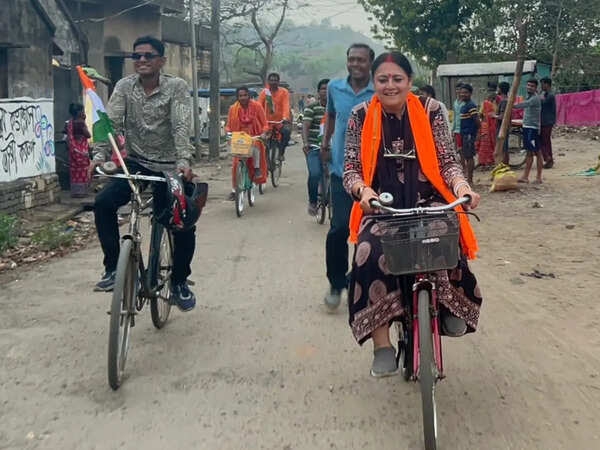
The Bharatiya Janata Party (BJP), which won the seat from the Trinamool Congress (TMC) in 2021, is aiming to retain it. The party has once again fielded sitting MLA Agnimitra Paul. The Trinamool Congress has nominated former MLA Tapas Banerjee, who represented the seat in 2011 and 2016. The Communist Party of India (Marxist) has fielded Shilpi Chakraborty, while the Congress has nominated Souvik Mukherjee.
In the 2021 Assembly elections, Agnimitra Paul defeated TMC’s Sayoni Ghosh by 4,487 votes, a result seen as a significant BJP gain in the industrial belt. However, the Trinamool Congress received a boost in the region after Shatrughan Sinha’s decisive victory in the 2022 Asansol Lok Sabha bypoll.
-------
Employment And Illegal Mining Key Issues
The Raniganj coal belt once provided stable employment to thousands, but automation and restructuring have reduced direct job opportunities. As a result, many residents have been pushed towards informal work or migration.
At the same time, illegal coal mining continues to serve as a source of livelihood for economically weaker sections, making enforcement action a politically sensitive issue.
--------
Land Subsidence A Major Concern
Decades of mining activity have also led to serious land subsidence problems in several areas. Residents in affected zones face risks such as cracks in houses, sinking land, and potential accidents. Rehabilitation, compensation, and safety measures have therefore emerged as key electoral issues.
-------
Identity Politics Also In Play
The social composition of Asansol South is highly diverse. Hindi-speaking voters with roots in Bihar and Jharkhand are estimated to constitute around 35 to 40 per cent of the electorate. The BJP is attempting to consolidate Hindu votes beyond linguistic divisions, while the TMC is focusing on strengthening its traditional support base among Bengali voters and minorities.
Political mobilisation around religious events such as Ram Navami has also influenced the electoral atmosphere.
--------
War Of Words Intensifies
The BJP has raised issues such as alleged coal smuggling, recruitment irregularities, and the role of local syndicates. The Trinamool Congress, on the other hand, has accused the BJP of attempting to polarise voters and has highlighted the state government’s social welfare schemes and development initiatives as its strengths.
Analysts believe that given the constituency’s diverse social structure and the absence of any single dominant voting bloc, the contest is likely to remain closely fought. Even small shifts in vote share could prove decisive. While the Left parties may not be principal contenders, their vote share could influence the final outcome.
The constituency includes several wards of the Asansol Municipal Corporation as well as the Amarsoota, Egra, Ballavpur, Jemari, and Tirat gram panchayats. Polling in this seat will be held in the first phase on April 23, while counting of votes is scheduled for May 4.
Hindusthan Samachar / Satya Prakash Singh