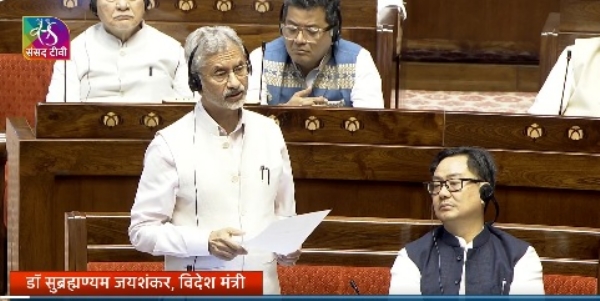
New Delhi, 09 March (H.S.): External Affairs Minister S Jaishankar assured Parliament on Monday that the government is closely monitoring the West Asia conflict, prioritizing the safety of Indian nationals in the region through every possible measure.
In statements to both Lok Sabha and Rajya Sabha on the Situation in West Asia, Jaishankar outlined the conflict's contours since February 28: Israel and the US on one side, Iran on the other, with strikes hitting several Gulf states. The violence has inflicted heavy casualties and infrastructure damage.He revealed a March 1 meeting of the Cabinet Committee on Security, chaired by Prime Minister Narendra Modi, reviewed risks to Indians in the region, regional security, trade, and economic fallout. The panel addressed travel disruptions for Indian passengers and students facing exam delays, directing ministries to act.PM Modi is personally tracking developments.
Strategic Stakes for India
Jaishankar emphasized West Asia's criticality: Nearly 10 million Indians live and work in Gulf nations, thousands of students and professionals in Iran. The region underpins India's energy security and hosts major trade partners with $200 billion annual turnover. Gulf investments have bolstered India's economy over the past decade.
Disruptions—supply chain snags, instability, and merchant shipping attacks (where Indians often crew)—pose grave threats. Tragically, two Indian sailors have died, one remains missing.
Preemptive advisories urged Indians to avoid Iran from January, with evacuation calls on February 14 and 23. Post-outbreak, the Tehran embassy aided students to safe zones and facilitated returns via Armenia for stranded traders. Transit hubs like Dubai, Doha, and Abu Dhabi saw assistance; borders enabled safe exits. Nearly 67,000 Indians have returned via flights.
On Iran's request, the ship Iris Lavon docked in Kochi on March 4; its crew is under Indian naval care. Tehran thanked India for the humanitarian gesture.
Energy and Policy Pillars
Amid energy security concerns, Jaishankar affirmed commitment to supply stability, market responsiveness, costs, and risks—always prioritizing consumers. Diplomacy has backed Indian energy firms in the turmoil.India's approach rests on three pillars: backing peace and diplomacy; utmost protection for its West Asian community; safeguarding national interests, especially energy and trade flows. Jaishankar appealed to all sides for restraint and dialogue to defuse tensions.
---------------
Hindusthan Samachar / Jun Sarkar
09 Mar 2026
Hockey India, Adoptrees Launch Tree Plantation Drive During Women’s Hockey World Cup Qualifiers

09 Mar 2026
Biplab Deb and Suvendu Adhikari Assure Women’s Safety, Financial Support if BJP Forms Government in Bengal
09 Mar 2026