Gandhinagar, 31 March (H.S.):
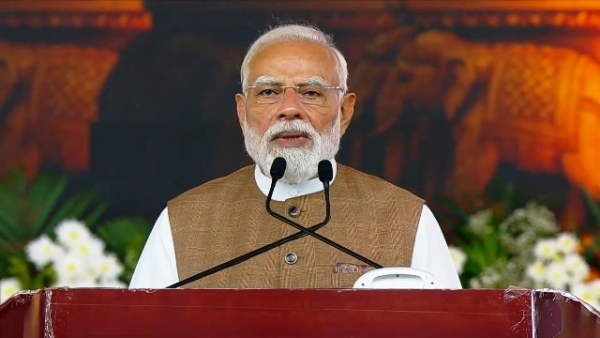
Prime Minister Narendra Modi has said that the world today is passing through a phase of instability and unrest, and at such a time the Jain doctrine of ahimsa (non‑violence) is more relevant than ever for the entire humanity.
Addressing a public gathering at the Koba Tirth Jain pilgrimage site in Gandhinagar on the occasion of Mahavir Jayanti, he underlined that the principles of non‑violence, truth, non‑stealing, and non‑possession from Jain philosophy can offer a new direction to a troubled global order.
The Prime Minister was speaking after inaugurating the Samrat Samprati Museum at Koba Teerth in Gandhinagar. Highlighting the museum’s message, he said that the conditions in the world today—marked by conflict and insecurity—make the inheritance of such institutions particularly important not only for India, but for all of humanity. He urged students, scholars, and curious visitors from across the world to carry the teachings of Jainism, rooted in non‑violence, to every corner of the globe and to everyday life.
Paying homage to Lord Mahavir,PM Modi described the present global situation as deeply concerning, noting that conflict and uncertainty are rising in many regions. In this context, he said, the Jain ideals of ahimsa, satya (truth), asteya (non‑theft), and aparigraha (non‑attachment) can play a transformative role in shaping a more peaceful and ethical world order. He also recalled the life of Samrat Samprati, who, according to Jain tradition, turned governance into a vehicle of service and expanded the reach of non‑violence, whose life continues to inspire both rulers and citizens.
The Prime Minister stressed that the Samrat Samprati Museum does not only preserve India’s ancient heritage, but also serves as a bridge between the present and future generations. The museum, organised into seven thematic galleries, showcases rare relics, Jain artworks, ancient manuscripts, and traditional artefacts, offering visitors and researchers an immersive journey into India’s civilisational ethos. Equipped with modern technology, it provides a detailed chronological narrative of the evolution and cultural impact of Jainism.
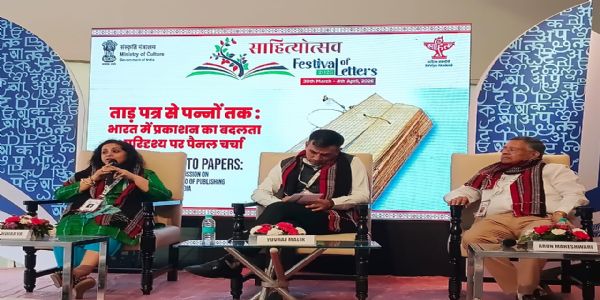
PM Modi also spoke about the long‑standing Indian tradition of knowledge and scholarship, noting that institutions such as Takshashila and Nalanda were once global centres of learning. He said that foreign invasions led to the destruction of priceless palm‑leaf manuscripts, and that, even after independence, due attention was not paid to preserving such heritage.
Recalling the neglect of manuscripts by earlier governments, he asserted that the current leadership is now actively searching for, recovering, and safeguarding these texts. Initiatives such as the “Gyan Bharatam Mission” are using advanced scanning, chemical conservation, and broad‑scale digital archives to digitally preserve ancient manuscripts and ensure they remain accessible to future generations.
---------------
Hindusthan Samachar / Jun Sarkar