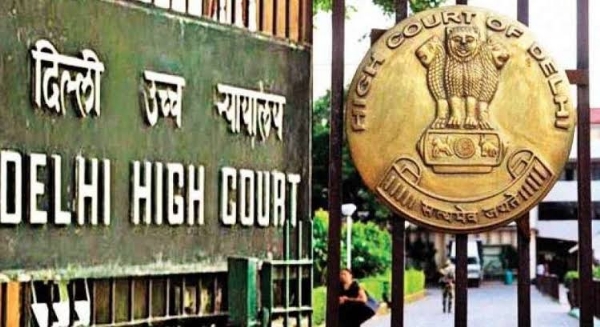
New Delhi, 24 March (H.S.):
The Delhi High Court has turned down former Bihar Chief Minister Lalu Prasad Yadav’s plea seeking to quash the FIR in the Central Bureau of Investigation’s (CBI) railway hotel tender scam case. A bench headed by Justice Ravindra Dudeja rejected his application, clearing the way for the trial proceedings to continue. The court’s order comes after Yadav had also challenged the lower court’s decision to frame charges against him in the same case.
Lalu Prasad had moved the High Court to set aside the FIR registered by the CBI, as well as the trial court’s order of October 13, 2025, which had framed criminal charges against him, his wife Rabri Devi and his son Tejashwi Yadav.
During hearings, senior advocate Kapil Sibal, appearing for Lalu Prasad, argued that two of the transactions in question were carried out under existing government policy and therefore could not fall within the ambit of the Prevention of Corruption Act. He claimed that treating such policy‑driven decisions as criminal acts violated the law.
The trial court had taken cognisance of the case in 2018 after the Enforcement Directorate (ED) filed a chargesheet, and later the CBI followed up with its own charge sheet. The ED list of accused included Lalu Prasad, Rabri Devi, Tejashwi Yadav, M/s Lara Project LLP, Sarla Gupta, Premchand Gupta, Gaurav Gupta, Nathmal Kakaraniya, Rahul Yadav, Vijay Tripathi, Devkinandan Tulsian, M/s Sujata Hotel, Vinay Kochhar, Vijay Kochhar, Rajeev Kumar Reylan and M/s Abhishek Finance Private Limited, among others.
The prosecution alleges that while Lalu Prasad was Union Railway Minister, he arranged the transfer of two railway hotels in Ranchi and Puri to IRCTC and then issued tenders for their management, which were later handed over to a company linked to the Kochhar brothers.
During the trial‑court proceedings, Lalu Prasad’s counsel, advocate Manindar Singh, argued that there was no substantial evidence to justify the prosecution, and questioned the very validity of the prior permission under the Prevention of Corruption Act. He pointed out that the CBI had first claimed that no such prior sanction was needed to prosecute the accused, and later submitted that sanction had in fact been obtained. He described this shift as legally inconsistent.
Countering the defence, the CBI told the court that it had solid evidence to support the charges of corruption, criminal conspiracy and cheating.
The Rouse Avenue court, which framed charges under IPC sections 428, 120B and section 13(2) of the Prevention of Corruption Act, had noted that the accused had manipulated the tender process and undervalued the assets.
The High Court has now effectively upheld the prosecutorial route, rejecting the attempt to erase the FIR at this stage. Earlier, on January 19, 2019, the trial court had granted regular bail to Lalu Prasad in the CBI case, and on January 28, 2019, it had also granted regular bail in the ED case, with the court imposing surety conditions in each case. With the High Court’s latest order, the focus shifts back to the trial, where the prosecution will have to prove its allegations against the three accused and the 13 others named in the corruption‑linked case.
---------------
Hindusthan Samachar / Jun Sarkar